Showing posts with label Afghanistan. Show all posts

Tuesday, November 16, 2010

SSG Sal Giunta ~ Medal of Honor

SSG Sal Giunta


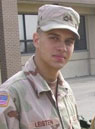
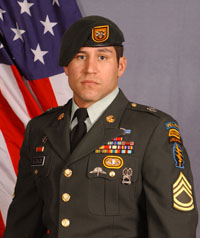
On November 16, 2010, Staff Sergeant Sal Giunta of the 173rd Airborne will become the first living Medal of Honor recipient since the Vietnam War. His actions occurred in Afghanistan's Korengal Valley duiring the deployment chronicled in the movie "Restrepo." This fourteen-minute video tells his story.


And, the man he rescued that day - SGT Joshua C Brennan - click here to read his story.


Later, SSG Giunta's citation will be posted on the

Friday, May 28, 2010

May They Walk with God - May We Ever Remember


Forty-five-year-old; Sgt. Maj. Robert J. Cottle, 4th Light Armored Reconnaissance Battalion, 4th Marine Division, pays tribute to one of his fallen Marines on March 8, 2010 at South Station, Helmand province, Afghanistan.

A little more than two weeks later, Cottle, a seven-year active-duty veteran and high-ranking SWAT officer for the Los Angeles Police Department, was struck by a roadside bomb killing him and 19 year old Marine Lance Cpl. Rick Centanni.

Photo by Marine Corps 1st Lt. Joshua Diddams
I Marine Expeditionary Force (Fwd)
Date: 03.08.2010
Location: South Station, AF


As we approach Memorial Day,
we must never forget that good men and women
are still giving their lives in defense of our nation.

If you didn't read the caption of this photo, you missed the point....

Monday, February 15, 2010

Afghan Women Can Succeed in Agriculture

Local Afghan women package harvested saffron as part of the Kentucky Agribusiness Development Team, Task Force Cyclone, Womens' Empowerment Project in Panjshir Province. The Womens' Empowerment Team of the Kentucky ADT educate women on things they can do at home, such as grow saffron and mushrooms and other things to improve their families lives.
Photo by US Army SGT Jo Lisa Ashley, Kentucky ADT Task Force Cyclone

KAPISA PROVINCE, Afghanistan - The Kentucky Army National Guard and Air Guard united in August 2009 to form Kentucky’s first joint Agri-business Development Team.

This specialized unit is made up of service members from different backgrounds throughout the state of Kentucky.

Around 80% of Afghanistan’s populous is connected to the agriculture industry. Since Aug., the ADT has spent their deployment educating the local farmers and government on how to increase productivity, increase their market share and manage natural resources in Parwan, Panjshir, Kapisa and Bamyan provinces.

As a result of their work, the production of potatoes and onion has greatly increased in the Bamyan province.

U.S. Army Lt. Col. William T. Ewing, from Harrisburg, Ky., has a degree in Entomology and has been working with the Agricultural team during his deployment here.

“The Afghan people can grow a lot of crops,” said Ewing. “They are actually producing more than they consume or export, and we are teaching them how to export and store their crops longer.”

With the ADT’s help, pomegranate farmers in the Tagab district of the Kapisa province were able to export their crops to India and Dubai. Because they exported to these countries, they received three times their normal price for the crops.

Educating the people on natural resource management has been a key point of the ADT. Irrigation and reforestation advances should greatly improve agricultural production in Afghanistan.

U.S. Air Force Staff Sgt. Ray Norris, from Scottsburg, In., assigned to the 123rd Airlift Wing in Louisville, Ky., grew up on a family farm and volunteered to deploy with the ADT.

Norris spent some time in the Yakalong district of the Bamyan province where there is an eroded canal that provides water to about 800 family farms.

“There are not many organizations in this area helping the people,” said Norris. “We are working to get the materials so the people can make repairs themselves.”

The ADT has been working with the Minister of Agriculture, Irrigation and Livestock (MAIL), and the Director of Agriculture, Irrigation and Livestock (DAIL) at the provincial levels in the Parwan, Panjshir, Bamyan and Kapisa provinces.

U.S. Army Col. Mike D. Farley, from Corbin, Ky., is the commander of the ADT and is glad to be a part of this important and unique mission.

“We are here to help the people increase the nutritional value in the country and sustain a better and healthier lifestyle,” said Farley.

We are working directly with the MAIL and the DAIL’s, to give them the knowledge to help their people, said Farley.

The ADT has also been working to teach the women of Afghanistan techniques to improve their home life.

U.S. Army Sgt. Jo Lisa Ashley, of Eubank, Ky. is the ADT’s women’s empowerment coordinator for the team.

“Most women here work at home, they take care of their families and the household duties,” said Ashley. “I am working with them on projects that they can do at home to bring in extra income.”

The Afghan government is working side-by-side with Ministry of Women’s Affairs and they are doing a great job about going out and showing that they support these programs for the women, said Ashley.

The ADT will spend about five more months here in Afghanistan before they return home.

- Written by U.S. Army Spc. Charles J. Thompson

-------------------------------------
As my readers know, I am a huge advocate of reviving the agriculture in Afghanistan and Iraq. No country can survive and prosper without the ability to feed its own people. Look at our own economy as we continue to push out agriculture. I am also an advocate for teaching skills and income making opportunities to women. Thanks to the Kentucky ADT for their efforts!

Thursday, February 11, 2010

History is Our Stories ~ Charlie Wilson of Texas

Representative Charlie Wilson
The Liberal from Lufkin
1933-2010


If you haven't read and seen Charlie Wilson's War --- you should.
If you are interested in the history of Afghanistan --- you should read and see Charlie Wilson's War.

Charlie Wilson was the Congressman from the 2nd District of Texas from 1973-1996. He was known as "Good Time Charlie" for his excesses as a hard-drinking womanizer. But, he was also a very hard working Congressman and defense hawk. He is best known for the appropriations he secured for the US covert war in Afghanistan against the Soviet Union. The money provided weapons for the Afghans who drove the Soviet Army out their country, contributing to the eventual collapse of the Soviet Union.

After the ousting of the Soviet Union, the US withdrew its support, in spite of Wilson's encouragement to help rebuild.
"That caused an enormous amount of real bitterness in Afghanistan and it was probably the catalyst for Taliban movement," Wilson said in a 2001 interview.

Charlie Wilson loved this country and the men and women who served to protect and defend her. He was a staunch supporter of the VA and its hospitals. He was a graduate of the U.S. Naval Academy in 1956 and served in the Navy from 1956 to 1960.

One of my favorite Charlie Wilson stories:
A Trinity city councilman purposefully poisoned his dog and killed him, when Wilson was 13. Wilson described how he used his hardship driver's license to round up voters from the poor neighborhoods to vote in the councilman's election. Wilson said he told the voters as they got out of the car that he did not want to tell them which way to vote, but the councilman, Charles Hazard, killed his dog. Wilson said he drove 96 voters to the polls, and Hazard lost his reelection by 13 votes. Wilson described that as the day he fell in love with America.
America is a better place because of Charlie Wilson. And, east Texas is a better place because of Charlie Wilson.

Wilson is survived by his wife, Barbara, who he married in 1999, his sister, Sharon Allison, a niece and nephew. He was born in Trinity in 1933. Funeral services are pending.

Rest in Peace, Charlie --- and thank you!

A great interview (8 minutes) http://www.charlierose.com/view/interview/10858


Wednesday, February 10, 2010

Afghan Women Learn to Grow Mushrooms

Women from Laghman province learned how to grow mushrooms using wet straw
in a class hosted by the coalition Female Engagement Team.


BAGRAM AIRFIELD, Afghanistan –Some women from Laghman province learned how to grow mushrooms during a class hosted by the coalition Female Engagement Team this past week.

The Female Engagement Team has been able to develop a more intimate relationship with the Afghan female students. Afghan women have reached out to request a booth at the coalition run Forward Operating Base Bazaar to sell hand-made products. The request was approved to will allow the local Afghan women work in the locan business community.

The FMT is currently organizing classes on tailoring and computer skills for the women.

Monday, February 01, 2010

Special Forces in Agfghanistan

U.S. Special Forces are extracted from a mountain pinnacle in Zabul province, Afghanistan, by a U.S. Army UH-60 Black Hawk helicopter from Company A, 2nd Battalion, 82nd Aviation Regiment, 82nd Combat Aviation Brigade after executing an air assault mission to disrupt insurgent communication.
U.S. Army photo by Staff Sgt. Aubree Clute

Click Picture to Enlarge

Some things these guys do are just too amazing for words!

Friday, January 22, 2010

Soldiers Assist with Veterinary Care in Afghanistan

SPC Jose Lopez of the California National Guard, 40th Infantry Division, Agribusiness Development Team, assists with the veterinary mission near Camp Wright, Asadabad, Afghanistan.

Staff Sergeant John Carter of the California National Guard, 40th Infantry Division, Agribusiness Development Team, assists with the veterinary mission near Camp Wright, Asadabad, Afghanistan.

Photos by Tech. Sgt. Brian Boisvert, Kunar Provisional Reconstruction Team Public Affairs.


KUNAR PROVINCE, Afghanistan – The California National Guard’s 40th Infantry Division’s Agri-business Development Team conducted a veterinary civic action program in the provincial capital to help area residents with their livestock, Jan. 15.

The ADT partnered with local leaders and veterinarians to administer vaccinations and vitamin treatment to 567 animals belonging to more than 100 villagers from the Gujjer and Pashtun tribes in the villages of Woch Now, Argadel Kalay and Yargul Kalay that surround Camp Wright in Kunar Province.

The local residents brought their livestock to the event to get treatment and information, but most important the event helped foster a positive relationship between Coalition Forces, government leaders and the people.

According to Fazlullah Wahidi, Kunar provincial governor, the VETCAP was necessary because of the importance of livestock in Afghanistan.

“Kunar is a province of agriculture and animals. We are in a mountain area, and the biggest economy for people is their cows, sheep and goats,” Wahidi said. “This is very good for our farmers today for the medicines. Livestock for these people are cash-money because they don’t have businesses, they are farmers. If they were to buy some goods for example, they would have to sell something to buy something.”

The governor said the people he talked to were happy to have the ADT’s help.

“We are thankful to the people and government of America. They all support across the province and work with us as a team,” Wahidi said. “This is the first time for this here and the people are very happy that they (ADT) are here for them to benefit from this knowledge and experience.”

The governor was so pleased by the operation he had his own horse and four cows sent to the event for treatment.

The ADT teamed up with Afghan elders, military-aged males and children from the surrounding villages to help set up the holding pens, assist with the vaccinations and clean up the site when done. The VETCAP ran smoothly with the assistance of village children who helped corral animals that tried to escape. The mobile clinic paired Afghan veterinarians with ADT members and allowed them to work with villagers on how to properly administer future vaccinations.

U.S. Army Lt. Col. Max Velte, ADT deputy commander from Sacramento, Calif., said this VETCAP was a collaborative partnership with local leaders and elders, as well as a great opportunity to work with Afghan National Security Forces to secure the event.

Velte said the ADT also handed out humanitarian assistance to the villagers who brought their animals for treatment as both an incentive and as preventive care.

“The items included solar powered radios, water and small food items and livestock vitamin booster supplements,” Velte said. “We needed to get the solar-powered radios out to them because of the three villages that came today, two are without power. Now with solar radios, the Gujjer villages are much more connected to information from the government center of Asadabad and the surrounding areas.”

U.S. Army Spc. Gerardo Robledo, Jr., ADT security forces member from Anaheim, Calif., said the VETCAP was important because it put Afghan veterinarians out in front of their people.

“It’s important because it gives the local people confidence in the workers from their communities. That way if something is wrong with their animals they can go to them and not come to us or wait for these VETCAPS,” Robledo said. “They can go and find a local veterinarian to tell them what is wrong with their animals.”

One of the Afghan veterinarians was Hedayetullah from Jalalabad. He said he was glad to come and help the people take care of their animals.

“We have a lot of profit from the animals. It is important to take care of the animals because when we trade the animals we get a good amount for them,” Hedayetullah said. “This (VETCAP) was done to prevent diseases, and I’m very happy to participate in today’s event. The people were very excited and happy about this.”

But, pride was also in the faces of the ADT members as they closed out their most successful VETCAP.

“We finished crunching our numbers last night and our total number was 567 animals treated at the Argadel VETCAP,” Velte said. “This is a record number of us. It was a great VETCAP and total team effort.”

Monday, January 11, 2010

Marine in Afghanistan

U.S. Marine Corps Lance Cpl. Michael Fort, with Bravo Company, 1st Battalion, 5th Marine Regiment, crosses a stream during a security patrol through the Nawa district of Helmand province, Afghanistan, on Oct. 20, 2009. U.S. Marines conduct security patrols to decrease insurgent activity and gain the trust of the Afghan people. The Marines are deployed with Regimental Combat Team 3 to conduct counterinsurgency operations in partnership with Afghan National Security Forces in southern Afghanistan.
DoD photo by Cpl. Artur Shvartsberg, U.S. Marine Corps. (Released)

Wednesday, December 09, 2009

Wednesday Hero ~ Petty Officer 2nd Class Daniel Elsey

Petty Officer 2nd Class Daniel Elsey
U.S. Navy

Abdul Rashid, a 5-year-old resident of the Nawa district of Afghanistan, receives a dressing for a wound on his face from Petty Officer 2nd Class Daniel Elsey, 1st Battalion, 5th Marine Regiment, while a linguist translates at a medical aid station at Patrol Base Jaker Dec. 3. Rashid was injured by a motorcycle earlier that day. Navy hospital corpsmen like Elsey routinely see local residents and children here to treat their wounds.

Photo Courtesy United States Marine Corps

These brave men and women sacrifice so much in their lives
so that others may enjoy the freedoms we get to enjoy everyday.
For that, I am proud to call them Hero.

This post is part of the Wednesday Hero Blogroll. For more information about Wednesday Hero, or if you would like to post it on your site, you can go here.

Wednesday Hero Logo

Wednesday, October 28, 2009

Wednesday Hero ~ SPC Justin Slagle

Spc. Justin Slagle
Spc. Justin Slagle
U.S. Army

Spc. Justin Slagle returns to Forward Operating Base Lane in a UH-60 Black Hawk helicopter after an air assault mission in the Zabul province of Afghanistan, Oct. 15, 2009. Even as leaders in Washington struggle with the next steps in Afghanistan, troops there are moving to better protect the Afghan people by separating them from Taliban influence and intimidation.


Photo Courtesy of U.S. Army

These brave men and women sacrifice so much in their lives
so that others may enjoy the freedoms we get to enjoy everyday.
For that, I am proud to call them Hero.


This post is part of the Wednesday Hero Blogroll. For more information about Wednesday Hero, or if you would like to post it on your site, you can go here.
Wednesday Hero Logo

Friday, October 23, 2009

Keeper of the Flame Award 2009


Remarks by Sec. Donald Rumsfeld, Sen. Jon Kyl and Vice President Richard Cheney
All have won the Keeper of the Flame Award from the Center for Security Policy

"We can NOT hope to win a war
by talking down our country and those who do its hardest work -
the men and women of the military and the intellegence services -

they are the true Keepers of the Flame.
- Vice President Richard B Cheney

Tuesday, October 13, 2009

Wednesday Hero ~ Cpl Benjamin S Koop

Cpl. Benjamin S. Kopp
21 years old from Rosemont, Minnesota
3rd Battalion, 75th Ranger Regiment
July 18, 2009
U.S. Army

Ben Kopp has been a fighter since the day he was born. When he was born his mother was given morphine to stop her labor so the doctors could deliver her via a cesarean section. But it caused his heart rate to slow and when he was born he wasn't breathing. But he recovered to the amazement of everyone. "Ben has always been up for a challenge," said his mother, Jill Stephenson. "He came into the world a fighter."

On July 10, 2009, Cpl. Benjamin Kopp was wounded in the Helmand province of Afghanistan. He was hit in the knee that hit his popliteal artery and the loss of blood caused him to go into cardiac arrest on the operating table at a battalion surgical center. As a result of his injuries, Cpl. Kopp developed swelling in his brain was put into an induced coma to try and save his life. But he died on July 18.

But his service didn't end with his passing. Upon his death, by his own desire, his organs were donated to people in need saving their lives.

"Please continue to say prayers for all of the men and women who so proudly serve our country," Stephenson wrote online. "Ben had a deep love of country and has just left a legacy of heroism for all of us to cherish. Be as proud of him as I was as his mother."

You can read much more about Cpl. Benjamin S. Kopp here.


These brave men and women sacrifice so much in their lives
so that others may enjoy the freedoms we get to enjoy everyday.
For that, I am proud to call them Hero.

This post is part of the Wednesday Hero Blogroll. For more information about Wednesday Hero, or if you would like to post it on your site, you can go here.

Wednesday Hero Logo

Monday, October 05, 2009

Afghanistan - Through the Eyes of Michael Ramirez


I don't often post on politics on this blog, but the current politics are adversely affecting out troops - people I know and care about.

It's time for the President to lead - something he doesn't seem to know how to do - but, when you have troops in the field and the generals ask for reinforcements, you provide them or you go home.

Wednesday, September 30, 2009

Wednesday Hero ~ 1SGT Jose San Nicolas Crisostomo

1st Sgt. Jose San Nicolas Crisostomo
59 years old from Spanaway, Washington

Rest In Peace "Joe Sinbad"

August 29, 1949 - August 18, 2009

Army 1st Sgt. Jose S.N. Crisostomo, 59, of Inarajan, Guam, died Aug. 18 in Kabul, Afghanistan, of wounds suffered when an improvised explosive device detonated near his vehicle. He was assigned to International Security Assistance Force Kabul, Kabul, Afghanistan.

U.S. Army

You can read Sgt. Crisostomo's story here.
And it is quite a story, indeed.

Farewell, and Walk with God, Joe Sinbad


These brave men and women sacrifice so much in their lives
so that others may enjoy the freedoms we get to enjoy everyday.
For that, I am proud to call them Hero.


This post is part of the Wednesday Hero Blogroll. For more information about Wednesday Hero, or if you would like to post it on your site, you can go here.
Wednesday Hero Logo

Monday, September 21, 2009

Air Force Pararescue

The BEST article and extensive photographs of the Pararescue team and Afghanistan.

GO NOW

http://www.michaelyon-online.com/pedros.htm

Friday, September 18, 2009

Medal of Honor ~ SFC Jared Monti


Sergeant First Class Jared C. Monti -

Medal of Honor Operation Enduring Freedom

Official Narrative

In June of 2006, the 3rd Squadron of the 71st Cavalry Regiment (Recon), 3rd Brigade Combat Team, 10th Mountain Division, prepared to execute Operation Gowardesh Thrust, a Squadron size operation in the Gremen Valley, Nuristan Province, Afghanistan.

The operation was designed to disrupt enemy operations in the Gremen Valley by denying the enemy freedom of movement and the use of critical staging areas near the border with Pakistan. The initial phase of the operation require

The operation was designed to disrupt enemy operations in the Gremen Valley by denying the enemy freedom of movement and the use of critical staging areas near the border with Pakistan. The initial phase of the operation required a 16-man patrol to infiltrate into the area of operations in advance of the Squadron’s main effort.

The patrol, consisting of snipers, forward observers and scouts, would maneuver north along a high ridgeline overlooking the Gremen Valley. From the high ground of the ridge, the patrol would provide real-time intelligence and help direct fires against enemy forces attempting to oppose the Squadron’s main effort.

On the evening of June 17, 2006, a convoy transported the patrol to a pre-established mortar firing position south of the village of Baz-Gal near the Gowardesh Bridge. The following morning, the patrol infiltrated on foot from the mortar firing position into their area of operation. For three days, the patrol moved north up the ridgeline through rugged mountain terrain. Due to the difficulty of the climb and temperatures near 100 degrees, the patrol moved mostly at night or in the early morning hours; stopping during the heat of the day to observe the valley below.

On June 20, 2006, the patrol leaders, Staff Sgt. Christopher M. Cunningham and Staff Sgt. Jared C. Monti, halted the patrol on the ridgeline of Mountain 2610, approximately 5 kilometers northwest of the village of Gowardesh. With an elevation of over 2600 meters, Mountain 2610 commanded a view of several enemy known areas of interest, including insurgent safe houses and the summer residence of Hadji Usman, an HIG commander, who was a vetted Combined Joint Task Force 76 insurgent target.

Staff Sgt. Cunningham and Staff Sgt. Monti selected a flat area on top of the ridge approximately 50 meters long and 20 meters wide, with a trail running along the eastern edge. At the southern end of the position, there were several large rocks, a portion of an old stone wall and a few small trees. The terrain sloped gradually upward to the north. At the northern end of the patrol’s position there was a line of dense vegetation composed of trees, heavy brush and smaller rocks. In between the large rocks to the south and the tree line to the north was a clearing approximately 40-50 meters in length. The terrain dropped off steeply on the eastern and western sides of the position. The rocks and trees around the position provided concealment and protection for the patrol as they observed the valley more than 1,000 meters below.

The patrol spent the night of June 20, 2006, observing from their position on Mountain 2610. The following morning the patrol was dangerously low on both food and water. A re-supply mission was scheduled for that day. The re-supply was originally coordinated to occur in conjunction with the Squadron’s main effort, which included a large air assault into the Gremen Valley. The heavy helicopter traffic associated with the air assault mission would have provided distraction for the re-supply; reducing the risk that the drop would compromise the patrol’s position. However, on the morning of June 21, 2006, Monti and Cunningham learned that the Squadron operation had been pushed back until June 24, 2006. The delay extended the patrol’s mission by several days, making re-supply critical; however, the absence of other aerial traffic increased the risk that the re-supply would compromise the patrol. Because of the critical shortage of water, it was determined that the re-supply would go forward as planned despite the risk of compromise.

The drop zone was located approximately 150 meters from the patrol’s position. Staff Sgt. Cunningham and Staff Sgt. Monti brought the majority of their patrol to the re-supply drop zone to provide security and to transport the supplies back to the patrol’s position. A smaller group remained at the observation position to provide security and to continue to survey the valley below. At approximately 1:30 in the afternoon, a UH-60 Black Hawk delivered food and water to the patrol. The patrol secured the supplies and began transporting them back to their observation position.

Spc. Max Noble, the patrol’s medic, was one of the Soldiers who remained at the observation position while the majority of the patrol picked up the re-supply. Spc. Noble was using a spotting scope to look down into the valley. Prior to the patrol’s return from the re-supply drop, Noble observed a local national male in the valley using military style binoculars to look up towards at the patrol’s position. Spc. Noble informed Cunningham and Monti as soon as they returned. They watched the man observing the patrol’s position for several minutes before he picked up a bag and walked away.

As dusk approached, the patrol established a security perimeter around their position and scheduled guard rotations. The patrol members then divided up the supplies and prepared for the night. Staff Sgt. Cunningham, Staff Sgt. Monti, and Sgt. John R. Hawes sat behind one of the large rocks at the southern end of the patrol’s position and discussing courses of action in the event that their position had likely been compromised. Pfc. Brian J. Bradbury, Pfc. Mark James, Pvt. Sean J. Smith, Spc. Matthew P. Chambers, Spc. Shawn M. Heistand, and Spc. Franklin L. Woods were at the northern end of the position, near the wood line. Sgt. Chris J. Grzecki, Spc. Noble, and Spc. John H. Garner were along the trail on the eastern edge of the position using spotting scopes to monitor the valley below.

At approximately, 6:45 in the evening, Spc. Woods heard the shuffling of feet in the wood line immediately to the north. Before he could react, the patrol’s position was hit by a barrage of rocket-propelled grenades (RPGs), medium machine gun (PK) fire, and small-arms fire from the wood line. An enemy force of approximately 50 fighters was moving in under cover from two support-by-fire positions above the patrol to the north and northwest. Members of the patrol could hear enemy fighters giving commands as they moved through the wood line at the northern end of the patrol’s position.

At the time of the attack, the six patrol members at the northern end of the patrol’s position immediately dove for cover as the enemy opened fire. The attack came so quickly and with such ferocity, that many of the patrol members at the northern end of the position were unable to maneuver to get to their weapons. Others had their weapons literally shot out of their hands by the intense fire.

Spc. Heistand and Pfc. Bradbury were both near the wood line when the enemy opened fire. Heistand was armed with an assault rifle and Bradbury was a Squad Automatic Weapon (SAW) gunner. Both hit the ground and began to return fire. However, they soon realized that their fire was drawing the enemies’ attention to their dangerously exposed position in the open area near the wood line. Spc. Heistand told Pfc. Bradbury that they had to fall back to the south where the large rocks would provide better cover. Spc. Heistand then jumped up and sprinted back towards the large rocks at the southern end of the position. Pfc. Bradbury was directly behind Spc. Heistand as they headed for the rocks, however, Pfc. Bradbury did not make it back to the rocks.

Pfc. James, Spc. Chambers, Spc. Woods, and Pvt. Smith were also in the area near the wood line when the enemy attacked. They also fell quickly back towards the large rocks to the south. Chambers, Woods, and Smith successfully made it to cover without injury; however, Pfc. James was hit by small arms fire in the back and wrist as he ran for cover to the south. Although wounded, Pfc. James was able to crawl back towards the rest of the patrol on the southern end of the position. As soon as he was close enough, other members of the patrol grabbed James and drug him to better cover behind the rocks. Spc. Chambers, who lost his weapon in the initial volley, then took Pfc. James to a safe position further back from the rocks and administered first aid.

From behind the rocks at the southern end of the patrol’s position, Staff Sgt. Monti, Staff Sgt. Cunningham, and Sgt. Hawes returned fire, attempting to cover for the patrol members falling back from the north. However, the intensity of the enemy small arms fire and frequent volleys of RPGs made it dangerous for the patrol members to expose themselves in order to accurately aim their return fire.

Sgt. Patrick L. Lybert was in a prone position beside the small stone wall which was slightly out in front of the larger rocks at the southern end of the patrol’s position. Although his position did not provide complete cover, it did provide the best vantage to place accurate fire on the enemy. From his position, Sgt. Lybert used aimed shots and controlled bursts to effectively slow the approaching enemy while other members of the patrol consolidated their position behind the rocks at the southern end of the position.

As the patrol fell back behind the large rocks, Staff Sgt. Cunningham and Staff Sgt. Monti took charge of the defense. They quickly set up a perimeter, posting Soldiers to guard potential approaches on their flanks. They directed return fire and cautioned their Soldiers to control their fires to conserve ammunition. Staff Sgt. Monti grabbed his radio handset and cleared the network to call for fire. He calmly informed headquarters that the patrol was under attack, heavily outnumbered, and at risk of being overrun.

Staff Sgt. Monti provided accurate grid coordinates of the enemy’s current positions and likely avenues of approach as RPGs skipped off of the rock above his head. Due to the proximity of the enemy forces, Staff Sgt. Monti’s call for fire was ‘danger close.’

While Monti was calling in the fire support mission, Staff Sgt. Cunningham moved along the rocks towards the eastern edge of the patrol’s position to take charge of the defense at that end of the position. Sgt. Hawes remained on the western side of the position to defend the western approach and to provide cover for Monti as he worked the radio calling for indirect fire. Sgt. Lybert was still out in front of the larger rocks returning fire from behind the stone wall. At some point, members of the patrol saw Lybert’s head slump forward and blood began to pour from his ears. Members of the patrol called out to Sgt. Lybert, but he did not respond. Spc. Noble, the patrol’s medic was on the western side of the position, near Sgt. Lybert, but was unable to get to Lybert to provide treatment due to the volume of enemy fire. However, Spc. Daniel B. Linnihan crawled out just far enough to grab Sgt. Lybert’s weapon and drag it back behind the rocks for use by the members of the patrol.

The enemy used support by fire positions to fix the patrol as they split into two groups to flank the patrol from the east and west. One group of approximately 15 fighters moved through the wood line towards the patrol’s western flank while a smaller group maneuvered across the trail to attempt to flank the eastern side of the position. The patrol members on either end of the position redirected their fires to protect their flanks. Patrol members with weapons traded off with unarmed members to ensure that the Soldier in the best position had a weapon to defeat the flanking maneuver. Pvt. Smith was along the trail on the eastern edge of the patrol’s position. From a covered position he killed several enemy fighters attempting to move up the trail to flank the patrol.

While still communicating with the Squadron headquarters, Staff Sgt. Monti periodically dropped the handset to engage the enemy with his rifle. At one point, he noticed a group of fighters closing in on the western flank and disrupted their attack with several bursts from his M-4. As the enemy closed within ten meters of the patrol’s defensive perimeter, Monti threw a grenade into their path. Although the grenade was inert, it’s presence disrupted the enemy advance and caused them to scatter and fall back, denying the enemy a position on the patrol’s flank. Staff Sgt. Monti then went back to the radio and continued to call for fire.

At this time, the initial volley of mortar fire began to fall on the advancing enemy, driving them back to a wood line north of the patrol’s position. The mortar firing position asked Staff Sgt. Monti to adjust the incoming rounds, however, the enemy fire from the wood line was so extreme that Monti was unable to even raise his head up to observe the incoming rounds.

As the enemy was driven back into the wood line, Staff Sgt. Monti and Staff Sgt. Cunningham took accountability of their Soldiers. They quickly realized that one Soldier, Pfc. Bradbury, was unaccounted for. Monti called for Bradbury several times and received no response. Finally, over the din of near constant enemy fire, they heard Pfc. Bradbury weakly reply that he was badly injured and unable to move.

Pfc. Bradbury, who was a SAW gunner on Staff Sgt. Monti’s team, lay severely wounded in a shallow depression approximately 20 meters in front of the patrol. The shallow depression prevented the patrol from actually seeing Bradbury, but it also protected him from enemy view. Other than the shallow depression, there was no other substantial cover near the wounded Soldier. The enemy in the wood line was as close as 30 meters on the other side of Pfc. Bradbury.

Staff Sgt. Monti recognized that Pfc. Bradbury was not only exposed to enemy fire, but also to the incoming indirect fire. He called out to Bradbury to reassure him that he would be alright and that they were coming to get him. Staff Sgt. Cunningham yelled across the rocks to Monti, that he would go for Pfc. Bradbury. However, Monti insisted that Bradbury was his Soldier and that he would go and get him.

Staff Sgt. Monti then handed the radio handset to Sgt. Grzecki and said, “you are now Chaos three-five,” which was Monti’s call sign. After tightening down his chin strap, Staff Sgt. Monti, without hesitation or concern for his own safety, moved out from behind the protection of the large rocks into the open, and into the face of enemy fire.

The wood line immediately erupted as dozens of enemy fighters focused their fire on Staff Sgt. Monti running towards his wounded Soldier. Patrol members reported hearing the distinct report of PK machine guns as soon as Monti left the protection of the rocks. Moving low and fast, Monti approached to within a few meters of Bradbury before heavy enemy fire forced him to move back and dive behind the small stone wall where Sgt. Lybert was located.

After pausing briefly to verify that Sgt. Lybert was dead, Staff Sgt. Monti again rose from his covered position and again moved out into a wall of enemy fire in his second attempt to save Pfc. Bradbury. This time, the fire was even more intense and Monti only made it a few steps before a volley of small arms fire and RPGs drove him back behind cover of the stone wall.

Unwilling to leave his Soldier wounded and exposed, Staff Sgt. Monti prepared to make a third attempt to get to the wounded Pfc. Bradbury. This time, Monti yelled back to the patrol members behind the rocks that he needed more cover fire. He coordinated with Sgt. Hawes to fire 40mm grenades from his M203 launcher onto the enemy position, while other members of the patrol would provide cover fire. Timing his movement to the sound of the exploding 40mm rounds, Staff Sgt. Monti, for a third time, rose from his covered position and moved into the open, knowing he again would be the focus of the enemy fire.

On his third attempt, Staff Sgt. Monti took several lunging steps through withering fire towards his wounded Soldier before an RPG exploded in his path. Before he could reach cover, Monti fell mortally wounded only a few meters from Pfc. Bradbury. Staff Sgt. Monti attempted to crawl back towards the stone wall, but was unable to move far due to the severity of his wounds. The patrol called out to Staff Sgt. Monti and tried to encourage him to remain conscious. Monti spoke briefly with the members of the patrol, telling them that he had made his peace with God. He then asked Staff Sgt. Cunningham to tell his parents that he loved them. Shortly thereafter, he fell silent.

By this time it was getting dark and the incoming mortar and howitzer rounds were falling with accuracy on the enemy position. Close air support was on station and the aviators dropped several 500lb bombs as well as two 2000lb bombs with direction from Sgt. Grzecki. The patrol members redoubled their efforts to beat back the superior enemy force. Under the weight of the accurate indirect fire, the enemy effort began to slacken.

As the enemy fire slowed, Sgt. Hawes low-crawled out from behind the rocks and made his way to Sgt. Lybert’s body. He took Sgt. Lybert’s ammunition and handed it back to one of the Soldiers fighting behind the rock. He then moved out to Staff Sgt. Monti’s body and confirmed that Monti had been killed while attempting to save Pfc. Bradbury. Sgt. Hawes took Monti’s weapon and ammunition and passed them back to the patrol.

Staff Sgt. Cunningham and Pfc. Smith then moved up along the trail to the east and made their way towards Pfc. Bradbury. They found Bradbury approximately 20 meters in front of the rocks. Pfc. Bradbury was alive, and although seriously wounded, he was able to communicate. Pfc. Bradbury reported that there were approximately 40 enemy fighters in the wooded area to the north. He was able to hear them talking and giving commands during the engagement.

It was completely dark by the time Staff Sgt. Cunningham brought Pfc. Bradbury back behind the rock so he could be treated by Spc. Noble.

The patrol remained in their position for the rest of the night. The next morning, they assessed the enemy position and found several blood trails and a bloody shoe, but no bodies. Later estimates put the enemy death toll at 15-20. The patrol moved on that day and made their way off of the mountain on foot.

Staff Sgt. Monti was posthumously promoted to Sergeant First Class on June 22, 2006.

Thursday, September 17, 2009

Medal of Honor Winner Honored by 10th Mountain Division


3rd Brigade Combat Team, 10th Mountain Division, Soldiers with 1st Battalion, 32nd Infantry Regiment and 3rd Squadron, 71st Cavalry Regiment stand at attention during the rededication of Combat Outpost Monti, Sept. 17, in Kunar province, Afghanistan. Soldiers remembered the life and times of Sgt. 1st Class Jared Monti as his family received the Medal of Honor posthumously in Washington, D.C.
Photo by U.S. Army Sgt. Brandon Selver, Task Force Chosin


By U.S. Army Sgt. Rob Frazier
5th Mobile Public Affairs Detachment

KUNAR PROVINCE, Afghanistan (Sept. 17) - Thursday morning, 3rd Brigade Combat Team, 10th Mountain Division Soldiers gathered to remember the life, sacrifice, and selfless service of Sgt. 1st Class Jared Monti at the Combat Outpost that bears his name.

“President John F. Kennedy once said, ‘a nation reveals itself not only by the men it produces but by the men it honors,’” said Chaplain Capt. Kevin Mucher, the chaplain for 1st Battalion, 32nd Infantry Regiment, of Ft. Drum, N.Y., at the beginning of the ceremony.

As a show of support and unity, Soldiers from Company C, 1st Battalion, 32nd Infantry Regiment and Troop B, 3rd Squadron, 71st Cavalry Regiment, sat in their red chairs, filling the gaps between the walkways, at the center of the compound, to rededicate the COP nestled in the mountains of Eastern Kunar province.

According to the command sergeant major of 1st Bn., 32nd Inf. Reg., Command Sgt. Maj. James Carabello, a Boston native, the ceremony was “only fitting…and the right thing to do” for the Raynham, Mass., Soldier.

At the White House, Monti’s family, along with Service Members, past and present from 3rd Sqd., 71st Cav. Reg., were on-hand for another assembly as President Barack Obama posthumously bestowed the highest award for military valor to Monti’s family, the Medal of Honor.

“We honor him by continuing the fight and believing in the same things he believed in,” said the executive officer of 1st Bn., 32nd Inf. Reg., Maj. Pete Granger, who served as the Master of Ceremony for the tribute at COP Monti.

Those things, according to the Canandaigua, N.Y., Soldier, were, “his Soldiers, his friends, his family and his country.”
Monti’s name will forever be linked with the bravest of America’s Service Members including: Pfc. Jacob Parrot, the initial recipient in 1863, Dr. Mary Walker, the only woman to receive this honor; 1st Lt. Audie Murphy, the most decorated Soldier of WWII and Spc. Ross McGuiness, who was enshrined last year by President George W. Bush.

Monti is the sixth Soldier since 2001 to receive the Medal of Honor as a result of his actions displayed, while in support of the Global War on Terrorism encompassing both Iraq and Afghanistan.

“June 21, 2006, Sergeant First Class Monti, other forward observers and snipers were engaged in a firefight in the mountains near Gowardesh,” stated Staff Sgt. Matthew Wolfhanger, as he recounted the events of that evening. “We listened as Chaos3-5 (Monti’s call sign) called round after round on a seemingly endless enemy.”

According to several Soldiers who served with Monti, they state that in between calling for fire and directing his troops, Monti made the decision to retrieve Pfc. Brian Bradbury, who had been hit. After several attempts, Monti was mortally wounded when a rocket propelled grenade landed near him.

“When the team returned, they gave us the rest of the details of what had happened that night,” continued the Branchville, N.J. Soldier. “Sergeant First Class Monti had not only devastated the enemy with a mix of coolness and precision, but he had also made the ultimate sacrifice. He had given his life to save one of his own.”

1st Sgt. James Reese, who served as a Battle NCO with Headquarters, Headquarters Troop, 3-71 CAV, the night Monti died, said after three years the feeling of losing a Soldier never gets any easier, but he is comforted by the personal and professional memories he has of Monti.

“He was a Soldier’s Soldier,” added the Monroe, Wi. Soldier. “He epitomized what a noncommissioned officer should be, and he took great pride in training his troops and commanded respect from others.”

Granger implored his troops to remember that the actions of Monti went far beyond one firefight mission on June 21, 2006, and his enshrinement as a Medal of Honor recipient serves as a final tribute to a person who was always held in the highest regards by the men and women he served with.

“Please remember him as a hero for everyday he served his country and for how he lived his life,” added Granger. “There can be no higher recognition bestowed on any of us than to be remembered as a person of honor, a selfless leader, devoted son and dedicated friend.”

****************
SFC Jared Monti's parents will be awarded his Medal of Honor today at the White House
Tomorrow he will be inducted into the Hall of Honor at the Pentagon

Thursday, August 06, 2009

Medics Aid Afghans in Remote Villages

Army Spc Chad E Brown, a combat medic with the 1st Battalion, 4th Infantry Regiment,
cleans an Afghan girl’s burned leg, July 24, 2009, at Forward Operating Base Baylough
in Afghanistan’s Zabul Province.

Army Spc. Chad E Brown, examines a girl in a village
in the Deh Chopan district of Afghanistan’s Zabul province.
(Click on picture to enlarge, and note the clothing & jewelry on the child)

Army Spc. Chad E Brown examines a boy’s wound in a village in the Deb Chopan district of Afghanistan’s Zabul province.
All photos by Spc Elisebet Freeburg, U. S. Army

Medics Aid Afghans in Remote Villages

By Army Spc. Elisebet Freeburg
Special to American Forces Press Service

KANDAHAR AIRFIELD, Afghanistan, Aug. 3, 2009 - Two medics of the 1st Battalion, 4th Infantry Regiment, are using their medical skills not only to help their fellow soldiers, but also to aid local Afghans.

Army Spcs. Chad E. Brown of Red Oak, Texas, and Rodrigus I. Purdiman of Cairo, Ill., both assigned to Forward Operating Base Baylough in Afghanistan, said they are dedicated to helping ill or injured Afghans.

"The impression we try to leave is that America is here to help them in their lives and not to hurt them in any kind of way," Purdiman said.

Purdiman and Brown rotate their duties, with one medic managing the forward operating base aid station, while the other medic accompanies soldiers on daily patrols. Most of the patrols trek through mountainous terrain to villages in the Deh Chopan district of Afghanistan's Zabul province.

"When we're on patrol we provide aid -- humanitarian aid or first aid -- for citizens," Brown said.

On occasion, villagers will approach the soldiers to ask for medical care. But typically, the patrol leader will ask village leaders if anyone is ill or injured. The medics aren't always able to treat some patients solely with supplies from their aid bag.

"The hard part is they don't like to come in, for whatever reason, on their own," Brown said. "But I'll urge them to come into the aid station and let me take care of them a lot better than in the field."

Baylough's aid station contains basic wound-cleansing equipment and bandages, as well as pain medication. The most high-tech piece of equipment in the station is an oxygen tank, Brown said.

Even though helicopter flights to Baylough often are sporadic due to enemy fire, the aid station never has exhausted its medical supplies. Brown monitors supply levels, keeping about four weeks of supplies on hand.

"We're able to do what we're trained to, with what we have, but there's a lot of improvisation," Brown said.

Burns, especially among children, are the most common injuries the medics said they see in the remote villages around Baylough. Since there is no electricity, villagers use fire for everything from cooking to a light source. The medics have treated burn victims ranging from infants to 10-year-olds.

"It's hard to work on the kids, especially the young ones," Brown said.

The medics also have treated Afghans injured by explosives. If the wound is minor, the medics are able to treat it there. For more serious injuries, they request a medevac for transportation to the forward surgical team at Forward Operating Base Lagman or to the Kandahar Airfield hospital. Brown said he was trained to insert chest tubes and sew sutures at a NATO-sponsored medical patrol course in Germany, making him able to stabilize patients for up to 72 hours while awaiting evacuation.

Both medics said the language barrier makes treating civilians difficult. They always work with an interpreter, but there is no guarantee of an exact translation, Purdiman said.

(Army Spc. Elisebet Freeburg serves in the Joint Sustainment Command Afghanistan public affairs office.)

********
The Afghans dress their children in such bright and sparkly clothing - quite remarkable.
Gratitude to our troops for their compassion and care.

Saturday, August 01, 2009

Year of the NCO ~ 1SG Troy Steward


1st Sergeant Troy Steward

1st Sgt. Troy Steward

Age: 40
Current Unit: 2nd Squadron, 101st Cavalry Regiment, 27th Brigade Combat Team
Current Position: Senior Infantry NCO
Component: New York National Guard
Current Location: Buffalo, N.Y.
Hometown: Amherst, N.Y.
Years of Service: 21

The annual celebration of the Army's Birthday brings about a reflection on the traditions and legacy of service to country. One of the proudest traditions the Army can recognize, is the generations of families that have volunteered to serve over its 234 years. 1st Sgt. Troy Steward is one generation of a family that has answered their call to duty repeatedly.

A 21-year veteran of the Army, Steward is the son of a Green Beret who served three tours in Vietnam. After high school, Steward followed in his father's footsteps and enlisted in the Army. Now an NCO just as his father was, Steward takes his role as a mentor and leader seriously. His example was so strong, that after 9/11, his son, John Aisel, signed up to serve in the same unit of the National Guard as his father, thus adding another chapter to the Steward's legacy of service. The family's call to duty has put each of them in harm's way whether it be in Vietnam, Afghanistan or Iraq, but the common experiences have ultimately strengthened them as a family.

During his own deployment to Afghanistan from May 2006-2007, Steward led a 15-person team of Soldiers embedded with an Afghan battalion. He was responsible for mentoring the Afghan troops and conducting in combat operations. On September 9, 2006, a day which Steward has nicknamed his "Alive Day," an improvised explosive device (IED) went off approximately 25 feet behind his truck, and killed several other American and Afghan troops in his unit. Steward, who later learned that he was the insurgents' target that day, says that it was hard to lose his fellow Soldiers, regardless of their nationality. He had trained and mentored those men, and the loss was personal. For his meritorious service and involvement in more than 100 missions during his year-long deployment, Steward was awarded the Bronze Star Medal.

For Steward, his journey as an NCO and Soldier has been well worth the ride. Even though he has been approached on multiple occasions to attend Officer Candidate School, he says he prefers to be an NCO.

"Being a Noncommissioned Officer means that I have the best job in the military," Steward says. "I have the chance to work closely with younger enlisted Soldiers and mold them into future leaders."

A leader on the battlefield and in his home, Steward never pressured his sons about joining the Army, but was proud his eldest chose to follow in his father's and grandfather's footsteps. Although they never deployed together, Steward still mentored and prepared his son for his deployment. When Steward returned home from Afghanistan in the summer of 2007, he was able to pass on first-hand knowledge to his son, who was preparing to deploy in January 2008. The day before Aisel deployed, Steward was able to pin sergeant stripes on his son thus adding another generation of NCOs to their family line. After six years in the Army, including a year-long deployment, Aisel completed his service and is now pursuing a college degree.

Steward and his wife, Christine, currently reside in Buffalo, N.Y., where they live with their three younger sons. She is a leader with the New York National Guard's Family Readiness Group. As a civilian, Steward works for an information technology company working to prevent identity theft, and plans to retire from the Army in the fall of 2009.

From the Army site: http://www.army.mil/-news/2009/07/31/25301-year-of-the-noncommissioned-officer---spotlight-nco/?ref=home-spot3-title

**********************
I had the wonderful opportunity to be one of the many supporters Troy had while in Afghanistan. We were penpals and sent pancake mix and spices and 'cookables', as his unit was mostly on their own. I am proud to know Troy!

Troy has a wonderful blog www.bouhammer.com - and, it is the place for current news and analysis on Afghanistan.

Friday, July 31, 2009

Soldiers and Fun!

U.S. Army Chaplain (Capt.) Michael Wikstrom shows Afghan refugee children how to blow bubbles during an aid delivery mission in Kabul, Afghanistan, July 24, 2009.Wikstrom is assigned to the Combined Security Transition Command Afghanistan. Chaplains and coalition forces frequently volunteer to distribute donated clothing, school supplies and food aid to people throughout the Kabul area.
U.S. Army photo by Senior Airman Marc Lane


I put bubbles in care packages - yes, this is what I envisioned!