Showing posts with label Awards-Medals. Show all posts

Tuesday, November 16, 2010

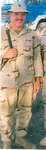
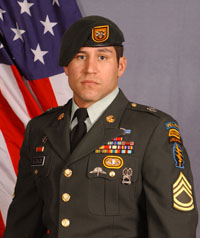
SSG Sal Giunta ~ Medal of Honor

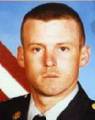
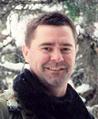
SSG Sal Giunta


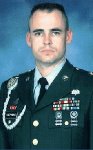
On November 16, 2010, Staff Sergeant Sal Giunta of the 173rd Airborne will become the first living Medal of Honor recipient since the Vietnam War. His actions occurred in Afghanistan's Korengal Valley duiring the deployment chronicled in the movie "Restrepo." This fourteen-minute video tells his story.


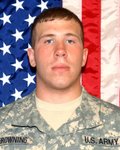
And, the man he rescued that day - SGT Joshua C Brennan - click here to read his story.


Later, SSG Giunta's citation will be posted on the

Thursday, January 28, 2010

Ambassador Kenneth D Taylor & the Canadian Caper ~ 30 years ago

January 27, 1980
Thirty years ago, Ambassador Kenneth D Taylor
got the six Americans hiding in the Canadian Embassy out of Iran
Americans were shocked that some of the Embassy personnel had escaped,
and extremely grateful to Canada.
For a period of time, the Maple Leaf was a common symbol in the US.

The Canadian ambassador to Iran, Ken Taylor, briefs reporters on the situation in the mist of the Iran's Revolution in Tehran, a week before leaving the country with six Americans on January 27, 1980. THE CANADIAN PRESS/Peter Bregg

Canadian Ambassador Kenneth D Taylor, gave sanctuary to the six Americans who were not in the US Embassy on the day of the takeover by the Iranian students on November 4, 1979. By November 10, three of the diplomats and two of their wives had made their way to the Canadian Embassy. A few weeks later, they were joined by another who had been sleeping on the floor of the Swedish Embassy.

Faced with the daunting task of hiding the Americans, the boldness continued when they decided to smuggle them out of Iran on Canadian passports. Canada's Parliament convened it's first secret session since World War II to give permission to issue Canadian passports for the six Americans. The CIA prepared a set of forged Iranian Visas to go with the passports. Disguises and cover stories were invented for a series of scenarios. They eventually used the Hollywood advance crew who were scouting locations for a movie.

On January 27, 1980, the American diplomats, now travelling on Canadian passports, boarded a flight for Zurich, Switzerland, leaving from Tehran. The Canadian embassy staff also left and closed the Embassy.

The six rescued Americans were:

  • Robert Anders, 34 - Consular Officer
  • Mark J. Lijek, 29 - Consular Officer
  • Cora A. Lijek, 25 - Consular Assistant
  • Henry L. Schatz, 31 - Agriculture Attaché
  • Joseph D. Stafford, 29 - Consular Officer
  • Kathleen F. Stafford, 28 - Consular Assistant

Ambassador Kenneth D Taylor was awarded
the Congressional Gold Medal
Approved on March 6, 1980


Friday, September 18, 2009

Medal of Honor ~ SFC Jared Monti


Sergeant First Class Jared C. Monti -

Medal of Honor Operation Enduring Freedom

Official Narrative

In June of 2006, the 3rd Squadron of the 71st Cavalry Regiment (Recon), 3rd Brigade Combat Team, 10th Mountain Division, prepared to execute Operation Gowardesh Thrust, a Squadron size operation in the Gremen Valley, Nuristan Province, Afghanistan.

The operation was designed to disrupt enemy operations in the Gremen Valley by denying the enemy freedom of movement and the use of critical staging areas near the border with Pakistan. The initial phase of the operation require

The operation was designed to disrupt enemy operations in the Gremen Valley by denying the enemy freedom of movement and the use of critical staging areas near the border with Pakistan. The initial phase of the operation required a 16-man patrol to infiltrate into the area of operations in advance of the Squadron’s main effort.

The patrol, consisting of snipers, forward observers and scouts, would maneuver north along a high ridgeline overlooking the Gremen Valley. From the high ground of the ridge, the patrol would provide real-time intelligence and help direct fires against enemy forces attempting to oppose the Squadron’s main effort.

On the evening of June 17, 2006, a convoy transported the patrol to a pre-established mortar firing position south of the village of Baz-Gal near the Gowardesh Bridge. The following morning, the patrol infiltrated on foot from the mortar firing position into their area of operation. For three days, the patrol moved north up the ridgeline through rugged mountain terrain. Due to the difficulty of the climb and temperatures near 100 degrees, the patrol moved mostly at night or in the early morning hours; stopping during the heat of the day to observe the valley below.

On June 20, 2006, the patrol leaders, Staff Sgt. Christopher M. Cunningham and Staff Sgt. Jared C. Monti, halted the patrol on the ridgeline of Mountain 2610, approximately 5 kilometers northwest of the village of Gowardesh. With an elevation of over 2600 meters, Mountain 2610 commanded a view of several enemy known areas of interest, including insurgent safe houses and the summer residence of Hadji Usman, an HIG commander, who was a vetted Combined Joint Task Force 76 insurgent target.

Staff Sgt. Cunningham and Staff Sgt. Monti selected a flat area on top of the ridge approximately 50 meters long and 20 meters wide, with a trail running along the eastern edge. At the southern end of the position, there were several large rocks, a portion of an old stone wall and a few small trees. The terrain sloped gradually upward to the north. At the northern end of the patrol’s position there was a line of dense vegetation composed of trees, heavy brush and smaller rocks. In between the large rocks to the south and the tree line to the north was a clearing approximately 40-50 meters in length. The terrain dropped off steeply on the eastern and western sides of the position. The rocks and trees around the position provided concealment and protection for the patrol as they observed the valley more than 1,000 meters below.

The patrol spent the night of June 20, 2006, observing from their position on Mountain 2610. The following morning the patrol was dangerously low on both food and water. A re-supply mission was scheduled for that day. The re-supply was originally coordinated to occur in conjunction with the Squadron’s main effort, which included a large air assault into the Gremen Valley. The heavy helicopter traffic associated with the air assault mission would have provided distraction for the re-supply; reducing the risk that the drop would compromise the patrol’s position. However, on the morning of June 21, 2006, Monti and Cunningham learned that the Squadron operation had been pushed back until June 24, 2006. The delay extended the patrol’s mission by several days, making re-supply critical; however, the absence of other aerial traffic increased the risk that the re-supply would compromise the patrol. Because of the critical shortage of water, it was determined that the re-supply would go forward as planned despite the risk of compromise.

The drop zone was located approximately 150 meters from the patrol’s position. Staff Sgt. Cunningham and Staff Sgt. Monti brought the majority of their patrol to the re-supply drop zone to provide security and to transport the supplies back to the patrol’s position. A smaller group remained at the observation position to provide security and to continue to survey the valley below. At approximately 1:30 in the afternoon, a UH-60 Black Hawk delivered food and water to the patrol. The patrol secured the supplies and began transporting them back to their observation position.

Spc. Max Noble, the patrol’s medic, was one of the Soldiers who remained at the observation position while the majority of the patrol picked up the re-supply. Spc. Noble was using a spotting scope to look down into the valley. Prior to the patrol’s return from the re-supply drop, Noble observed a local national male in the valley using military style binoculars to look up towards at the patrol’s position. Spc. Noble informed Cunningham and Monti as soon as they returned. They watched the man observing the patrol’s position for several minutes before he picked up a bag and walked away.

As dusk approached, the patrol established a security perimeter around their position and scheduled guard rotations. The patrol members then divided up the supplies and prepared for the night. Staff Sgt. Cunningham, Staff Sgt. Monti, and Sgt. John R. Hawes sat behind one of the large rocks at the southern end of the patrol’s position and discussing courses of action in the event that their position had likely been compromised. Pfc. Brian J. Bradbury, Pfc. Mark James, Pvt. Sean J. Smith, Spc. Matthew P. Chambers, Spc. Shawn M. Heistand, and Spc. Franklin L. Woods were at the northern end of the position, near the wood line. Sgt. Chris J. Grzecki, Spc. Noble, and Spc. John H. Garner were along the trail on the eastern edge of the position using spotting scopes to monitor the valley below.

At approximately, 6:45 in the evening, Spc. Woods heard the shuffling of feet in the wood line immediately to the north. Before he could react, the patrol’s position was hit by a barrage of rocket-propelled grenades (RPGs), medium machine gun (PK) fire, and small-arms fire from the wood line. An enemy force of approximately 50 fighters was moving in under cover from two support-by-fire positions above the patrol to the north and northwest. Members of the patrol could hear enemy fighters giving commands as they moved through the wood line at the northern end of the patrol’s position.

At the time of the attack, the six patrol members at the northern end of the patrol’s position immediately dove for cover as the enemy opened fire. The attack came so quickly and with such ferocity, that many of the patrol members at the northern end of the position were unable to maneuver to get to their weapons. Others had their weapons literally shot out of their hands by the intense fire.

Spc. Heistand and Pfc. Bradbury were both near the wood line when the enemy opened fire. Heistand was armed with an assault rifle and Bradbury was a Squad Automatic Weapon (SAW) gunner. Both hit the ground and began to return fire. However, they soon realized that their fire was drawing the enemies’ attention to their dangerously exposed position in the open area near the wood line. Spc. Heistand told Pfc. Bradbury that they had to fall back to the south where the large rocks would provide better cover. Spc. Heistand then jumped up and sprinted back towards the large rocks at the southern end of the position. Pfc. Bradbury was directly behind Spc. Heistand as they headed for the rocks, however, Pfc. Bradbury did not make it back to the rocks.

Pfc. James, Spc. Chambers, Spc. Woods, and Pvt. Smith were also in the area near the wood line when the enemy attacked. They also fell quickly back towards the large rocks to the south. Chambers, Woods, and Smith successfully made it to cover without injury; however, Pfc. James was hit by small arms fire in the back and wrist as he ran for cover to the south. Although wounded, Pfc. James was able to crawl back towards the rest of the patrol on the southern end of the position. As soon as he was close enough, other members of the patrol grabbed James and drug him to better cover behind the rocks. Spc. Chambers, who lost his weapon in the initial volley, then took Pfc. James to a safe position further back from the rocks and administered first aid.

From behind the rocks at the southern end of the patrol’s position, Staff Sgt. Monti, Staff Sgt. Cunningham, and Sgt. Hawes returned fire, attempting to cover for the patrol members falling back from the north. However, the intensity of the enemy small arms fire and frequent volleys of RPGs made it dangerous for the patrol members to expose themselves in order to accurately aim their return fire.

Sgt. Patrick L. Lybert was in a prone position beside the small stone wall which was slightly out in front of the larger rocks at the southern end of the patrol’s position. Although his position did not provide complete cover, it did provide the best vantage to place accurate fire on the enemy. From his position, Sgt. Lybert used aimed shots and controlled bursts to effectively slow the approaching enemy while other members of the patrol consolidated their position behind the rocks at the southern end of the position.

As the patrol fell back behind the large rocks, Staff Sgt. Cunningham and Staff Sgt. Monti took charge of the defense. They quickly set up a perimeter, posting Soldiers to guard potential approaches on their flanks. They directed return fire and cautioned their Soldiers to control their fires to conserve ammunition. Staff Sgt. Monti grabbed his radio handset and cleared the network to call for fire. He calmly informed headquarters that the patrol was under attack, heavily outnumbered, and at risk of being overrun.

Staff Sgt. Monti provided accurate grid coordinates of the enemy’s current positions and likely avenues of approach as RPGs skipped off of the rock above his head. Due to the proximity of the enemy forces, Staff Sgt. Monti’s call for fire was ‘danger close.’

While Monti was calling in the fire support mission, Staff Sgt. Cunningham moved along the rocks towards the eastern edge of the patrol’s position to take charge of the defense at that end of the position. Sgt. Hawes remained on the western side of the position to defend the western approach and to provide cover for Monti as he worked the radio calling for indirect fire. Sgt. Lybert was still out in front of the larger rocks returning fire from behind the stone wall. At some point, members of the patrol saw Lybert’s head slump forward and blood began to pour from his ears. Members of the patrol called out to Sgt. Lybert, but he did not respond. Spc. Noble, the patrol’s medic was on the western side of the position, near Sgt. Lybert, but was unable to get to Lybert to provide treatment due to the volume of enemy fire. However, Spc. Daniel B. Linnihan crawled out just far enough to grab Sgt. Lybert’s weapon and drag it back behind the rocks for use by the members of the patrol.

The enemy used support by fire positions to fix the patrol as they split into two groups to flank the patrol from the east and west. One group of approximately 15 fighters moved through the wood line towards the patrol’s western flank while a smaller group maneuvered across the trail to attempt to flank the eastern side of the position. The patrol members on either end of the position redirected their fires to protect their flanks. Patrol members with weapons traded off with unarmed members to ensure that the Soldier in the best position had a weapon to defeat the flanking maneuver. Pvt. Smith was along the trail on the eastern edge of the patrol’s position. From a covered position he killed several enemy fighters attempting to move up the trail to flank the patrol.

While still communicating with the Squadron headquarters, Staff Sgt. Monti periodically dropped the handset to engage the enemy with his rifle. At one point, he noticed a group of fighters closing in on the western flank and disrupted their attack with several bursts from his M-4. As the enemy closed within ten meters of the patrol’s defensive perimeter, Monti threw a grenade into their path. Although the grenade was inert, it’s presence disrupted the enemy advance and caused them to scatter and fall back, denying the enemy a position on the patrol’s flank. Staff Sgt. Monti then went back to the radio and continued to call for fire.

At this time, the initial volley of mortar fire began to fall on the advancing enemy, driving them back to a wood line north of the patrol’s position. The mortar firing position asked Staff Sgt. Monti to adjust the incoming rounds, however, the enemy fire from the wood line was so extreme that Monti was unable to even raise his head up to observe the incoming rounds.

As the enemy was driven back into the wood line, Staff Sgt. Monti and Staff Sgt. Cunningham took accountability of their Soldiers. They quickly realized that one Soldier, Pfc. Bradbury, was unaccounted for. Monti called for Bradbury several times and received no response. Finally, over the din of near constant enemy fire, they heard Pfc. Bradbury weakly reply that he was badly injured and unable to move.

Pfc. Bradbury, who was a SAW gunner on Staff Sgt. Monti’s team, lay severely wounded in a shallow depression approximately 20 meters in front of the patrol. The shallow depression prevented the patrol from actually seeing Bradbury, but it also protected him from enemy view. Other than the shallow depression, there was no other substantial cover near the wounded Soldier. The enemy in the wood line was as close as 30 meters on the other side of Pfc. Bradbury.

Staff Sgt. Monti recognized that Pfc. Bradbury was not only exposed to enemy fire, but also to the incoming indirect fire. He called out to Bradbury to reassure him that he would be alright and that they were coming to get him. Staff Sgt. Cunningham yelled across the rocks to Monti, that he would go for Pfc. Bradbury. However, Monti insisted that Bradbury was his Soldier and that he would go and get him.

Staff Sgt. Monti then handed the radio handset to Sgt. Grzecki and said, “you are now Chaos three-five,” which was Monti’s call sign. After tightening down his chin strap, Staff Sgt. Monti, without hesitation or concern for his own safety, moved out from behind the protection of the large rocks into the open, and into the face of enemy fire.

The wood line immediately erupted as dozens of enemy fighters focused their fire on Staff Sgt. Monti running towards his wounded Soldier. Patrol members reported hearing the distinct report of PK machine guns as soon as Monti left the protection of the rocks. Moving low and fast, Monti approached to within a few meters of Bradbury before heavy enemy fire forced him to move back and dive behind the small stone wall where Sgt. Lybert was located.

After pausing briefly to verify that Sgt. Lybert was dead, Staff Sgt. Monti again rose from his covered position and again moved out into a wall of enemy fire in his second attempt to save Pfc. Bradbury. This time, the fire was even more intense and Monti only made it a few steps before a volley of small arms fire and RPGs drove him back behind cover of the stone wall.

Unwilling to leave his Soldier wounded and exposed, Staff Sgt. Monti prepared to make a third attempt to get to the wounded Pfc. Bradbury. This time, Monti yelled back to the patrol members behind the rocks that he needed more cover fire. He coordinated with Sgt. Hawes to fire 40mm grenades from his M203 launcher onto the enemy position, while other members of the patrol would provide cover fire. Timing his movement to the sound of the exploding 40mm rounds, Staff Sgt. Monti, for a third time, rose from his covered position and moved into the open, knowing he again would be the focus of the enemy fire.

On his third attempt, Staff Sgt. Monti took several lunging steps through withering fire towards his wounded Soldier before an RPG exploded in his path. Before he could reach cover, Monti fell mortally wounded only a few meters from Pfc. Bradbury. Staff Sgt. Monti attempted to crawl back towards the stone wall, but was unable to move far due to the severity of his wounds. The patrol called out to Staff Sgt. Monti and tried to encourage him to remain conscious. Monti spoke briefly with the members of the patrol, telling them that he had made his peace with God. He then asked Staff Sgt. Cunningham to tell his parents that he loved them. Shortly thereafter, he fell silent.

By this time it was getting dark and the incoming mortar and howitzer rounds were falling with accuracy on the enemy position. Close air support was on station and the aviators dropped several 500lb bombs as well as two 2000lb bombs with direction from Sgt. Grzecki. The patrol members redoubled their efforts to beat back the superior enemy force. Under the weight of the accurate indirect fire, the enemy effort began to slacken.

As the enemy fire slowed, Sgt. Hawes low-crawled out from behind the rocks and made his way to Sgt. Lybert’s body. He took Sgt. Lybert’s ammunition and handed it back to one of the Soldiers fighting behind the rock. He then moved out to Staff Sgt. Monti’s body and confirmed that Monti had been killed while attempting to save Pfc. Bradbury. Sgt. Hawes took Monti’s weapon and ammunition and passed them back to the patrol.

Staff Sgt. Cunningham and Pfc. Smith then moved up along the trail to the east and made their way towards Pfc. Bradbury. They found Bradbury approximately 20 meters in front of the rocks. Pfc. Bradbury was alive, and although seriously wounded, he was able to communicate. Pfc. Bradbury reported that there were approximately 40 enemy fighters in the wooded area to the north. He was able to hear them talking and giving commands during the engagement.

It was completely dark by the time Staff Sgt. Cunningham brought Pfc. Bradbury back behind the rock so he could be treated by Spc. Noble.

The patrol remained in their position for the rest of the night. The next morning, they assessed the enemy position and found several blood trails and a bloody shoe, but no bodies. Later estimates put the enemy death toll at 15-20. The patrol moved on that day and made their way off of the mountain on foot.

Staff Sgt. Monti was posthumously promoted to Sergeant First Class on June 22, 2006.

Thursday, September 17, 2009

Medal of Honor Winner Honored by 10th Mountain Division


3rd Brigade Combat Team, 10th Mountain Division, Soldiers with 1st Battalion, 32nd Infantry Regiment and 3rd Squadron, 71st Cavalry Regiment stand at attention during the rededication of Combat Outpost Monti, Sept. 17, in Kunar province, Afghanistan. Soldiers remembered the life and times of Sgt. 1st Class Jared Monti as his family received the Medal of Honor posthumously in Washington, D.C.
Photo by U.S. Army Sgt. Brandon Selver, Task Force Chosin


By U.S. Army Sgt. Rob Frazier
5th Mobile Public Affairs Detachment

KUNAR PROVINCE, Afghanistan (Sept. 17) - Thursday morning, 3rd Brigade Combat Team, 10th Mountain Division Soldiers gathered to remember the life, sacrifice, and selfless service of Sgt. 1st Class Jared Monti at the Combat Outpost that bears his name.

“President John F. Kennedy once said, ‘a nation reveals itself not only by the men it produces but by the men it honors,’” said Chaplain Capt. Kevin Mucher, the chaplain for 1st Battalion, 32nd Infantry Regiment, of Ft. Drum, N.Y., at the beginning of the ceremony.

As a show of support and unity, Soldiers from Company C, 1st Battalion, 32nd Infantry Regiment and Troop B, 3rd Squadron, 71st Cavalry Regiment, sat in their red chairs, filling the gaps between the walkways, at the center of the compound, to rededicate the COP nestled in the mountains of Eastern Kunar province.

According to the command sergeant major of 1st Bn., 32nd Inf. Reg., Command Sgt. Maj. James Carabello, a Boston native, the ceremony was “only fitting…and the right thing to do” for the Raynham, Mass., Soldier.

At the White House, Monti’s family, along with Service Members, past and present from 3rd Sqd., 71st Cav. Reg., were on-hand for another assembly as President Barack Obama posthumously bestowed the highest award for military valor to Monti’s family, the Medal of Honor.

“We honor him by continuing the fight and believing in the same things he believed in,” said the executive officer of 1st Bn., 32nd Inf. Reg., Maj. Pete Granger, who served as the Master of Ceremony for the tribute at COP Monti.

Those things, according to the Canandaigua, N.Y., Soldier, were, “his Soldiers, his friends, his family and his country.”
Monti’s name will forever be linked with the bravest of America’s Service Members including: Pfc. Jacob Parrot, the initial recipient in 1863, Dr. Mary Walker, the only woman to receive this honor; 1st Lt. Audie Murphy, the most decorated Soldier of WWII and Spc. Ross McGuiness, who was enshrined last year by President George W. Bush.

Monti is the sixth Soldier since 2001 to receive the Medal of Honor as a result of his actions displayed, while in support of the Global War on Terrorism encompassing both Iraq and Afghanistan.

“June 21, 2006, Sergeant First Class Monti, other forward observers and snipers were engaged in a firefight in the mountains near Gowardesh,” stated Staff Sgt. Matthew Wolfhanger, as he recounted the events of that evening. “We listened as Chaos3-5 (Monti’s call sign) called round after round on a seemingly endless enemy.”

According to several Soldiers who served with Monti, they state that in between calling for fire and directing his troops, Monti made the decision to retrieve Pfc. Brian Bradbury, who had been hit. After several attempts, Monti was mortally wounded when a rocket propelled grenade landed near him.

“When the team returned, they gave us the rest of the details of what had happened that night,” continued the Branchville, N.J. Soldier. “Sergeant First Class Monti had not only devastated the enemy with a mix of coolness and precision, but he had also made the ultimate sacrifice. He had given his life to save one of his own.”

1st Sgt. James Reese, who served as a Battle NCO with Headquarters, Headquarters Troop, 3-71 CAV, the night Monti died, said after three years the feeling of losing a Soldier never gets any easier, but he is comforted by the personal and professional memories he has of Monti.

“He was a Soldier’s Soldier,” added the Monroe, Wi. Soldier. “He epitomized what a noncommissioned officer should be, and he took great pride in training his troops and commanded respect from others.”

Granger implored his troops to remember that the actions of Monti went far beyond one firefight mission on June 21, 2006, and his enshrinement as a Medal of Honor recipient serves as a final tribute to a person who was always held in the highest regards by the men and women he served with.

“Please remember him as a hero for everyday he served his country and for how he lived his life,” added Granger. “There can be no higher recognition bestowed on any of us than to be remembered as a person of honor, a selfless leader, devoted son and dedicated friend.”

****************
SFC Jared Monti's parents will be awarded his Medal of Honor today at the White House
Tomorrow he will be inducted into the Hall of Honor at the Pentagon

Saturday, August 01, 2009

Year of the NCO ~ 1SG Troy Steward


1st Sergeant Troy Steward

1st Sgt. Troy Steward

Age: 40
Current Unit: 2nd Squadron, 101st Cavalry Regiment, 27th Brigade Combat Team
Current Position: Senior Infantry NCO
Component: New York National Guard
Current Location: Buffalo, N.Y.
Hometown: Amherst, N.Y.
Years of Service: 21

The annual celebration of the Army's Birthday brings about a reflection on the traditions and legacy of service to country. One of the proudest traditions the Army can recognize, is the generations of families that have volunteered to serve over its 234 years. 1st Sgt. Troy Steward is one generation of a family that has answered their call to duty repeatedly.

A 21-year veteran of the Army, Steward is the son of a Green Beret who served three tours in Vietnam. After high school, Steward followed in his father's footsteps and enlisted in the Army. Now an NCO just as his father was, Steward takes his role as a mentor and leader seriously. His example was so strong, that after 9/11, his son, John Aisel, signed up to serve in the same unit of the National Guard as his father, thus adding another chapter to the Steward's legacy of service. The family's call to duty has put each of them in harm's way whether it be in Vietnam, Afghanistan or Iraq, but the common experiences have ultimately strengthened them as a family.

During his own deployment to Afghanistan from May 2006-2007, Steward led a 15-person team of Soldiers embedded with an Afghan battalion. He was responsible for mentoring the Afghan troops and conducting in combat operations. On September 9, 2006, a day which Steward has nicknamed his "Alive Day," an improvised explosive device (IED) went off approximately 25 feet behind his truck, and killed several other American and Afghan troops in his unit. Steward, who later learned that he was the insurgents' target that day, says that it was hard to lose his fellow Soldiers, regardless of their nationality. He had trained and mentored those men, and the loss was personal. For his meritorious service and involvement in more than 100 missions during his year-long deployment, Steward was awarded the Bronze Star Medal.

For Steward, his journey as an NCO and Soldier has been well worth the ride. Even though he has been approached on multiple occasions to attend Officer Candidate School, he says he prefers to be an NCO.

"Being a Noncommissioned Officer means that I have the best job in the military," Steward says. "I have the chance to work closely with younger enlisted Soldiers and mold them into future leaders."

A leader on the battlefield and in his home, Steward never pressured his sons about joining the Army, but was proud his eldest chose to follow in his father's and grandfather's footsteps. Although they never deployed together, Steward still mentored and prepared his son for his deployment. When Steward returned home from Afghanistan in the summer of 2007, he was able to pass on first-hand knowledge to his son, who was preparing to deploy in January 2008. The day before Aisel deployed, Steward was able to pin sergeant stripes on his son thus adding another generation of NCOs to their family line. After six years in the Army, including a year-long deployment, Aisel completed his service and is now pursuing a college degree.

Steward and his wife, Christine, currently reside in Buffalo, N.Y., where they live with their three younger sons. She is a leader with the New York National Guard's Family Readiness Group. As a civilian, Steward works for an information technology company working to prevent identity theft, and plans to retire from the Army in the fall of 2009.

From the Army site: http://www.army.mil/-news/2009/07/31/25301-year-of-the-noncommissioned-officer---spotlight-nco/?ref=home-spot3-title

**********************
I had the wonderful opportunity to be one of the many supporters Troy had while in Afghanistan. We were penpals and sent pancake mix and spices and 'cookables', as his unit was mostly on their own. I am proud to know Troy!

Troy has a wonderful blog www.bouhammer.com - and, it is the place for current news and analysis on Afghanistan.

Thursday, July 30, 2009

Gen Petraeus Visits the USS Bainbridge

USS Bainbridge
Navy photo released


Army Gen. David H. Petraeus, commander of U.S. Central Command, addresses sailors aboard USS Bainbridge while the ship was in port in Manama, Bahrain, July 27, 2009. Petraeus thanked sailors for their hard work while deployed to U.S. 5th Fleet as well as their role in the successful rescue of Richard Phillips, the Maersk Alabama captain held captive by Somali pirates for five days in April.
U.S. Navy photo by Petty Officer 2nd Class Nathan Schaeffer


Petraeus Visits Sailors, Awards Maersk Rescuers

By Navy Petty Officer 2nd Class Nathan Schaeffer
Special to American Forces Press Service

MANAMA, Bahrain, July 27, 2009 – The head of U.S. Central Command visited the guided-missile destroyer USS Bainbridge while in port here today to thank sailors for their work while deployed to U.S. 5th Fleet, as well as for their role in the rescue of Richard Phillips, the Maersk Alabama cargo ship captain held captive by Somali pirates.

Army Gen. David H. Petraeus held an all-hands call with Bainbridge's sailors and presented awards to three sailors for rescuing Phillips after he was held by pirates for five days in April.

"The eyes of the world were upon you that Easter weekend," Petraeus said. "You played important roles and should be proud of what you did. In moments of danger and decision during the rescue of Captain Phillips, you did what you were trained to do. You remembered your skills. You did your duty. You stood your watch. And you brought Captain Phillips home alive."

Petraeus presented Senior Chief Joel Steinbach with the Meritorious Service Medal, and Petty Officers 2nd Class Matthew Olin and Joshua Waters with the Navy and Marine Corps Commendation Medal for their exemplary service during the rescue.

Steinbach served as the chief negotiator and liaison between the FBI's Critical Incident Response Group/Crisis Negotiation Unit and the pirates holding Phillips.

"I am honored to be recognized with this award and to receive it from General Petraeus," Steinbach said. "However, the credit for the rescue of Captain Phillips belongs to all the sailors who took part in the successful operation."

Olin and Waters led a boat crew in the covert recovery of U.S. Navy SEALs, served as coxswain as their boats approached the pirate lifeboat holding Phillips despite coming under hostile fire on the initial approach, and navigated their boats alongside the lifeboat to direct negotiations for the release and subsequent rescue of Phillips.

"I am proud that I was part of this mission and that I made a difference," Olin said. "I am proud of all the sailors involved who not only risked their lives, but brought honor upon our ship."

Bainbridge Commanding Officer Cmdr. Frank X. Castellano said it was an honor to host Petraeus. He praised his crew for their role in the rescue and counter-piracy operations.

"The success of Captain Phillips' rescue belongs not to a single commander or a team of SEALs," Castellano said. "Those few days belong to everyone involved -- officers and enlisted, not on one ship, but several – who diligently stood their watch. It belongs to the many."

(Navy Petty Officer 2nd Class Nathan Schaeffer serves in U.S. Naval Forces Central Command.)


Previous Stories:
USS Bainbridge
Captain Phillips and the Pirates

Sunday, June 28, 2009

Farewell Marine Corps Col Kenneth Reusser


Retired Marine Corps Col. Kenneth L. Reusser
January 20, 1927 - June 20, 2009

Veteran of WWII, Korea, Vietnam
Considered the most decorated Marine Aviator in history


Retired Marine Corps Col. Kenneth L. Reusser has passed away and been laid to rest in the Willamette National Cemetery in Portland, Oregon. The Patriot Guard Riders were there to honor him -

Reusser was called the most decorated Marine aviator in history and was shot down in three wars in the Pacific theater - World War II, Korea and Vietnam. Colonel Ken Reusser's distinguished combat record:
-flew 253 combat missions in World War II, Korea and Vietnam and was shot down in all three, five times in all.
-59 medals included two Navy Crosses, five Purple Hearts and two Legions of Merit.

Ken Reusser enlisted in the U.S. Naval Reserve as a seaman recruit on August 23, 1941, and entered flight training. In April 1942, he completed flight training, was commissioned a 2nd Lieutenant, and in May 1942 left for the Southwest Pacific. Upon arrival at Guadalcanal, was assigned to VMF-122, flying the F4F-3. On his first combat mission, he was credited with a probable kill of a Mitsubishi "Betty." In October of that year, he was injured during a ditching and spent 6 months in a hospital.

Ken returned to the Pacific in 1944 flying F4U's from USS Hollandia, (CVE 97) off Okinawa. He led a flight of Corsairs intending to shoot down a Japanese KI-45 "Nick" high-altitude photo reconnaissance airplane gathering information for the day's Kamikaze flights. With altitude frozen guns, the only weapon left was the Corsair itself. Ken and his wingman severely damaged the tail of the KI-45 with their propellers. It entered a graveyard spiral, breaking up before hitting the water. Ken and his wingman shared the kill. Each was awarded the Navy Cross.

In 1950, Ken found himself again in combat, flying F4U's from USS Sicily, (CVE 118). He was awarded a second Navy Cross for making two very low-level passes down a street to identify, through a building's windows, what was hidden inside. He then led a flight back, destroying the target. Exiting the area, with only 20mm guns remaining, he made a firing pass on a ship moored to a camouflaged pier. Loaded with fuel, the ship exploded, flipping the Corsair inverted. After righting the airplane, Ken returned to USS Sicily where the severely crippled F4U was pushed over the side for being too damaged to repair.

During the Vietnam War, Reusser flew helicopters. He was leading a Marine Air Group in a rescue mission, when his own "Huey" was shot down. He needed skin grafts over 35 percent of his badly burned body. He retired from the Marine Corps in July 1968 due to his combat wounds.

Reusser raced motorcycles to help pay for college and earning a pilots license before World War II. After retiring from the Marine Corps, he worked for Lockheed Aircraft and the Piasecki Helicopter Corp. He remained active in veterans groups.

Reusser is survived by his wife, Trudy; and sons, Richard C. and Kenneth L. Jr.


UPDATE:
To view the photos of his service at Willamette Cemetery go here:
http://www.wwiiwarheroes.org/kenneth_reusser/index.htm
Thank you, Q.

To read Q's story of how we don't remember our heroes and the service for this hero:
http://blogs.myspace.com/index.cfm?fuseaction=blog.view&friendId=16565528&blogId=497180920

Wednesday, June 10, 2009

Wednesday Hero ~ Petty Officer 2nd Class Marc A Lee

Aviation Ordnanceman 2nd Class (SEAL) Marc A. Lee
28 years old from Hood River, Oregon
Navy SEAL
August 2, 2006
U.S. Navy

"Marc was amazing. He was my best friend, my love," his widow, Maya, said.

Petty Officer Marc A. Lee joined the Navy in 2001 and became an AO after completing Naval Air Technical Training. Later that year he attempted to complete the grueling BUD/S program but caught pneumonia and had to drop out. He tried again in 2004 and completed the course. He joined a SEAL team and deployed in 2005

On August 2, 2006, Marc A. Lee became the first SEAL to be killed in combat in Iraq when he was fatally wounded in a firefight in Ramadi, Iraq. The following is from the award citation for the Silver Star he received postumously:

"During the operation, one element member was wounded by enemy fire. The element completed the casualty evacuation, regrouped and returned onto the battlefield to continue the fight. Petty Officer Lee and his SEAL element maneuvered to assault an unidentified enemy position. He, his teammates, Bradley Fighting Vehicles and Abrams tanks engaged enemy positions with suppressive fire from an adjacent building to the north.

"To protect the lives of his teammates, he fearlessly exposed himself to direct enemy fire by engaging the enemy with his machine gun and was mortally wounded in the engagement. His brave actions in the line of fire saved the lives of many of his teammates"

"It was so like Marc to give up his life to save his friends," his mother, Debbie Lee, told the Hood River News. "I am so proud of him. He is my hero."

Petty Officer Lee was posthumously awarded a Silver Star and Bronze Star with combat "V" for his actions in Iraq during his team’s combat tour and the Purple Heart medal.


Source: MilitaryCity.com

These brave men and women sacrifice so much in their lives
so that others may enjoy the freedoms we get to enjoy everyday.
For that, I am proud to call them Hero.

This post is part of the Wednesday Hero Blogroll. For more information about Wednesday Hero, or if you would like to post it on your site, you can go here.
Wednesday Hero Logo

Editors Note:
PO2 Marc A Lee was from my state of Oregon. His loss affected all of us very deeply. My previous pieces on Marc are here:

Farewell, Marc Lee - http://gazingattheflag.blogspot.com/2006/08/farewell-mark-lee.html

Memorial for Marc Lee - http://gazingattheflag.blogspot.com/2006/08/memorial-for-navy-seal-mark-lee.html

A piece on his service and the protesters who didn't get to spoil it is here and the video is very moving - http://www.salem-news.com/articles/august272006/hatemongers_82706.php

And, finally, his Mom, Debbie Lee, who has been a public face and constant advocate for our troops - http://gazingattheflag.blogspot.com/2008/02/gold-star-mom-standing-up-for-troops.html

Friday, April 17, 2009

Medal of Honor Recipients Visit Soldiers in Baghdad

Medal of Honor recipients retired Army Command Sgt. Maj. Gary Littrell, left, and retired Army Col. Robert Howard, center, sign and hand out copies of their award citations to soldiers serving in Multinational Division Baghdad with the 1st Infantry Division's 2nd Heavy Brigade Combat Team on Camp Liberty, Iraq, April 14, 2009.
Army Command Sgt. Maj. Donald Battle, who serves in Multinational Division Baghdad as senior enlisted advisor for the 1st Infantry Division's 2nd Heavy Brigade Combat Team, introduces Medal of Honor recipients retired Army Col. Robert Howard, center, and retired Army Command Sgt. Maj. Gary Littrell to the brigade's soldiers on Camp Liberty, Iraq, April 14, 2009.

Medal of Honor Recipients Visit Soldiers in Baghdad

By Army Sgt. Dustin Roberts
Special to American Forces Press Service

BAGHDAD, April 15, 2009 - Two Vietnam War veterans who survived combat and who received the Medal of Honor visited soldiers serving in Multinational Division Baghdad here with the 1st Infantry Division's 2nd Heavy Brigade Combat Team at Warrior Chapel on Camp Liberty yesterday.

Retired Army Col. Robert Howard and retired Army Command Sgt. Maj. Gary Littrell spoke to the "Dagger Brigade" soldiers about keeping morale high while maintaining a sense of urgency, and they took the opportunity to answer questions from the soldiers.

"We try to visit soldiers here and in Afghanistan every April," said Littrell, who spent four days on a hill in Vietnam fighting enemy mortar and small-arms fire. "It's very important that we visit the men and women who are preserving the same freedom we preserved many years ago."

Littrell and Howard -- who also earned the Distinguished Service Cross, Silver Star and eight Purple Hearts for his actions in Vietnam -- gave words of encouragement and advice during their visit.

"Many of you have family at home, and because of the technology today, keep them informed and tell them how you are doing," Howard said. "This is good for everyone's morale, and it will help you focus on the mission."

The two recipients of the nation's highest award for conspicuous gallantry in battle took turns speaking to the troops, emphasizing that commitment to mission accomplishment is what motivates leaders to get the job done.

"After reading my citation, I felt that I did deserve the Medal of Honor," Littrell said. "At the time, all I was thinking was I was a noncommissioned officer in the United States Army with a job to do and soldiers to take care of."

Littrell told the soldiers that if they were placed in the same predicament, they would have the same level of integrity and courage to put total effort into the fight, no matter how long it took.

"You are fine young men and women who have outstanding tools and leadership," he said. "We are behind you all the way, and as long as we are able to make the trip, we will continue to visit the servicemembers in Iraq and Afghanistan."

When the time came for soldiers to ask the veterans questions, Army Staff Sgt. Andres Redondo, a native of Overland Park, Kan., asked how they stayed motivated and motivated their soldiers during the time they spent thousands of miles away from their families.

"We had no choice but to stay motivated as leaders," Howard said. "As for our soldiers, we reminded them that God and country came before our needs."

Littrell added that today's Army has more resources in quality of life, weapons systems and medical care to meet the needs of soldiers than were available in the Vietnam War era.

Greenville, N.C., native Army Command Sgt. Maj. Donald Battle, the brigade's senior enlisted advisor, introduced the soldiers' guests and thanked them for sharing their knowledge and support with the Dagger soldiers.

"It's because of Americans like Colonel Howard and Command Sergeant Major Littrell that we can still serve in America's Army," Battle said. "They are heroes, and we owe them great respect and thanks for coming to visit us."

(Photos and Story by Army Sgt. Dustin Roberts, Multinational Division Baghdad with the 1st Infantry Division's 2nd Heavy Brigade Combat Team.)

Monday, April 06, 2009

Farewell & Walk with God, SSG Phillip Myers


Staff Sgt. Phillip Myers, from the 48th Civil Engineer Squadron at Royal Air Force Lakenheath, England, shown above receiving the Bronze Star Medal from Lt. Gen. Robert D. Bishop, 3rd Air Force commander, on March 19, 2008.
U.S. Air Force photo/Airman Perry Aston


Servicemembers and civilians deployed to International Security Assistance Force Regional Command-South gathered to pay final respects to a fallen Airman April 6 in the base chapel of Kandahar Airfield, Afghanistan. Staff Sgt. Phillip A. Myers, 30, was killed April 3 by an improvised explosive device while conducting military operations with the 755th Air Expeditionary Group Explosive Ordinance Disposal Operational Location Bravo near Musa Qal'eh in the Helmand Province of southern Afghanistan.

Those gathered at the service remembered Sergeant Myers for his humility as a leader. Capt. Robert Scott, the 755th AEG/EOD OL-B officer in charge, reflected on the former EOD team leader describing him as a "shining example of selfless leadership and heroism." "He was a man who took great care to educate team members," he said. "The impression he left people with was awe and he personified excellence and took great pride in his team's successes."

Sergeant Myers, who hailed from Hopewell, Va., was deployed from the 48th EOD Flight at Royal Air Force Lakenheath, England. He was the recipient of the 2008 U.S. Air Force Lupia Civil Engineer NCO of the Year Award and was awarded a Bronze Star in 2008.

(Personal information about SSG Myers is scarce at this time. I will continue to look for it.)

Wednesday, April 01, 2009

Wednesday Hero ~ A Distinguished Unit

Heroes


Maj. Gen. William B. Garrett III, commander of U.S. Army Africa, speaks with Spc. Jeffrey Scantlin, 24, of Anchorage, Alaska, after presenting him with the Silver Star during a March 20 ceremony at Caserma Ederle, Vicenza, Italy. Also pictured, from left, are Sgt. 1st Class Erich Phillips and Sgt. John Hayes, who also earned ther Silver Star. 1st Lt. Aaron Thurman, right, recieved the Bronze Star Medal for valor. The Soldiers were among six paratroopers from 2nd Platoon, Chosen Company, 2nd Battalion, 503rd Infantry Regiment, awarded the medals for combat actions in Wanat, Afghanistan, on July 13, 2008.


VICENZA, Italy - In the early morning hours of July 13, 2008, Soldiers from Chosen Company, 2nd Battalion, 503rd Infantry Regiment were not thinking about medals as they fought off roughly 200 insurgents attacking their vehicle patrol base in Afghanistan.


No Soldier in combat does.


The Army, however, takes pause afterward to honor those who distinguish themselves in battle and recognizes them before their peers.


Six Soldiers from 2nd Platoon, Chosen Company received medals of valor for combat actions that morning in Wanat, a village in northeast Afghanistan. Nine of their comrades lost their lives during the fight.


Maj. Gen. William B. Garrett III, commander of U.S. Army Africa, presented medals to the Soldiers during a March 20 ceremony held at Caserma Ederle.


Receiving the Silver Star was bittersweet, said Spc. Jeffrey Scantlin, 24, of Anchorage, Alaska. "It's a big deal. But brings back a lot of memories of people who should be here, but aren't," Scantlin said. "For me the medal is more of a group achievement, something I wear to remind me of those who didn't come back."


The Silver Star Medal was also presented to Sgt. 1st Class Erich Phillips and Sgt. John Hayes.


Bronze Star Medals with "V" device for valor were awarded to 1st Lt. Aaron Thurman, Sgt. Hector Chavez and Spc. Tyler Hanson.


As the ceremony began, the 173rd Airborne Brigade Combat Team stood silent to remember those who died. Then, Garrett spoke about the bravery Soldiers displayed during the battle.


"Their courage under fire, valor, and loyalty to each other was absolutely astounding," Garrett said.


The platoon was near the end of a long deployment to Afghanistan, enduring many firefights along the way. Yet, when faced with enemy fire near Wanat, outnumbered and in some cases wounded, these paratroopers fought desperately for each other, overcoming fear and willingly risking their lives to save others.


"Incredible acts of courage and valor were commonplace on the battlefield that day," Garrett said. "Today, we recognize these six Soldiers for their courage - and we are thankful for the opportunity to serve with such men."


Garrett stepped forward and orders were read detailing each of their actions. The six paratroopers paused for photos, the bright ribbons and shining stars standing out against their gray digital fatigues.


In that quiet moment, each Soldier felt mixed emotions. Rows of paratroopers in maroon berets stood before them -many who have their own combat experiences from Afghanistan.


Scantlin, like most of those awarded, knew they had been put in for a medal. Some knew that same day. But it meant little to them at the time, still reeling from the combat they had endured. "We just lost nine guys - everyone was still in shock, it was surreal. It still is," Scantlin said. "The guys that died there were my friends."


These brave men and women sacrifice so much in their lives
so that others may enjoy the freedoms we get to enjoy everyday.
For that, I am proud to call them Hero.

This post is part of the Wednesday Hero Blogroll. For more information about Wednesday Hero, or if you would like to post it on your site, you can go here.

Wednesday Hero Logo

Saturday, March 14, 2009

Face of Freedom ~ SPC Sixto Garcia


On Feb. 23, 2009, Spc. Sixto Garcia was awarded the Bronze Star with “V” device for actions in Anbar province, Iraq, March 23, 2007.

Spc. Garcia provided overwatch with his M240B machine gun as his unit secured a village. The unit’s routine was disrupted when a vehicle-borne Improvised Explosive Device (IED) raced toward them. Spc. Garcia immediately engaged and hit the vehicle, causing it to veer off the road and detonate just short of the unit. Next, a series of IEDs exploded in succession that knocked Spc. Garcia from his position to the ground. Regaining his senses, he set his M240 back up and re-engaged. His steady contact with the enemy enabled his unit to re-group and evacuate the wounded to safety. Spc. Garcia’s role in the fight contributed to no loss of American lives.

Maj. Gen. Anthony Cucolo, commander of the 3rd Infantry Division commented on Spc. Garcia’s “incredible calm under fire and presence of mind to report everything that was happening to his non-commissioned officer in charge.”

Friday, March 06, 2009

Face of Freedom ~ SSG Jeffrey Moe

Staff Sgt. Jeffrey D. Moe, 2nd Bn., 10th Special Forces Group (Airborne) is awarded the Bronze Star with Valor Device on Feb. 20. Moe heroically distinguished himself by exceptionally valorous conduct in the face of insurgents June 3, 2007 in Diwaniyah, Iraq.
Photo by SSG Michael R. Noggle


On Feb. 20, 2009, Staff Sgt. Jeffrey Moe, 2nd Bn., 10th Special Forces Group (Airborne), was awarded the Bronze Star with Valor device for actions in Diwaniyah, Iraq, June 3, 2007.

Staff Sgt. Moe was supporting a Special Forces Operational Detachment (ODA) and soldiers from 8th Iraqi Army when they came up against mounted resistance of at least 100 insurgents. He reacted first by securing his ground and denying the enemy from advancing in his sector. During the firefight, a sniper team advanced from the ODA’s forward line to destroy enemy fire positions. The insurgents enveloped the team and severely wounded one of the snipers. Realizing the team’s immobility, Staff Sgt. Moe stepped from protected cover and laid suppressive fire on the enemy positions. Despite taking an enemy round in his leg, he continued to place effective fire on the enemy until the sniper team moved to save cover.

Thursday, March 05, 2009

Face of Freedom ~ Chris Jackson

Marine Maj. Gen. Paul Lefebvre, deputy commanding general, Multi-National Corps-Iraq, awarded cameraman Chris Jackson with the Department of the Navy Distinguished Public Service Award

Chris Jackson, a network cameraman, and Marines from Multi-National Force and Corps-Iraq pose for a group picture at an awards ceremony Jan. 24. Jackson was awarded the Department of the Navy Distinguished Public Service Award for pulling a Marine from a burning vehicle in Afghanistan Aug. 3, 2008.

When told in front of the crowd of digital cameras why he was invited to Al Faw Palace, Jackson blushed. “It goes to show that Marines have a good sense of humor,” he said. “I was told I was coming here for a briefing.”

By Staff Sgt. Joy Pariante
13th Public Affairs Detachment

CAMP VICTORY, Iraq - On Aug. 3, 2003, while traveling the dangerous roads of Afghanistan, a cameraman working for Fox News risked his life to save a U.S. Marine from a vehicle engulfed in flames.

While embedded with 2nd Platoon, Weapons Company, 1st Battalion, 6th Marines, cameraman Chris Jackson’s vehicle hit 50 pounds of homemade explosives. The Humvee occupants escaped the flaming vehicle, all but the vehicle commander, Sgt. Courtney Rauch.

The blast severely injured Rauch and knocked him unconscious. Jackson, despite having received shrapnel wounds himself, rushed back to the vehicle, pulled Rauch out and carried him to safety. “Without Chris’ quick thinking and heroic act, I would have lost my life that day,” Rauch said. “Chris forgot about being a reporter that day and became one of our bothers and acted as one of us. Chris went above and beyond his duty.”

Jackson, who now works for CNN/Turner Broadcasting, was presented the Department of the Navy Distinguished Public Service Award, the second highest award given to civilians by the Navy, for his actions. Jackson received the award during a stop in Iraq en route to India. An audience of appreciative Marines was on hand during the ceremony.

Marine Maj. Gen. Paul Lefebvre, deputy commanding general, Multi-National Corps – Iraq, has a son in the very same company with which Jackson was traveling. Lefebvre, who presented the award on behalf of the Navy, asked his son if all the wonderful things being said about Jackson were true. “I asked him ‘is this the real thing’ and he said ‘yeah dad, this guy’s a hero’,” Lefebvre said. “This was not an everyday action. It came from somewhere deep inside and shows such a level of courage and commitment.”

When told in front of the crowd of digital cameras why he was invited to Al Faw Palace, Jackson blushed. “It goes to show that Marines have a good sense of humor,” he said. “I was told I was coming here for a briefing.”

Jackson, who has been out with service members in combat zones since 2001, said he didn’t think twice about risking his own life to save someone else’s. “I wasn’t thinking. I saw there was trouble and I didn’t even think about grabbing a camera and filming it,” Jackson said. “I just did what anyone else would do if someone was in trouble.”


Wednesday, February 25, 2009

Wednesday Hero ~ SPC Ross McGinnis

Spc. Ross A. McGinnis
19 years old from Knox, Pennsylvania
1st Battalion, 26th Infantry Regiment, 2nd Brigade Combat Team, 1st Infantry Division
December 4, 2006
U.S. Army

His mission was to patrol the streets of Adhamiyah in northeast Baghdad and find a place to put a 250-kilowatt generator that would provide electricity for more than 100 homes. But it's a mission he wasn't able to accomplish.

Shortly after Pfc. McGinnis's convoy left the compound, and less than a mile from FOB Apache, an insurgent standing on a nearby rooftop threw a grenade into the sixth, and last, Humvee. "Grenade!" yelled McGinnis, who was manning the vehicle's M2 .50-caliber machine gun. He tried to deflect the grenade but it fell into the Humvee and lodged between the radios.

"McGinnis turned and looked down and realized no one in the truck knew where the grenade was," said Capt. Michael Baka, his company commander. "He knew everyone had their doors combat-locked and they wouldn't be able to get out."

Instead of jumping out of the truck to save his own life, like he had been trained to do, McGinnis threw his back against the radio mount, smothering the explosive with his body. The grenade exploded just as Pfc. McGinnis covered it. The blast filled the vehicle with black smoke and debris and blew the driver's door and right passenger's door wide open and blew the machine gun off its mount. The explosion hit McGinnis on his sides and his lower back, under his vest. He was killed instantly.

The other four soldiers in the Humvee suffered relatively minor injuries.

On the morning of December 4, 2006, before his convoy had left, Cpt. Baka has signed a waver promoting Pfc. McGinnis to Specialist and he was posthumously promoted to E-4.

For his heroic actions on that day, McGinnis was awarded the Silver Star and was nominated for a Medal of Honor which he received on June 2, 2008.


From MilitaryCity.com


These brave men and women sacrifice so much in their lives
so that others may enjoy the freedoms we get to enjoy everyday.
For that, I am proud to call them Hero.

This post is part of the Wednesday Hero Blogroll. For more information about Wednesday Hero, or if you would like to post it on your site, you can go here.

Wednesday Hero Logo
To read more about Spc McGinnis go to
http://www.arlingtoncemetery.net/ramcginnis.htm
Scroll down to see his pictures in Iraq - to see the faces of heroes...

Wednesday, September 17, 2008

Face of Freedom ~ LCpl Ben Gonzalez


Lance Corporal Ben Gonzalez

Lance Cpl. Benjamin Gonzalez said he wants to start wearing shorts in public this summer, something he won’t do until he’s tattooed.

So what does he want to write on his leg?

“Freedom isn’t free.”

Perhaps even a picture of the Silver Star he was awarded March 25 during a ceremony in his hometown of El Paso, Texas.

“I don’t like to show off so much, but that’s something I would like people to see,” Gonzalez said.

This way, he said, he won’t have to explain his disfigured, scarred legs to anyone or worry about being mistaken for the victim of a simple motorcycle wreck when the truth is so much more extraordinary.

Gonzalez and the rest of Fox Company, 2nd Battalion, 1st Marines, had been moving through Fallujah, Iraq, the night before taking up a position on a bridge at the northern edge of the city the morning of June 18, 2004.

From the position he shared with three other Marines along the road, Gonzalez kept watch over pedestrians until around 9:30 a.m.

“I got off post and I was actually going to go to rest and check on all my gear, and that’s pretty much when it happened,” Gonzalez said.

Gonzalez remembers the sound of the insurgent releasing the spoon of the old, pineapple-style grenade and the “clink” the grenade made when it hit the ground in his fighting hole.

“Unhesitatingly and with total disregard for his own personal safety, Lance Corporal Gonzalez threw himself on his fellow Marine, shielding him from the blast,” according to his award citation. But that’s not exactly how Gonzalez describes it.

Gonzalez said he was actually about to jump away from the grenade when he saw his fire team leader “sitting there without a clue.” He said he didn’t exactly “throw himself” on his team leader.

“I can’t really remember much of those details, but I guess I hugged him,” Gonzalez said.

When the grenade detonated, the team leader was unharmed, but Gonzalez, who absorbed the blast, was riddled with shrapnel. “I got burned. It broke both of my legs and broke and fractured other parts. It messed up my nerves really bad. I have permanent trauma. I can’t feel my feet or move my ankles. I have shrapnel in my stomach, too,” Gonzalez said.

“This must have been the crappiest grenade ever made because we were all really close. The detonation was one to two feet away from my legs. If it was one of ours, it would have taken us all out.”

Gonzalez was still conscious after the blast. A corpsman gave him general anesthetic, and he was medically evacuated.

“I was told I had gone through Germany for a day and a half, but I woke up in Bethesda and thought I was still in Iraq,” said Gonzalez, referring to the National Naval Medical Center north of Washington, D.C.

Gonzalez, who is on temporary retirement and can rejoin the Corps after he heals, has not regained full mobility or feeling in his feet and legs.

But he was able to stand in formation as his Silver Star was pinned to his suit jacket by Capt. William Zirkle, who, as a first lieutenant, was Gonzalez’s commanding officer at the time of the attack.

April 10, 2006
Marine caught in grenade blast gets Silver Star
By John Hoellwarth
Times staff writer
As posted on the Vets for Freedom site

*************************
For more about LCpl Ben Gonzalez:
http://www.signonsandiego.com/news/military/homeofthebrave/20061110-9999-val-gonzalez.html

http://www.stripes.com/article.asp?section=104&article=36933&archive=true

Wednesday, June 25, 2008

Wednesday Hero ~ SSG Jude Voss

Staff Sgt. Jude Voss
1st Battalion, 3d Special Forces Group (Airborne)
U.S. Army

His courage illustrates a combat truth to these veterans of World War II, Korea and Vietnam: Soldiers arenʼt thinking about glory or ideals in the midst of a battle. They fight for the men to the left and right of them.

And that's just what SSgt. Jude Voss did in September of 2006 when, without consideration to his safety, SSgt. Voss ran through enemy fire and the burning, smoking debris of a truck to rescue Sgt. 1st Class Greg Stube. Sgt. Stube was in a bad way. Uniform burning and legs busted, but because of the actions of SSgt. Voss he is alive today.

Because of his actions that day, SSgt. Voss was nominated for and received the Silver Star Medal for conspicuous gallantry and intrepidity in action. "I did what everybody out there would do" Voss said. "I was just the closest guy."

You can read SSgt. Voss's story here.


These brave men and women sacrifice so much in their lives
so that others may enjoy the freedoms we get to enjoy everyday.
For that, I am proud to call them Hero.

We Have Every Right To Dream Heroic Dreams.
Those Who Say That We're In A Time When There Are No Heroes,
They Just Don't Know Where To Look


This post is part of the Wednesday Hero Blogroll. For more information about Wednesday Hero, or if you would like to post it on your site, you can go here.

Wednesday Hero Logo

Thursday, February 28, 2008

Civilian Global War on Terror Medal

Deputy Secretary of Defense Gordon England presents the first-ever awards of the Secretary of Defense Medal for the Global War on Terrorism during Pentagon ceremonies, Feb. 26, 2008. Fourteen Department of Defense civilians who served abroad in direct support of military operations to combat terrorism received the medal. Shown here receiving his medal is Gilbert R. Reed III of the Marine Corps Systems Command. Joining England in congratulating the recipients is Marine Gen. James E. Cartwright.
Defense Dept. photo by R. D. Ward

Deputy Secretary of Defense Gordon England, joined by Marine Gen. James E. Cartwright, vice chairman of the Joint Chiefs of Staff, present the first- ever awards of the Secretary of Defense Medal for the Global War on Terrorism during Pentagon ceremonies, Feb. 26, 2008. Here, Beverly Hall of the Defense Language Institute, accepts her award.
Defense Dept. photo by R. D. Ward


Defense Department Civilians Receive Global War on Terror Medal

By Jim Garamone
American Forces Press Service

WASHINGTON, Feb. 26, 2008 - Fourteen Defense Department civilians became the first to receive the Secretary of Defense Medal for the Global War on Terrorism during a ceremony at the Pentagon today.

The medal, approved Aug. 7, 2007, recognizes the contribution of DoD civilians operating in direct support of military forces engaged in the war on terror.

According to Pentagon statistics, seven DoD civilians have been killed in the line of duty in operations Iraqi Freedom and Enduring Freedom. Since Sept. 11, 2001, more than 16,000 DoD civilians have qualified for the award, according to Patricia Bradshaw, the deputy undersecretary of defense for civilian personnel policy.

One of the awardees today, Natalie Sudman, was wounded by an improvised explosive device while performing her mission for the Army Corps of Engineers in Iraq.

"We are asking more of our civilian employees in this war than in the past," said David S. C. Chu, undersecretary of defense for personnel and readiness. "We are asking them to be part of an expeditionary force."

Chu said civilian specialists not only are helping maintain combat forces, but also are helping the Iraqi and Afghan governments set up and maintain democratic institutions.

DoD civilians are on the front lines of the war on terror, Deputy Defense Secretary Gordon England said. "This is truly a counterinsurgency operation," he said before presenting the awards.

Operations against terrorism require the special skills civilians bring, England said. DoD civilians are working in provincial reconstruction teams, rebuilding Afghan and Iraqi infrastructure, building institutions, and helping run whole cities, he noted.

The criteria for the award mirror those for the military's Global War on Terror Expeditionary Medal. The medal is authorized to civilian employees who provide direct support to military operations in locations designated a combat zone. "Employees must be engaged in direct support for 30 consecutive days, 60 non-consecutive days or -- regardless of time -- be killed or medically evacuated from the area of eligibility," according to a DoD news release.

DoD has delegated the authority to make the award to component heads.

The U.S. Army Institute of Heraldry designed the award, and it should be available through the Defense Supply System in March.

In addition to Sudman, the inaugural awardees are:

Carol King, Army Materiel Command;

Scott R. Adams, Marine Corps Systems Command;

Gilbert R. Reed III, Navy financial management and comptroller;

Beverly Hall, Defense Language Institute;

Marion Andrews Jr., Defense Threat Reduction Agency;

John A. Carper III, DoD Inspector General Office;

Aleck K. Holcomb, Defense Information Systems Agency;

Ronald C. Meldonian, Defense Contract Audit Agency;

David J. Munger, DISA; James Rogner, Defense Security Service;

Fred A. Runnels, Defense Finance and Accounting Service;

Larry Spalding, Defense Logistics Agency;

Celeste L. Ward, Office of the Undersecretary of Defense for Policy.