Wednesday, August 15, 2007

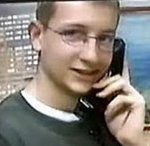
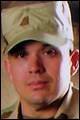
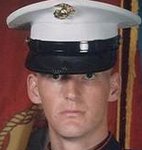
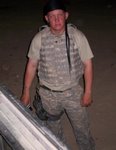
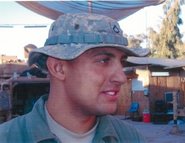
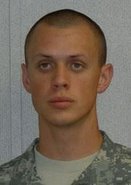
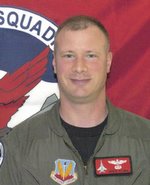
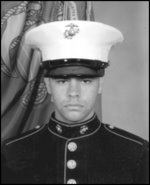
Wednesday Hero ~ SGT Michael J Stokely

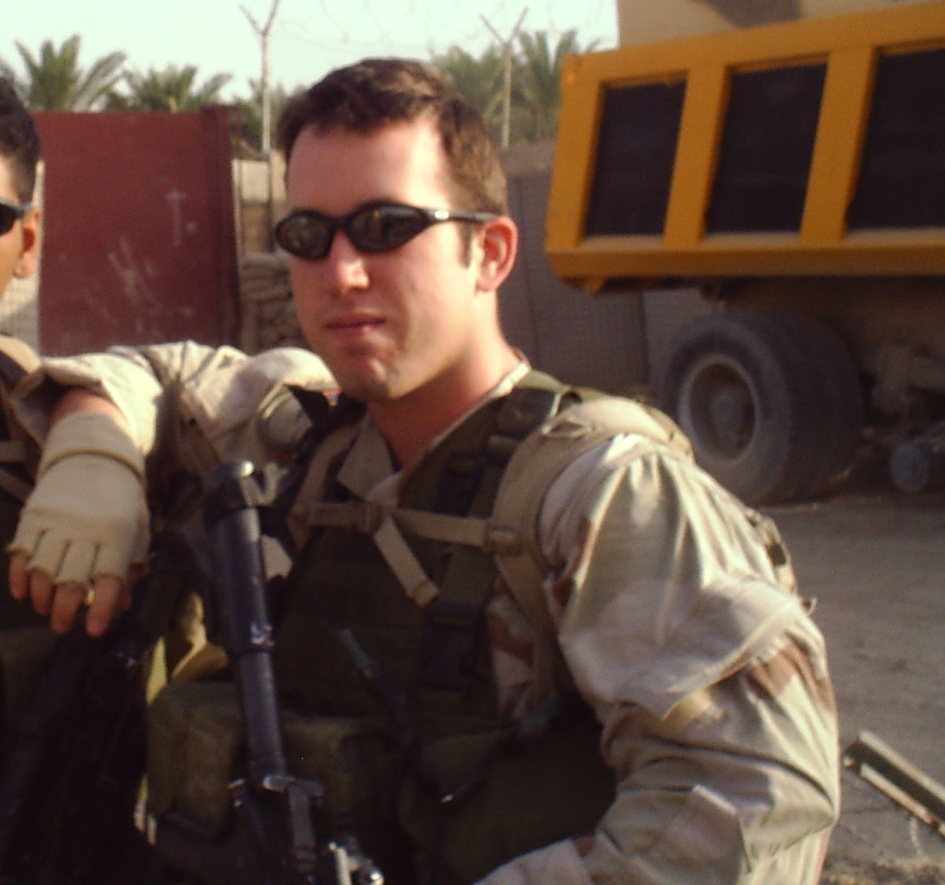
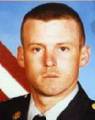
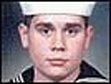
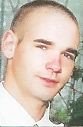
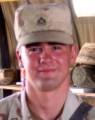
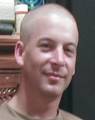
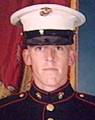
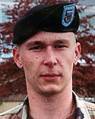
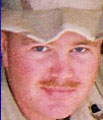
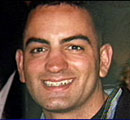
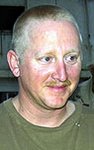
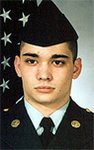
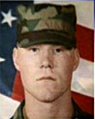
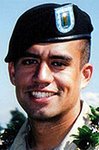
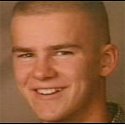
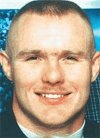
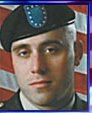
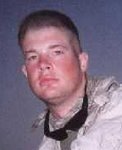
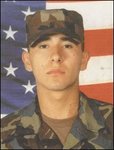
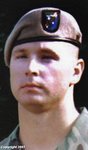
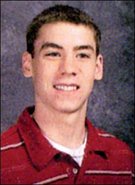
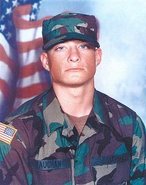
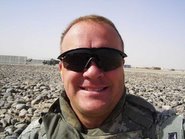
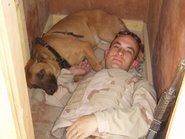
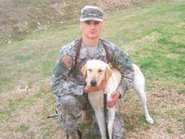
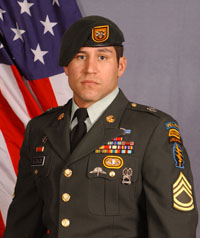
Sgt. Michael J. Stokely


Sgt. Michael J. Stokely
23 years old from Sharpsburg, Georgia
1st Battalion, 108th Armor Regiment, 48th Brigade Combat Team
August 16, 2005


Next Saturday, August 25, the town of Peachtree City, Ga. will be holding it's inaugural Ride To Remember for Sgt. Michael Stokely who lost his life two years ago tomorrow in Baghdad, Iraq when an IED detonated near his position. The patrol he was with had stopped and the NCO in charge had everyone take a rest while he walked back down the road with a Corporal to check out something suspicious. Sgt. Stokely refused to to rest, and instead took up a flanking position at the rear of his truck to watch their backs. Which, as a Cav Scout dismount, he saw as his job. The NCO and Corporal heard cracking noises and made their way to the sound when they were hit by an explosion. The NCO was seriously wounded but the Corporal made it through without a scratch. Sgt. Stokely, however, wasn't so lucky.

You can read more about Sgt. Michael Stokely here.

These brave men and women sacrifice so much in their lives
so that others may enjoy the freedoms we get to enjoy everyday.
For that, I am proud to call them Hero.


This post is part of the Wednesday Hero Blogroll.

Tuesday, August 14, 2007

National Navajo Code Talkers Day ~ August 14


Congressional Gold Medal for the Navajo Code Talkers


The back of the medal is inscribed with Navajo words that mean
"The Navajo Language Was Used to Defeat the Enemy."

"But in the late spring of 1940, as the Nazis pounded through Europe's defenses and British troops were pressed toward Dunkirk, the Navajo tribal council at Window Rock swore their allegiance and that of their 50,000 tribal members to the American government. They resolved that "the Navajo Indians stand ready, as they did in 1918, to aid and defend our Government and its institutions against all subversive and armed conflict.…"

"They still lacked voting rights. Arizona would not grant them the right to vote in state elections until 1948. New Mexico would wait until 1953, Utah until 1957. But they could vote in federal elections and their land and U.S. land were the same. When the Japanese attacked Pearl Harbor on December 7, 1941, they were attacked and the Navajo responded, ready to fight, some bringing guns from home to recruiting stations. As the Navajo volunteers and draftees headed for military service, little did they know that a strategic key to winning the island wars of the Pacific lay in their hands, in their culture, in their history."
(http://www.navajocodetalkers.com/)

Over 5,000 Navajo enlisted in the military in WWII - at least 10% of the Nation. Men who could not vote, still held great allegiance to a country that was not always friendly to their exsistence. Of those 5,000, about 400 became Code Talkers. Little did they know the integral part of the war across the Pacific that they would become. Seven Code Talkers were killed in action.

To be a Code Talker, they had to be fluent in English and Navajo, finished the 10th grade, complete Boot Camp and pass proficiency examinations. The original 29 Code Talkers invented the code - assigning Navajo words to military terms - while at Camp Pendelton.

The Code was classified until 1968. In 2001, the original Code Talkers, or their family members, were presented with the Congressional Gold Medal. The others were presented with the Congressional Silver Medal. The medal was awarded because the work of the Code Talkers "greatly assisted in saving countless lives and hastening the end of World War II in the Pacific."

There are Marines who fought at Iwo Jima that believe that the battle would never have been won without the Navajo Code Talkers.

Their story is inspiring. To read more:

http://www.thenavajocodetalkers.com/index.htm

http://www.archives.gov/publications/prologue/2001/winter/navajo-code-talkers.html

Navajo Code Talkers Today


Chairman of the Joint Chiefs of Staff Gen. Peter Pace, left, U.S. Marine Corps, talks with Navajo Code Talkers after they presented him with a Navajo blanket in the Pentagon on Aug. 10, 2007. Code Talkers were Native American Marines who served in World War II and developed a communications code based on their native language. DoD photo by Staff Sgt. D. Myles Cullen, U.S. Air Force. (Released)

V-J Day ~ August 14, 1945

Alfred Eisenstaedt - The Kiss

Dancing Man
Sydney, Australia

V-J Day - Victory over Japan Day

July 26, 1945 - Postsdam Declaration issued. Truman tells Japan, "Surrender or suffer prompt and utter destruction."
July 29 - Japan rejects the Potsdam Declaration.
August 2 - Potsdam conference ends.
August 6 - An atomic bomb, "Little Boy" is dropped on Hiroshima.
August 8 - USSR declares war on Japan.
August 9 - Another atomic bomb, "Fat Man" is dropped on Nagasaki.
August 15 - Japan surrenders. (August 14 in the United States.)

At long last, the war in the Pacific and World War II ended.

Monday, August 13, 2007

History is Our Stories ~ Army Code Talkers

Commanche Code Talkers
4th Signal Company
US Army
Charles "Charlie" J. Chibitty
The last Commanche Code Talker
Died in 2005

Most people have heard of the Navajo Code Talkers who served in the Pacific during WWII with the Marine Corps. Few have heard of the Commanche Code Talkers.

The Commanche Code Talkers were part of the US Army and served in the European theatre during WWII. Sixteen Commanche Code Talkers were part of the communication contingent during the D-Day invasion. The Germans were never able to break their code.

All of the Commanche Code Talkers had passed on by the time the information was declassified. The survivor, Charles Chibitty, was presented with many awards after the declassification, which he always accepted on behalf of the others.

Chibitty landed at Utah Beach. His first radio message was sent to another code talker on an incoming boat. Translated into English, it said: "Five miles to the right of the designated area and five miles inland, the fighting is fierce and we need help."

"We were trying to let them know where we were so they wouldn't lob no shells on us," Chibitty explained with a chuckle. "I was with the 22nd Infantry Regiment of the 4th Infantry Division. We talked Indian and sent messages when need be. It was quicker to use telephones and radios to send messages, because Morse code had to be decoded and the Germans could decode them. We used telephones and radios to talk Indian, then wrote it in English and gave it to the commanding officer."

Two Comanches were assigned to each of the 4th Infantry Division's three regiments. They sent coded messages from the front line to division headquarters, where other Comanches decoded the messages.

Speaking in the Comanche language, Chibitty gave Brownlee another example of a message code talkers sent to other units, then translated it for him: "A turtle is coming down the hedgerow. Get that stovepipe and shoot him."

"A turtle was a tank and a stovepipe was a bazooka," he explained. "We couldn't say tank or bazooka in Comanche, so we had to substitute something else. A turtle has a hard shell, so it was a tank."

Since there was no Comanche word for machine gun it became "sewing machine," Chibitty noted, "because of the noise the sewing machine made when my mother was sewing." Hitler, he said, was "posah-tai-vo," or "crazy white man."

In WWI, the Choctaw were Code Talkers.

The history of the Indian Code Talkers is a beautiful and not well known one, due to the classified nature of their activities. These amazing Americans saved many lives.


Sunday, August 12, 2007

Kaziah Hancock

A beautiful story about love...

Portraits of the Fallen ~ Kaziah Hancock

Long Day in America


1LT Erik McCrae
Oregon National Guard

Kaziah Hancock lives outside Manti, Utah on Sweetwater Goat Ranch with 100+ goats, some sheep and chickens. She is an artist with a distinctive technique. Motivated by the death of the first soldier from Utah, she now paints portraits of our fallen warriors for their families free of charge. She also has a foundation, Project Compassion, which helps to fund the materials and shipping costs. All Gold Star Families may contact Kaziah for a portrait of their fallen loved one.

From her website:
"As a way to say Thank you for those American servicemen and women who have given the ultimate sacrifice, Kaziah will paint, for the immediate family, an original oil on canvas portrait - free of charge - of your fallen loved one. In this small way she can say thank you for giving your all in the cause of freedom.

"Some of us Americans would like to tell all of the brothers and sisters, sons and daughters, husbands and wives in the service and their families, that our love, our thoughts and our prayers go out to them. The sacrifices of their time away from loved ones, injuries and lives lost for our country's safety and freedom can never be fully appreciated and we thank you all. God Bless You."

To visit her foundation:
http://www.heropaintings.com/kzindex.aspx
To visit her website:
http://www.kaziahthegoatwoman.com/kaziah.html
To read her biography:
http://www.childbrides.org/kaziah.html

Thank you, Gretchen, for telling me about her.

Saturday, August 11, 2007

A Hero to Remember ~ Major Keith Wolak

A Hero to Remember
Major Keith Wolak


Col. Kenneth Todorov pins the Distinguished Flying Cross on Maj. Keith Wolak during an award ceremony at Pope Air Force Base, N.C., July 27. Major Wolak is an A-10 Thunderbolt II pilot with the 23rd Fighter Group at Pope AFB. Colonel Todorov is the 23rd Wing commander at Moody Air Force Base, Ga.
Photo by Mike Murchison


Major Keith Wolak of the 74th Fighter Squadron, Pope Air Force Base, North Carolina, received the Distinguished Flying Cross - presented for heroism or extraordinary achievement while participating in an aerial flight - for actions in Afghanistan in 2005. He received the honor for a combat search and rescue mission he coordinated July 2, 2005, when he cleared a helicopter landing zone while suppressing the enemy's attacks. The mission was the nighttime rescue of Navy SEAL Marcus Luttrell. Wolak and other Air Force fliers helped a rescue helicopter get in and out safely with Luttrell.

"We really weren't concerned with any surfaced air threat to the fighters out there," Wolak said. "Our concern was getting the rescue helicopters in an area where, just the week before, we lost one helicopter due to surface to air fire. Everything we were doing was basically to protect the guys in helicopters -- getting them in and out."

Flying protection for the rescue helicopter, the lead A-10's equipment failed and could not fly the strafing runs to clear the Taliban/Al Queda positions, Wolak quickly moved into position to shoot at the enemy with his 30mm gun. While coordinating the 17 aircraft in the operation in the 16 square mile air space, in bad weather and low visibility, he put down infrared making on the landing zone to guide the HH-60G Pave Hawk rescue helicoper. The rescue crew said that landing would have been impossible without Wolak marking the landing zone.

"I feel very proud and very honored and I'll wear this medal with pride," said Maj. Wolak. "I didn't do anything any other combat search and rescue trained A-10 pilot wouldn't have done."

BAGRAM AIR BASE, Afghanistan -- Capt. (now Major) Keith Wolak checks the Litening precision targeting pod on his A-10 Thunderbolt II before flying a mission from here. He is an A-10 pilot assigned to the 355th Expeditionary Fighter Squadron supporting Operation Enduring Freedom.
(U.S. Air Force photo by Master Sgt. Andrew Gates)


A-10

Service Crosses - Awards of Honor and Heroism

Distinguished Service Cross


Awarded by the Department of the Army
This is the highest award presented by the United States Army.

The Navy Cross


Awarded by the Department of the Navy
This is the highest award presented by the Department of the Navy.


Air Force Cross


Awarded by the Department of the Air Force
This is the highest award presented by the Department of the Air Force.


These Crosses may be awarded to any member of the armed forces while serving with the Army, Navy, Marines, Coast Guard or Air Force that distinguishes himself in action by extraordinary heroism not justifying an award of the Medal of Honor. The action must take place under one of three circumstances: while engaged in action against an enemy of the United States, while engaged in military operations involving conflict with an opposing foreign force, and while serving with friendly foreign forces engaged in an armed conflict in which the United States is not a belligerent party.

To earn a Cross the act to be commended must be performed in the presence of great danger or at great personal risk and must be performed in such a manner as to render the individual highly conspicuous among others of equal grade, rate, experience, or position of responsibility.

In the Great War on Terror, Distinguished Service Crosses, Air Force Crosses and Navy Crosses have been awarded to amazing heroes. Heroes who have fought for us all. I intend to do tribute pages for each of them.


The Hero to Remember Series:

Distinguished Service Cross:

Col James H Coffman, Jr


Navy Cross:

PO2 Matthew G Axelson

PO2 Danny P Dietz

HM Luis E Fonseca, Jr.

Sgt Major Bradley Kasal and here

Unidentified Navy Seal - The One - now known as Marcus Luttrell

Honors to Axelson, Dietz & The One


Air Force Cross:


Friday, August 10, 2007

Aid for Afghanistan ~ Sangin District Center, Helmand Province

Coalition soldiers struggle to hold a cow steady while they give her de-worming medicine. Coalition forces conducted veterinary operations in the Helmand province, Afghanistan, Aug. 4.


A coalition medical officer checks the scabbing on the face of a local girl while providing medical assistance in Sangin, Afghanistan, Aug. 3.

Capt. Sococi Florin, a Romanian special operations medic, checks the breathing of a local resident during a medical assistance mission in Sangin, Afghanistan, Aug. 2.

Soldiers from the United Arab Emarites hand out copies of the Quran and rugs at a medical assistance operation at Sangin, Afghanistan, Aug. 2.
Photos by SGT Steve M Boone, Joint Combat Camera Center


Combined Joint Task Force-82
BAGRAM AIRFIELD, Afghanistan -

Afghan national security forces (ANSF), advised by coalition forces performed medical, veterinary and material assistance to Afghan civilians at the Sangin District Center, Helmand province, Aug. 1-5.

The medical and veterinary assistance were made possible due to diminished Taliban enemy activity in the area. Coalition forces have put heavy pressure on insurgents in Helmand province since spring, a strategy that disrupted the Taliban’s plan for a spring offensive.

“Our mission is to give these people medical treatment, something they otherwise have great difficulty getting access too,” said a coalition medical officer. “A lot of them can’t afford the medicine we’re giving them, but it’s part of a campaign for healthy bodies in Afghanistan.”

ANSF and coalition forces treated 857 villagers; including 329 men and 528 women and children during the five-day program. Common complaints were muscular and skeletal pain, upset stomach and dehydration, but there were some exceptions. Two victims of a recent Taliban mortar attack were stabilized and evacuated to a nearby coalition post for further care.

“Most of the people who come here have problems that are preventable or easy to fix,” said a coalition medical officer. “We can make simple advice and a little bit of medicine go a long way.”

A coalition dentist also provided dental care for the residents of Sangin. Most of his patients required extractions or fillings and each of them received information on how to maintain good oral health.

“This has been a great success,” said the governor of the Sangin District. “Many people of Sangin have been provided with medical care that they otherwise would not have been able to afford. Many thanks to God and to our friends in the international community for their assistance and may we all have peace.”

In addition to medical, dental and material services, the relief team also treated the livestock of Sangin residents. Sheep, goats and cattle made up the majority of the 120 animals that were treated for parasites, given growth supplements and antibiotics.

“The security and assistance for our animals and villagers are a gift from God,” said a Sangin area village elder. “Many thanks and blessings for an end to war.”

Coalition-aid programs divided 500 bags of rice, 400 bags of beans, cases of tea, powdered milk and cooking oil between villagers. Toys, books and school supplies were also distributed.

“The people of Sangin have seen a large portion of the combat in Afghanistan this year so we do whatever we can to make their lives easier,” said a coalition civil affairs officer. “Most of them are regular working families like you’d see back home; no different from us.”

“Although the services provided were limited, there were many encouraging comments from the locals,” said another coalition civil affairs officer. “They know we are here to help them and they appreciate that. Sangin residents can expect continued goodwill and care from coalition forces.”

Thursday, August 09, 2007

The Purple Heart ~ August 7, 1782 to August 7, 2007

The Purple Heart

Badge of Military Merit


The original 'Purple Heart' - Badge of Military Merit - was awarded by George Washington on August 7, 1782 - 225 years ago. He had been awarding promotions based on merit, but the Continental Congress ordered him to stop, as there were no funds to pay the increase in rank. General Washington developed the Badge of Military Merit - the first award given to the enlisted soldier. It was a heart of purple cloth embroidered with the word MERIT.


"The General, ever desirous to cherish virtuous ambition in his soldiers as well as foster and encourage every species of military merit, directs that whenever any singularly meritorious action is performed, the author of it shall be permitted to wear on his facings, over his left breast, the figure of a heart in purple cloth or silk edged with narrow lace or binding. Not only instances of unusual gallantry but also of extraordinary fidelity and essential service in any way shall meet with due reward. The name and regiment of the persons so certified are to be enrolled in a Book of Merit which shall be kept in the orderly room." The order further states: "Men who have merited this distinction to be suffered to pass all guards and sentinels which officers are permitted to do. The order to be retroactive to the earliest stages of the war, and to be a permanent one." Washington ended his order with: "The road to glory in a patriot army and a free country is thus open to all."


Front and Back of the current Purple Heart


The Badge of Military Merit fell into disuse after the Revolutionary War. In 1927, Army chief of Staff, General Charles P Summerall, proposed to Congress the reissuance of the award. The proposal was shelved. In 1931, Army Chief of Staff General Douglas MacArthur, requested revival of the award to coincide with the bicentennial of the birth of George Washington. On his birthday, February 22, 1932, the War Department announced the new award. In 1942, Franklin Roosevelt extended the use beyond the Army to include the Navy, Marine Corps and Coast Guard after the attack on Pearl Harbor. In 1952, President Truman extended eligibility back to April 5, 1917 to cover the soldiers of World War I.

The revived form is known as the PURPLE HEART. It is made of metal, in the shape of a rich purple heart bordered with gold, with a bust of Washington in the center and the Washington coat-of-arms at the top. The latter is believed to have been the source of the stars and stripes of the American Flag.

The PURPLE HEART is awarded to members of the armed forces of the U.S. who are wounded by an instrument of war in the hands of the enemy and posthumously to the next of kin in the name of those who are killed in action or die of wounds received in action. It is specifically a combat decoration.


To honor the 75th Anniversary of the PURPLE HEART, the United States Post Office issued this stamp on August 7, 2007. It is also the 225th Anniversary of the Military Badge of Merit.


An artist has mowed an 850,000-square-foot rendering of a Purple Heart medal into a park field to honor the 75th anniversary of the medal that commends servicemembers killed or wounded in action. The rendering, to be unveiled Sunday in Thomas Bull Memorial Park in Hamptonburgh, 55 miles northwest of New York City, was done by field artist and painter Roger Baker.


This monument to the Purple Heart and the Purple Heart Trail sits in front of George Washington's Mount Vernon.

An organization now known as the "Military Order of the Purple Heart," was formed in 1932 for the protection and mutual interest of all who have received the decoration. Composed exclusively of Purple Heart recipients, it is the only veterans service organization comprised strictly of "combat" veterans. It also has a Women's Auxillary and Associate memberships for family members of recipients. http://www.purpleheart.org/

The Purple Heart Hall of Honor is located in New York's Hudson River Valley at the New Windsor Cantonment State Historic Site. Its mission is to collect and preserve the stories of Purple Heart recipients from all branches of the service and across the generations in an attempt to ensure that all recipients are represented. Their stories will be preserved and shared through exhibits, live and videotaped interviews with the veterans themselves, and the Roll of Honor, an interactive computer program preserving the stories of each individual. The National Purple Heart Hall of Honor the first in the nation to recognize the more than 800,000 Americans wounded or killed in action while serving in the United States Military. For more information or to have your story preserved as a Purple Heart recipient, please visit the website at http://www.thepurpleheart.com/. If you wish to write or call: The National Purple Heart Hall of Honor, PO Box 207, 374 Temple Hill Road, Vails Gate, New York 12584-0207. Phone: 845-561-1765; 877-28H-ONOR (284-6667). FAX: 845- 561- 6577


Wednesday, August 08, 2007

Navy Divers ~ Minnesota Bridge Collapse

Sailors assigned to Mobile Dive and Salvage Unit (MDSU) 2 from Naval Amphibious Base Little Creek, Va., arrive at 934th Air Reserve Base Minneapolis Minn. Aug. 6
U.S. Navy photo by Mass Communication Specialist Seaman Joshua Adam Nuzzo
Below, Navy Divers in the water September 2005, post Katrina.


The Navy Mobile Dive and Salvage Unit 2 of Little Creek, Virginia, will search for bodies at the disaster scene and move tons of rubble from the bridge that collapsed into the Mississippi River on August 1.

The team of 18 divers and 6 support crew have arrived. Their gear arrived before dawn on Tuesday, and they immediately entered the Mississippi River to access the area. The divers returned to the riverby late morning, and began the process of removing concrete, rebar and other debris. The FBI also has a forensic dive team on site.

The Navy Divers are tethered to above-ground oxygen tanks, enabling them to stay in the water longer than conventional divers. The bring with them heavy-duty equipment to cut through the wreckage, and sophisticated sonar to scan for bodies.

Navy divers have been the salvage and recovery teams for TWA Flight 800 (where they made over 700 dives), the Shuttle Columbia and the recovery of the Civil War ship the Monitor. They were also active after Hurricane Katrina.

This is an elite group of people who quietly do amazing jobs and receive little credit or notoriety. Most people know about Navy Divers because of Carl Brashear and the movie Men of Honor.

Wednesday Hero ~ Col James W Harrison, Jr.

This Week's Soldier Was Suggested By Gary


Col. James W. Harrison Jr.
47 years old from Missouri
U.S. Army Command and General Staff College, Combined Forces Command Afghanistan
May 6, 2007


Duty, Honor, Country. Col. James Harrison Jr. embodied that ethos, said his family. He was committed to the mission of the United States in Afghanistan and spoke with great pride about the accomplishments of the men and women with which he served

Col. Harrison was killed on May 6 when a Taliban fighter, dressed as an Afghan police officer, shot him at point blank range at Pul-e-Charkhi prison near Kabul. Also killed along side Col. Harrison was Master Sgt. Wilberto Sabalu Jr. and two other soldiers were wounded. All four men were working as mentors to Afghan troops providing external security for the prison.

Harrison graduated from the U.S. Military Academy in 1981. He also graduated from the Military Police Basic and Advanced courses, the Combined Arms and Services Staff School, the Command and General Staff College, the Army Inspector General Course, and the Industrial College of the Armed Forces. He earned a Master of Business Administration from Syracuse University and a Master of Science degree in national security and strategic studies from the National Defense University. Before going to Afghanistan in December 2006, he was assigned to Fort Leavenworth as director of the School for Command Preparation at the Command and General Staff College.

He is survived by his wife and three sons.

To read a letter from the Afghan general in charge of the detention facility, visit Amy Proctor's site.


These brave men and women sacrifice so much in their lives

so that others may enjoy the freedoms we get to enjoy everyday.

For that, I am proud to call them Hero.

This post is part of the Wednesday Hero Blogroll.

Tuesday, August 07, 2007

History is Our Stories ~ Army Nurse Linnie Leckrone


World War I Army nurse Linnie Leckrone stands with her brothers, who also served in the war. Left to right: Orris, Dwight, Linnie and Lyle Leckrone. Linnie Leckrone, was one of the first females authorized to wear the Silver Star. Courtesy photo


Army Maj. Gen. Gale S. Pollock, acting Army surgeon general and chief of the Army Nurse Corps, presents the Silver Star to Mary Jane Bolles Reed, who accepts it on behalf of her deceased mother, World War I Army nurse Linnie Leckrone, July 31, 2007.
Photo by Fred W. Baker III

Mary Jane Bolles Reed talks with Army Capt. Rachel Park, the assistant head nurse for the surgical intensive care unit at Walter Reed Army Medical Center, after accepting the Silver Star July 31, 2007, on behalf of her late mother, Linnie Leckrone, an Army nurse who was one of the first females authorized to wear the Silver Star.
Photo by Fred W. Baker III

By Fred W. Baker III
American Forces Press Service

WASHINGTON, DC – While Army nurse Linnie Leckrone was patching up wounded soldiers in France on the front lines of World War I, she most likely wasn’t thinking that her actions one day would merit the military’s third-highest award for valor in the face of the enemy.

Leckrone probably didn’t even consider the history she was making on July 29, 1918, as enemy artillery pounded the location of her field hospital, and she and the small staff of the “gas and shock team” did their best to care for the barrage of incoming wounded.

The Army nurse who volunteered for duty on the front lines that day became one of the first three women in the military authorized to wear the Silver Star. Ironically, she never got to wear the medal, and never even knew she had earned it.

But that would have been fine by Leckrone, her daughter said yesterday at an Army ceremony at the Women in Military Service for America Memorial in Arlington. The Silver Star was awarded posthumously to Leckrone, and presented to her daughter, Mary Jane Bolles Reed.

“If she were here, she would say, “I don’t need a medal. I just did what I had to do,” said her daughter. “And, of course, that’s true. But what she had to do required great courage and was pretty exceptional.”

Leckrone was one of the more than 10,000 women who served in the Army Nurse Corps in France during World War I. Nurses then did not wear rank and were referred to as “miss” or “nurse.” Nurses were not supposed to serve in combat, but as forward surgery became more critical during the war, some nurses were moved to the front lines to work in field hospitals.
According to her daughter, Leckrone’s thoughts during the war were appropriately placed -- on the troops.
The image of one soldier must have stood out. “He was just a boy. No more than 16 years old. He called me Mom. And he was so sick, he died before morning,” Leckrone recalled to her daughter many years later.

Leckrone was cited for the Citation Star, which predated the Silver Star, for serving on the front lines that July in France and caring for wounded despite an enemy artillery bombardment, said Sanders Marble, a historian with the Army’s Office of Medical History, working for the Army Surgeon General.

A colleague of Marble’s found the three Army nurses cited for the award while searching lists for Army dentists. He came across the names and titles and realized their historical significance, Marble said.

Previously, four World War II Army nurses were considered the first female Silver Star recipients, he said, for gallantry in action in Italy in 1944. But, in 1932, then Secretary of War Patrick J. Hurley authorized recipients of the Citation Star to exchange their medals for the new Silver Star. About 10,000 servicemembers have requested to have their Citation Stars exchanged for Silver Stars.

Marble’s office researched the event. They had only two sentences to go by, including a name, location and description of the citation. They expanded on the citation and submitted for the exchange.

Marble said one recipient died and has no living next of kin. The other recipient’s family was not able to attend yesterday’s ceremony.

The historian said Leckrone’s family was surprised when they got the call from his office.

Leckrone was cited for the Citation Star, but it was never presented. She was discharged from the Army before it could be awarded.

“As far as we know, she never knew about it,” Marble said. “The daughter, Mrs. Reed, was stunned when we called her and said, ‘Your mother was in the Army, did you know about this?’”

Leckrone returned to the United States after serving 14 months overseas. When she returned there was no parade or welcome-home ceremony, her daughter said. “They got back to New York City in uniform. People looked at them like foreigners. There was no big welcome home celebration,” Reed said.

Her mother took a job as a nurse in Chicago, but then later followed her friend and fellow combat nurse – who also received the same citation – to Colorado. She got a job in the southern part of the state, in a small rural town, doing what she loved, her daughter said: helping people.

Routinely, Leckrone would walk two to three miles to small farm houses to take care of the sick, Reed said. The local people were grateful for the care. “She said ‘They just worshipped me,’” Reed said.

Leckrone later moved to Boulder, Colo., and worked as a nurse for the county. It was there she met her husband, married and quit nursing, at least outside of her family. “Four rambunctious farm kids came up with a multitude of illnesses and injuries that taxed her nursing skills,” Reed said of herself and her siblings.

While preparing to receive the award for her mother, Reed said she started digging back through years of family history and prepared a long list of her mother’s accomplishments. But afterward, Reed said, she realized the list was not important to understanding the impact that Leckrone left in the lives of those she served.

“Looking at it, I realized you don’t need to know what she did, but it was how she did those things. It was always with compassion, and gumption and care – with the heart of a true nurse,” Reed said. “Linnie Leckrone was a nurse all her life. She was unflappable.”

From Defenselink

Monday, August 06, 2007

Polish Soldiers Fly Kites with Afghan Children


By Army Spc. Micah E. Clare
Special to American Forces Press Service

FORWARD OPERATING BASE SALERNO, Afghanistan, July 10, 2007 -

Best-selling books have painted pictures of Afghan children flying colorful kites high in blue skies against backdrops of snow-capped mountains that tower over quaint villages, but not all Afghan children are fortunate enough to own such simple, yet wonderful toys.

However, when the Polish Battle Group arrived in Ghazni province's Andar district near the end of June, the local children were finally able to take part in an activity shared by children in almost all countries in the world: flying kites.

While conducting patrols throughout Andar district during Operation Maiwand last month, the Polish soldiers of 1st and 2nd platoons of the Polish Battle Group's Company B made many humanitarian aid deliveries to the poor families living in the area.

The extreme poverty of some of the areas was quite a shock to many of the Polish soldiers.

"It seems like time stopped here 2,000 years ago," said Polish Pfc. Chris Demko, a gunner on one of the giant Rosomak armored personnel carriers. "We see these kids running around with nothing, not even shoes, and we want to change that."

Everywhere they went, children crowded around the vehicles as the smiling soldiers pulled out boxes of shoes, clothes, school supplies and toys. But the biggest hit of all were the multi-colored kites that the soldiers unfolded for them.

With big grins and excited chattering, the children jumped up and down shouting, "Patang! Patang!" -- the Pashto word for kite. Soon, several of the yellow, green and red kites with International Security Assistance Force logos were flying high overhead, much to the delight of the children dancing around below.

"These kites are so much fun," said Mahmad-Amid Hahn, a 12-year- old boy, as he made whooping sounds while his kite dipped and swerved in the air. "The Taliban would never give us these things."

For the children who had never seen a kite before, some of the Polish soldiers stepped in to assist, unfolding the kites and showing them how to take off with a running start to get them airborne.

"Any time spent with children is a good thing," said Polish Pfc. Michal Ozog-Warclaw. "It is wonderful to see children who have been through so much with smiles on their faces."

Ozog-Warclaw has a daughter of his own back home in Poland, and this experience made him think of her. "I spent many days playing with her just like this in the park, or forest," he recalled.

While the children enjoyed their kites and new shoes, the Polish soldiers also gave out school supplies as an encouragement for the children not only to play, but also to learn and attend nearby schools.

The soldiers said they hope their presence and influence in these areas will be able to help change an environment where the Taliban threatened parents with violence if they sent their children to school.

"It is sad, because most children here have not had the same opportunities that my own daughter does," Ozog-Warclaw said. "It is not their fault, either. Back in Poland, my daughter is developing in school in a safe, loving community where she is free to learn, play and interact. Every person should have access to these things, because being educated is a weapon against people who would tell you to be something you are not."

Though the youngsters face many challenges as they grow older in their still unstable country, the pristine scene of children flying kites, completely free to enjoy their youth, still feels as if it could come out of the pages of a book.

"We're simply helping them make their lives better," said Polish Maj. Thomas Stachera, Company B commander, while watching the children playing as his men prepared to move on.

"I believe this to be a picture of what these people really want: a stable, peaceful, productive society," he said. "These children are the ones who will be able to make it happen."

(Army Spc. Micah E. Clare is assigned to the 82nd Airborne Division's 4th Brigade Combat Team Public Affairs Office.)

Book Review ~ The Kite Runner by Khaled Hosseini


The Kite Runner

by Khaled Hosseini


This is one of the best fiction books I have ever read. Khaled Hosseini takes us into the culture, life and war in the troubled land of Afghanistan. It gives a deep insight into the tribal culture, the quality of life, the difficulty the Taliban created.

The narrator tells the story of his childhood and the servant's boy that he shared it with. With continual warfare, his family immigrates and eventually arrives in the United States. He is educated and marries and has a life that Afghans can only dream of. Yet, he is still haunted by a childhood lie he told which caused a severe beating and exile for his childhood friend. He goes on a quest to right this wrong and finds a world that even he can not understand.

It is an intense tale of two friends, their opposite lives and the struggles in this war torn land.

It also tells of the tradition of kite flying and the importance of it in the community. It is a theme that goes throughout the book and becomes the symbol of hope for the future.


Sunday, August 05, 2007

Vote for Your Favorite Military Charity!


Vote for your favorite Military Charity!
This is a chance to earn extra money for your charity of choice.

Everyone can have ONE vote, so look at the charities listed,

and cast your vote.

Prizes for Charities
Grand Prize—$1,000
2nd, 3rd and 4th Places—$300 each

Raffle—$100 for a randomly selected charity


Voting occurs August 5-20.


While you are there, look around at VAJoe's blogs, forums,
and other great links for the military community!!

Saturday, August 04, 2007

Balloon Pilot


Yes, this really happened!!


Taking off from my town, in a lawn chair with 105 helium filled weather balloons attached, Ken Couch floated from Bend, Oregon 193 miles to Union, Oregon - near the Idaho border.


This picture shows the central Cascade mountains - Broken Top and the Three Sisters - and the smoke from the wildfires we have had this year.

Welcome Home ~ Festivities for the Oregon 41st BCT


Tigard Mayor Craig Dirksen is scheduled to speak at a welcome home ceremony honoring Soldiers from the 41st Brigade Combat Team at 11:15 a.m., Aug. 4, 2007 at the Tigard High School football stadium. Prior to the ceremony will be a parade beginning at 10:00 a.m.

Major General Raymond F. Rees, the Adjutant General, Oregon National Guard, and Brigadier General Douglas Pritt, commander of the 41st Brigade Combat Team, will also speak at the event.

The ceremony, sponsored by American Legion Post 158, will honor Oregon Army National Guard Soldiers who recently returned from a year-long deployment to Afghanistan. More than 900 Soldiers were deployed as a part of Task Force Phoenix V in support of Operation Enduring Freedom.

The day-long festivities will begin with a parade which starts at 10:00 a.m. at 113th St. and Durham Rd. in Tigard. The procession will make its way along Durham Rd. to Tigard High School for the ceremony. Following the official event, an afternoon of activities is planned at nearby Cook Park until 4:00 p.m.

Activities will include face painting, rock climbing wall, jump houses, dunk tank, weapons displays, antique car show, military vehicle show, and vendor booths. Food is also provided and will include hot dogs, hamburgers, ice cream, popcorn and more. Food and games at the event are free of charge in celebration of the return of Task Force Phoenix V Soldiers.

Task Force Phoenix has a unique mission to train and mentor members of the Afghan National Army (ANA). The ANA is an all-volunteer army, much like the military forces in the United States.

If you are in the area, stop by and thank them and welcome them home!!!

********************
Scheduled to show up, but cancelled are : Governor Kulongoski (D), Congresswoman Darlene Hooley (D), Congressman Peter DeFazio (D), Senator Gordon Smith (R?) - Now tell us about how you support the troops and the war in Afghanistan....

Friday, August 03, 2007

Guest Blogging at VA Joe


I have been invited to guest blog at VA Joe's for the next couple of weeks.

I am excited about this opportunity and invite you all to visit VA Joe's.

Besides the blog, there are reviews of many milbloggers, a discussion forum, humor and links to resources for the military. and, if you register for the forum and make twelve posts, you get a GREAT t-shirt!!!

Visit NOW!!!!