Showing posts with label Iran. Show all posts

Friday, October 16, 2015

The Passing of a Hero - Ken Taylor


Ken Taylor has died at 81


The Canadian ambassador who helped six American diplomats escape after the US embassy in Tehran was stormed by Iranian revolutionaries in 1979 has died, his family has said.  Ken Taylor was 81 and died in hospital in New York.

Ken Taylor played a key role in sneaking the diplomats out of Iran using Canadian passports and forged Iranian visas.

The crisis began when revolutionary students stormed the embassy taking about 50 American hostages.  Six members of the American Diplomatic Corps were able to get to the Canadian Embassy.  Taylor kept the Americans hidden at his residence and at the home of his deputy, John Sheardown, in Tehran for three months. Taylor facilitated their escape by arranging plane tickets and persuading the Ottawa government to issue fake passports.

Mr Taylor was praised by Canadian Prime Minister Stephen Harper on Thursday, who described him as "valiantly risking his life by shielding a group of American diplomats from capture".

"Ken Taylor represented the very best that Canada's foreign service has to offer," Mr Harper said.

Thursday, January 28, 2010

Ambassador Kenneth D Taylor & the Canadian Caper ~ 30 years ago

January 27, 1980
Thirty years ago, Ambassador Kenneth D Taylor
got the six Americans hiding in the Canadian Embassy out of Iran
Americans were shocked that some of the Embassy personnel had escaped,
and extremely grateful to Canada.
For a period of time, the Maple Leaf was a common symbol in the US.

The Canadian ambassador to Iran, Ken Taylor, briefs reporters on the situation in the mist of the Iran's Revolution in Tehran, a week before leaving the country with six Americans on January 27, 1980. THE CANADIAN PRESS/Peter Bregg

Canadian Ambassador Kenneth D Taylor, gave sanctuary to the six Americans who were not in the US Embassy on the day of the takeover by the Iranian students on November 4, 1979. By November 10, three of the diplomats and two of their wives had made their way to the Canadian Embassy. A few weeks later, they were joined by another who had been sleeping on the floor of the Swedish Embassy.

Faced with the daunting task of hiding the Americans, the boldness continued when they decided to smuggle them out of Iran on Canadian passports. Canada's Parliament convened it's first secret session since World War II to give permission to issue Canadian passports for the six Americans. The CIA prepared a set of forged Iranian Visas to go with the passports. Disguises and cover stories were invented for a series of scenarios. They eventually used the Hollywood advance crew who were scouting locations for a movie.

On January 27, 1980, the American diplomats, now travelling on Canadian passports, boarded a flight for Zurich, Switzerland, leaving from Tehran. The Canadian embassy staff also left and closed the Embassy.

The six rescued Americans were:

  • Robert Anders, 34 - Consular Officer
  • Mark J. Lijek, 29 - Consular Officer
  • Cora A. Lijek, 25 - Consular Assistant
  • Henry L. Schatz, 31 - Agriculture Attaché
  • Joseph D. Stafford, 29 - Consular Officer
  • Kathleen F. Stafford, 28 - Consular Assistant

Ambassador Kenneth D Taylor was awarded
the Congressional Gold Medal
Approved on March 6, 1980


Wednesday, November 04, 2009

30 Years Since Iran Takeover of US Embassy

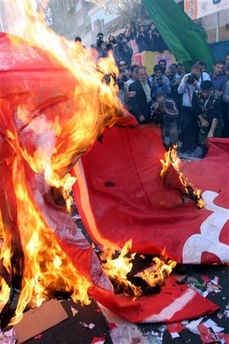
...and, once again, it was celebrated by burning the American flag.

Repeating the post I did several years ago....


November 4, 1979 - The Iran Hostage Crisis


"...in the aftermath of 9/11, we said, "My God, it began with us."

Bruce Laingan

Charge d'affaires of the US Embassy and Hostage


Iranian students take over the United States Embassy in Tehran, Iran


United States Embassy Hostages


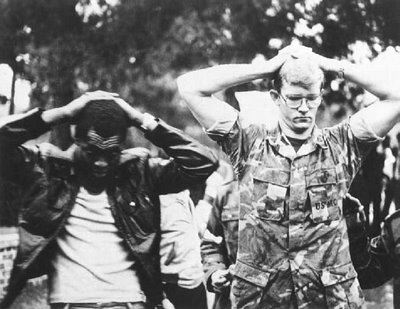
On November 4, 1979, thousands of Iranian students, overran the US Embassy and took about 90 people captive. The non-Americans were freed. Later, some were freed, including the women (except for two) and blacks (except for one), on the grounds that they were unlikely to be spies and had suffered enough with the oppression of the Americans. Another hostage was released in July 1980 due to illness. 52 hostages were held for 444 days. Six others had escaped and taken refuge at other embassies. On January 28, 1980, Canadian diplomats helped these six to flee Iran. The Canadian Embassy was then closed.

Thousands of other protesters pressed around the embassy compound, responding to the call by the country's new leader, Ayatollah Khomeini, to attack US and Israeli interests. They demanded the return of the shah, Muhammad Reza Pahlevi, for trail and execution.

President Carter eventually halted oil imports from Iran, imposed a complete economic embargo, froze Iranian assets in the US and began diplomatic efforts to free the remaining hostages.

The hostages were finally released on January 20, 1981, moments after President Reagan was inagurated.
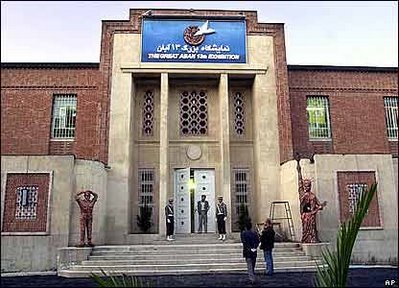


Today, the US Embassy in Iran serves as a museum to the revolution. It was opened in 2001. Outside the door are two bronze statues: the Statue of Liberty and a portrayal of one of the hostages. It is still the stage for angry demonstrations to chant anti-US and anti-Israeli slogans and to burn flags and effigies.


*********************************

Twenty seven years ago, the country gasped in horror as the symbol of America and our freedom was taken over in Iran. We stayed up to watch the news, to hope and pray for their release. Nightline with Ted Koppel was born for the purpose of covering the event. It was the first strike in our continuing war with radical Islam.


*********************************

The Hostages:

6 Evading Diplomats

Robert Anders, 34 - Consular Officer

Mark J. Lijek, 29 - Consular Officer

Cora A. Lijek, 25 - Consular Assistant

Henry L. Schatz, 31 - Agriculture Attaché

Joseph D. Stafford, 29 - Consular Officer

Kathleen F. Stafford, 28 - Consular Assistant


13 Women and African-American Personnel were captured, held hosage and released on 19-20 November, 1979

Kathy Gross, 22 - Secretary

Sgt. James Hughes, 30 - USAF Administrative Manager

Lillian Johnson, 32 - Secretary

Sgt. Ladell Maples, 23 - USMC Embassy Guard

Elizabeth Montagne, 42 - Secretary

Sgt. William Quarles, 23 - USMC Embassy Guard

Lloyd Rollins, 40 - Administrative Officer

Capt. Neal (Terry) Robinson, 30 - Administrative Officer

Terri Tedford, 24 - Secretary Sgt.

Joseph Vincent, 42 - USAF Administrative Manager

Sgt. David Walker, 25 - USMC Embassy Guard

Joan Walsh, 33 - Secretary

Cpl. Wesley Williams, 24 - USMC Embassy Guard


1 hostage captured, held and released on 11 July 1980 because of Multiple Sclerosis diagnosis

Richard I. Queen, 28 - Vice Consul 52

Remaining Hostages, held captive until 20 January, 1980

Thomas L. Ahern, Jr., -Narcotics Control Officer

Clair Cortland Barnes, 35 - Communications Specialist

William E. Belk, 44 - Communications and Records Officer

Robert O. Blucker, 54 - Economics Officer Specializing in Oil

Donald J. Cooke, 26 - Vice Consul

William J. Daugherty, 33 - 3rd Secretary of U.S. Mission

Lt. Cmdr. Robert Englemann, 34 - USN Attaché

Sgt. William Gallegos, 22 - USMC Guard

Bruce W. German, 44 - Budget Officer

Duane L. Gillette, 24 - USN Communications and Intelligence Specialist

Alan B. Golancinksi, 30 - Security Officer

John E. Graves, 53 - Public Affairs Officer

Joseph M. Hall, 32 - CWO Military Attaché

Sgt. Kevin J. Hermening, 21 - USMC Guard

Sgt. 1st Class Donald R. Hohman, 38 - USA Medic

Col. Leland J. Holland, 53 - Military Attaché

Michael Howland, 34 - Security Aide, held at Iranian Foreign Ministry Office

Charles A. Jones, Jr., 40 - Communications Specialist and Teletype Operator. Only African-American hostage not released in November 1979.

Malcolm Kalp, 42 - Affiliation Unknown

Moorhead C. Kennedy Jr., 50 - Economic and Commercial Officer

William F. Keough, Jr., 50 - Superintendent of American School in Islamabad, Pakistan, visiting Tehran at time of embassy seizure

Cpl. Steven W. Kirtley - USMC Guard

Kathryn L. Koob, 42 - Embassy Cultural Officer; one of two female hostages

Frederick Lee Kupke, 34 - Communications Officer and Electronics Specialist

L. Bruce Laingen, 58 - Chargé d'Affaires, held at Iranian Foreign Ministry Office

Steven Lauterbach, 29 - Administrative Officer

Gary E. Lee, 37 - Administrative Officer

Sgt. Paul Edward Lewis, 23 - USMC Guard

John W. Limbert, Jr., 37 - Political Officer

Sgt. James M. Lopez, 22 - USMC Guard

Sgt. John D. McKeel, Jr., 27 - USMC Guard

Michael J. Metrinko, 34 - Political Officer

Jerry J. Miele, 42 - Communications Officer

Staff Sgt. Michael E. Moeller, 31 - Head of USMC Guard Unit at Embassy

Bert C. Moore, 45 - Counselor for Administration

Richard H. Morefield, 51 - U.S. Consul General in Tehran

Capt. Paul M. Needham, Jr., 30 - USAF Logistcs Staff Officer

Robert C. Ode, 65 - Retired Foreign Service Officer on Temporary Duty in Tehran

Sgt. Gregory A. Persinger, 23 - USMC Guard

Jerry Plotkin, 45 - Civilian Businessman visiting Tehran

MSgt. Regis Ragan, 38 - USA NCO assigned to Defense Attaché's Office

Lt. Col. David M. Roeder, 41 - Deputy USAF Attaché

Barry M. Rosen, 36 - Press Attaché

William B. Royer, Jr., 49 - Assistant Director of Iran-American Society

Col. Thomas E. Schaefer, 50 - USAF Attaché

Col. Charles W. Scott, 48 - USA Officer, Military Attaché

Cmdr. Donald A. Sharer, 40 - USN Air Attaché

Sgt. Rodney V. (Rocky) Sickmann, 22 - USMC Guard

Staff Sgt. Joseph Subic, Jr., 23 - Military Police, USA, Defense Attaché's Staff

Elizabeth Ann Swift, 40 - Chief of Embassy's Political Section; 1 of 2 female hostages

Victor L. Tomseth, 39 - Senior Political Officer, held at Iranian Foreign Ministry Office

Phillip R. Ward, 40 - Administrative Officer


Constructed from Free At Last
by Doyle McManus

Friday, October 23, 2009

Keeper of the Flame Award 2009


Remarks by Sec. Donald Rumsfeld, Sen. Jon Kyl and Vice President Richard Cheney
All have won the Keeper of the Flame Award from the Center for Security Policy

"We can NOT hope to win a war
by talking down our country and those who do its hardest work -
the men and women of the military and the intellegence services -

they are the true Keepers of the Flame.
- Vice President Richard B Cheney

Wednesday, April 25, 2007

Operation Eagle Claw ~ Remembering History

Operation Eagle Claw
April 25, 1980

Rescue attempt of the Iran Hostages:
To land aircraft covertly in the desert
allowing special forces to infiltrate Iran
and free the remaining 52 American hostages.

Courtesy 16th SOW Historian


If everything went right, 52 American hostages would be coming home. The C-130s and helicopters were to rendezvous at Desert One the first night of the operation. The helicopters, with the army special forces team on board, would move forward and hide until the second night of the mission.


DOD Archive Photo


Crews make final checks on three of the eight RH-53 Sea Stallion helicopters lined up on the flight deck of the nuclear-powered aircraft carrier USS Nimitz in preparation for Operation Evening Light, the Navy code name for the rescue mission to Iran. For the mission to go forward, six of the eight RH-53s had to make it into Iran in working order. Two were damaged in a severe sandstorm and had to turn back. Six of them did make it. But just before heading out to their next staging point, one developed a hydraulic problem, and the mission was scrubbed.


A rendevous area for the C-130's and the helicopters inside of Iran, was called Desert One. After they lost three helicopters, it was clear that the mission would have to be cancelled. The aircraft refueled and the Special Operations team loaded onto the C-130, it was determined that one of the helicopters had to be moved. It hit the C-130, causing the plane and the helicopter to erupt into a fireball.


The plan for a volunteer force of Joint Special Operations Group to inflitrate Tehran and rescue the hostages ended in equipment failure and a final ball of fire. They has risked all for a daring plan, endured sandstorms and still eight US sericemen died in the Great Salt Desert near Tabas, Iran.

Some of the charred bodies were taken through the streets of Tehran during massive protests. Secret operational documents were also discovered in the wreckage and put on display for the international media to examine.

April 25, 1980 — A defining moment for President Jimmy Carter, for the American people and for America’s military. At 7 a.m. a somber President Carter announced to the nation, and the world, that eight American servicemen were dead and several others were seriously injured, after a super-secret hostage rescue mission failed.


Remembering Heroes
The Memorial to the Fallen at Arlington National Cemetery

United States Marine Corps

SGT John D Harvey, 21, Roanoke, VA

CPL George N Holmes, Jr, 22, Pine Bluff, AR

SSG Dewey L Johnson, 32, Jacksonville, NC

United States Air Force

MAJ Richard L Bakke, 34, Long Beach, CA

MAJ Harold Lewis, 35, Mansfield, CT

TSGT Joel C Mayo, 34, Bonifay, FL

MAJ Lynn D McIntosh, 33, Valdosta, GA

CAPT Charles T McMillan II, 28, Corrytown, TN

"The sheer audacity of the mission, the enormity of the task, the political situation at the time. When I reflect on the results - both positive and negative - I'm awed.

The very soul of any nation is its heroes. We are in the company of giants and in the shadow of eight true heroes." - General Hugh Shelton, April 2000

To read a remarkable account of the mission:

http://www.af.mil/news/airman/0401/hostage.html

*******************

Visiting Arlington National Cemetery, I always stop at the memorial marker for those lost on this mission - picture shown above. Even though I remember the event vividly, I spent many days reading everything I could to know what had happened. One of the most interesting things I found was the report on the investigation of the event - archived at Jimmy Carter's Library - and the positives and negatives of the mission. From this tragedy the Special Operations Command was born - a unification of the Special Operations Forces which made them more effective in communication and working together. The ability to refuel at a remote site was also begun. This was not President Carter's brightest moment. It was an incredibly sad day for our military and for our country. I will ever honor them for trying to rescue their fellow Americans, regardless of the risky and flawed plan they were given.

To read more, go to the Iran Hostage Crisis

Wednesday, April 04, 2007

The Avenue of the Flags


The Avenue of the Flags
Adds Union Jack
for British Hostages


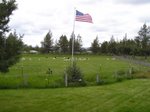
Hillcrest Memorial Park in Hermitage, Pennsylvania, has a tribute to a part of our history that most people have forgotten or choose to forget - The Iran Hostage Crisis.

The Tribute comes in the largest known display of flags in the world - 444 American flags to mark each day the American Embassy hostages were held, and a Canadian flag to recognize the Canadian embassy's help in saving six hostages from captivity. Now, a Union Jack is being added to remember the British Sailors and Marines who are being held.

Tom Flynn, owner of the Hillcrest Memorial Park, felt that the Iran Hostage Crisis was too important to ever forget and determined he would find a way to remember.

With the help of unemployed steel workers in the area and flags donated by the families of veterans buried at Hillcrest, Flynn decided to erect an American flag for each day the hostages had been held. 444 flags fly to commemorate each of those days our citizens were held.

When the eight American servicemen were killed during an ill-fated rescue attempt in Iran, the citizens of Scranton joined forces to dedicate a permanent monument in memory of these brave men and placed it in the Avenue of Flags.

The hostages were released on January 20, 1981. Michael Matrinko, along with fiver other returning hostages, lit the eternal flame which still burns today in front of the monument dedicated to the 1980 rescue attempt.

Hillcrest is also home to a landmark known as the War on Terror Veterans Memorial. It consists of eight steel and glass panels. One panel lists the names of all US service members killed by acts of terror from 1975 through September 11, 2001. The other seven contain the names of all of the men and women killed fighting the war on terror. The names are updated each week.

Tom Flynn - thank you for this remarkable tribute to those lost to terrorism.

For more on the Iran Hostage Crisis, go here and here.

Thursday, November 09, 2006

History is Our Stories - The Yellow Ribbon


Top Photo of Ribbon from the US Library of Congress
Bottom Photo of the Laingen's by Greg Jenkins


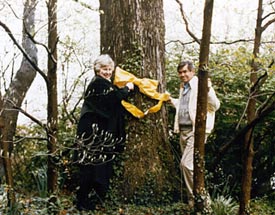
We see them everywhere - Yellow ribbons - magnets on cars, tied on mailboxes and posts, tied around trees. But, how did this happen?


During the Iran Hostage Crisis, Penelope Laingen, wife of hostage Bruce Laingen, charge d'affaires of the US Embassy, tied a yellow ribbon around a tree at their home in Maryland. This began a nationwide movement. The Washington Post wrote an article entitled "Penne Laingen's Wait," which announced the yellow ribbon symbol as a banner through which families could express their determination to be reunited. Millions of Americans also tied yellow ribbons around trees and lampposts. They stayed up until the hostages came home - more than a year later. The hostage's families formed a support group and took on the yellow ribbon as their symbol. They began making and distributing yellow ribbon lapel pins.

The Yellow Ribbon is now a national symbol in this country. "A symbol of reaching out, of caring, of caring for our fellow Americans," said Bruce Laingen.

Though Penne may have led the first national response with the yellow ribbon, it is part of the folklore of this coumtry. It can be traced back to the Puritans who used it as a battle symbol, versions of the song "She Wore A Yellow Ribbon" date throughout the late 19th century, and, of course, "Tie a Yellow Ribbon Round the Old Oak Tree." It's use and meaning continue to evolve, but we all know when we see a yellow ribbon that someone is away from home and is missed.


References:

Saturday, November 04, 2006

Iran Celebrates the Hostage Crisis

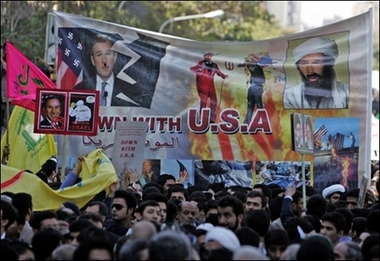
Today, the Iranians had large demonstrations against the United States, celebrating the taking of the US Embassy and the ensuing hostage crisis, 27 years ago.
Iranian protesters burn a banner which reads 'Death to America' Saturday Nov. 4, 2006 in front of former U.S embassy in Tehran, Iran during a demonstration. Iranian demonstrators Saturday celebrated the 27th anniversary of the takeover of the U.S. embassy in Tehran by militant students, warning the United States to learn from the incident. The protest was held as Iran continued a 10-day war games that on Saturday included the participation of some 30,000 ground forces. The students took 52 American diplomats hostage for 444 days. (AP Photo/Hasan Sarbakhshian)


Yahoo News

The Iran Hostage Crisis


November 4, 1979 - The Iran Hostage Crisis


"...in the aftermath of 9/11, we said, "My God, it began with us."

Bruce Laingan

Charge d'affaires of the US Embassy and Hostage


Iranian students take over the United States Embassy in Tehran, Iran


United States Embassy Hostages


On November 4, 1979, thousands of Iranian students, overran the US Embassy and took about 90 people captive. The non-Americans were freed. Later, some were freed, including the women (except for two) and blacks (except for one), on the grounds that they were unlikely to be spies and had suffered enough with the oppression of the Americans. Another hostage was released in July 1980 due to illness. 52 hostages were held for 444 days. Six others had escaped and taken refuge at other embassies. On January 28, 1980, Canadian diplomats helped these six to flee Iran. The Canadian Embassy was then closed.

Thousands of other protesters pressed around the embassy compound, responding to the call by the country's new leader, Ayatollah Khomeini, to attack US and Israeli interests. They demanded the return of the shah, Muhammad Reza Pahlevi, for trail and execution.

President Carter eventually halted oil imports from Iran, imposed a complete economic embargo, froze Iranian assets in the US and began diplomatic efforts to free the remaining hostages.

The hostages were finally released on January 20, 1981, moments after President Reagan was inagurated.


Today, the US Embassy in Iran serves as a museum to the revolution. It was opened in 2001. Outside the door are two bronze statues: the Statue of Liberty and a portrayal of one of the hostages. It is still the stage for angry demonstrations to chant anti-US and anti-Israeli slogans and to burn flags and effigies.


*********************************

Twenty seven years ago, the country gasped in horror as the symbol of America and our freedom was taken over in Iran. We stayed up to watch the news, to hope and pray for their release. Nightline with Ted Koppel was born for the purpose of covering the event. It was the first strike in our continuing war with radical Islam.


*********************************

The Hostages:

6 Evading Diplomats

Robert Anders, 34 - Consular Officer

Mark J. Lijek, 29 - Consular Officer

Cora A. Lijek, 25 - Consular Assistant

Henry L. Schatz, 31 - Agriculture Attaché

Joseph D. Stafford, 29 - Consular Officer

Kathleen F. Stafford, 28 - Consular Assistant


13 Women and African-American Personnel were captured, held hosage and released on 19-20 November, 1979

Kathy Gross, 22 - Secretary

Sgt. James Hughes, 30 - USAF Administrative Manager

Lillian Johnson, 32 - Secretary

Sgt. Ladell Maples, 23 - USMC Embassy Guard

Elizabeth Montagne, 42 - Secretary

Sgt. William Quarles, 23 - USMC Embassy Guard

Lloyd Rollins, 40 - Administrative Officer

Capt. Neal (Terry) Robinson, 30 - Administrative Officer

Terri Tedford, 24 - Secretary Sgt.

Joseph Vincent, 42 - USAF Administrative Manager

Sgt. David Walker, 25 - USMC Embassy Guard

Joan Walsh, 33 - Secretary

Cpl. Wesley Williams, 24 - USMC Embassy Guard


1 hostage captured, held and released on 11 July 1980 because of Multiple Sclerosis diagnosis

Richard I. Queen, 28 - Vice Consul 52

Remaining Hostages, held captive until 20 January, 1980

Thomas L. Ahern, Jr., -Narcotics Control Officer

Clair Cortland Barnes, 35 - Communications Specialist

William E. Belk, 44 - Communications and Records Officer

Robert O. Blucker, 54 - Economics Officer Specializing in Oil

Donald J. Cooke, 26 - Vice Consul

William J. Daugherty, 33 - 3rd Secretary of U.S. Mission

Lt. Cmdr. Robert Englemann, 34 - USN Attaché

Sgt. William Gallegos, 22 - USMC Guard

Bruce W. German, 44 - Budget Officer

Duane L. Gillette, 24 - USN Communications and Intelligence Specialist

Alan B. Golancinksi, 30 - Security Officer

John E. Graves, 53 - Public Affairs Officer

Joseph M. Hall, 32 - CWO Military Attaché

Sgt. Kevin J. Hermening, 21 - USMC Guard

Sgt. 1st Class Donald R. Hohman, 38 - USA Medic

Col. Leland J. Holland, 53 - Military Attaché

Michael Howland, 34 - Security Aide, held at Iranian Foreign Ministry Office

Charles A. Jones, Jr., 40 - Communications Specialist and Teletype Operator. Only African-American hostage not released in November 1979.

Malcolm Kalp, 42 - Affiliation Unknown

Moorhead C. Kennedy Jr., 50 - Economic and Commercial Officer

William F. Keough, Jr., 50 - Superintendent of American School in Islamabad, Pakistan, visiting Tehran at time of embassy seizure

Cpl. Steven W. Kirtley - USMC Guard

Kathryn L. Koob, 42 - Embassy Cultural Officer; one of two female hostages

Frederick Lee Kupke, 34 - Communications Officer and Electronics Specialist

L. Bruce Laingen, 58 - Chargé d'Affaires, held at Iranian Foreign Ministry Office

Steven Lauterbach, 29 - Administrative Officer

Gary E. Lee, 37 - Administrative Officer

Sgt. Paul Edward Lewis, 23 - USMC Guard

John W. Limbert, Jr., 37 - Political Officer

Sgt. James M. Lopez, 22 - USMC Guard

Sgt. John D. McKeel, Jr., 27 - USMC Guard

Michael J. Metrinko, 34 - Political Officer

Jerry J. Miele, 42 - Communications Officer

Staff Sgt. Michael E. Moeller, 31 - Head of USMC Guard Unit at Embassy

Bert C. Moore, 45 - Counselor for Administration

Richard H. Morefield, 51 - U.S. Consul General in Tehran

Capt. Paul M. Needham, Jr., 30 - USAF Logistcs Staff Officer

Robert C. Ode, 65 - Retired Foreign Service Officer on Temporary Duty in Tehran

Sgt. Gregory A. Persinger, 23 - USMC Guard

Jerry Plotkin, 45 - Civilian Businessman visiting Tehran

MSgt. Regis Ragan, 38 - USA NCO assigned to Defense Attaché's Office

Lt. Col. David M. Roeder, 41 - Deputy USAF Attaché

Barry M. Rosen, 36 - Press Attaché

William B. Royer, Jr., 49 - Assistant Director of Iran-American Society

Col. Thomas E. Schaefer, 50 - USAF Attaché

Col. Charles W. Scott, 48 - USA Officer, Military Attaché

Cmdr. Donald A. Sharer, 40 - USN Air Attaché

Sgt. Rodney V. (Rocky) Sickmann, 22 - USMC Guard

Staff Sgt. Joseph Subic, Jr., 23 - Military Police, USA, Defense Attaché's Staff

Elizabeth Ann Swift, 40 - Chief of Embassy's Political Section; 1 of 2 female hostages

Victor L. Tomseth, 39 - Senior Political Officer, held at Iranian Foreign Ministry Office

Phillip R. Ward, 40 - Administrative Officer


Constructed from Free At Last
by Doyle McManus