Showing posts with label Wounded. Show all posts

Wednesday, April 20, 2011

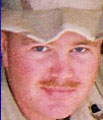
Photojournalist Chris Hondros Wounded in Libya

The brilliant photojournalist, Chris Hondros, has been reported critically injured in Misrata, Libya.
Earlier reports listed him as killed.  The fog of war leaves much speculation.

A year ago, he was photographing the Marines 4th LAR in Afghanistan.

http://inform.com/world/tribal-elders-pray-rural-helmand-province-2188706p

He has covered Libya, Egypt, Iraq, Liberia, The West Bank, Kashmir, Cuba, Afghanistan, Pakistan, Sierra Leone, Nigeria, Angola, Macedonia/Albania, Kosovo.....   http://www.chrishondros.com/images.htm

Chris has provided a vision of the worst conflicts in modern history.  My prayers are with him and his family and his friends at this time.

Update:
As was reported and then retracted, Chris was killed today in Misrata, Libya.
Getty Images has confirmed his death.
May you walk with God, Chris.  And, my personal gratitude for your time with the 4th LAR - I will never forget the day you posted the picture of my friend's son. 

Wednesday, November 10, 2010

The Marine Who Captured My Heart ~~~ Cpl Aaron Mankin


Click Play. This will be one of the most inspiring six minutes you may ever spend.


I remember that sleepless night in May 2005 -- I was sitting at the computer and an email came in from a favorite Marine I was supporting.  It said, simply, "Can you pray for one of my men?  He's bad.  Really, really bad.  We don't know if he will make it."


Of course, I prayed.  I began knitting a prayer afghan - each stitch a wish, each row a prayer.  Eventually, my friend would deliver it to Aaron at Brooke Army Medical Center.

Over the days and weeks and months and years, I learned more about Aaron Mankin.  I heard about the pain of his unit in Iraq while they packed up his stuff to send it home and waited for news.  I heard about the emails with his family.  We prayed.  We all prayed.  Today, I keep his picture where I see it every day, reminding me that my struggles may truly be small.  I've never met Aaron.  But, I follow his progress, and I still pray for him.  This combat correspondent captured my heart.

Today is the 235th Marine Corps Birthday.  Today, in honor of the Marines and Aaron and so very many men and women like Aaron, please remember them.  Please remember them with gratitude.

Thank you USMC --- Happy Birthday!

Thursday, August 19, 2010

Christian Bagge - Going Home At Last

You may remember this great picture of Christian Bagge running with President Bush. Christian lost both legs in and IED attack in Iraq on June 3, 2005. At the time, he had been married to Melissa for three months. Finally, they are coming back home to Oregon with their two children. They are coming home to a new adaptive home built by Homes for Our Troops.

Read about Christian and Melissa's journey here

And, read about what Homes For Our Troops are doing for the Bagge's here

Thank you to a great organization Homes For Our Troops


Wednesday, February 03, 2010

Face of Freedom ~ Capt Scott Smiley Takes Command ~ Blind Warrior Excels

Tiffany Smiley holds her youngest son while watching her husband Capt. Scott M Smiley salute the colors during the U.S. Army Warrior Transition Unit change of command ceremony Feb. 1, at West Point, N.Y.

Capt. Scott M. Smiley speaks briefly as his cadre stand in formation after he accepted command of the U.S. Army Warrior Transition Unit at West Point, N.Y.

Capt. Scott M. Smiley grins while passing the guidon back to 1st Sgt. Deon E. Dabrio during the change of command ceremony Feb. 1, for the U.S. Army Warrior Transition Unit at West Point, N.Y.
Photo Credits: Tommy Gilligan.

WEST POINT, N.Y. (Feb. 1, 2010) -- Soldier, Infantryman, Airborne Ranger, combat diver, mountain climber, skier, triathlete, surfer, husband and father are just a few words to describe Capt. Scotty Smiley.

Now, add company commander to his resume as he became the first blind officer to assume command of a Warrior Transition Unit, Monday.

He became only the second wounded warrior to assume command of a WTU.

During Smiley's last deployment to Iraq in 2005, he was wounded, permanently losing his vision.

After receiving medical attention, Smiley was transferred to the Fort Lewis, Wash., WTU. There he began his recovery and his journey to get back to active-duty status.

The 2003 West Point graduate wanted to get back to doing what he loved and that was serving his country in uniform.

Smiley attributes his strength and drive during his recovery to his family, faith and friends.

"It was my wife, my family and friends who were in my hospital room singing songs and reading the Bible that gave me the strength during my recovery," he said. "It was all of this which allowed me to put one foot in front of the other and has allowed me to accomplish everything that I have done to get to where I am today."

The Army Times 2007 Soldier of the Year looked at what had happened to him and made the decision that he was not going down the same path as the character Gary Sinise played in the 1994 movie Forrest Gump.

"The decisions that Lieutenant Dan made after his injuries never came into my mind. I wanted to take care of myself--physically, mentally and spiritually," he said. "I just did not want to give up because of something that negatively happened to me."

He dreamed to return back to active duty, but he knew it was going to be a long and strenuous path. However, it was not anything Smiley was willing to give up on.

"There were some very long dark days, physically and mentally, but I just had to keep pushing on," Smiley said.

He transitioned back to active duty, working at the U.S. Army Accessions Command at Fort Monroe, Va. After being there for some time, Smiley's commander told him he had been selected to go to grad school.

"I thought he was kidding me. I was absolutely shocked," he explained.

"Then they are going to let me go teach--that was awesome," Smiley said with a smile stretching from ear to ear.

He attended Duke University where he received his master's of business administration.

While Smiley was in school, he also cultivated a friendship that had begun during the summer of 2007 with legendary Duke University basketball coach and fellow West Point graduate, Mike Krzyzewski, Class of 1969, before the men's basketball world championships and Olympics.

"When my brigade commander, who was (then a) colonel and is now Brigadier General Brown, asked if I would be interested in speaking to the team, I was taken aback. 'Are you sure you know who you are talking to? Why would the national basketball team want me to talk to them?'" Smiley said.

"The first time I met him, he spoke to the Olympic team in Las Vegas. We were trying to teach the team about selfless service," Krzyzewski said. "They not only heard what Scott had to say, but they truly felt what he had to say."

"When I think of Scotty, I think of ultimate service, especially selfless service," he added.

When Smiley realized why Coach K wanted him to come speak to the team, it made sense to him. "Coach Krzyzewski went and coached here, he understands what sacrifice is all about," Smiley said.

After completing his master's degree, Smiley returned to where it started during the summer of 1999, although in a very different capacity.

Over the past six months, Smiley has been an instructor in the Behavioral Sciences and Leadership Department, teaching a leadership course to third-year cadets.

"His endurable spirit and character are traits that the cadets can just relate to," said Lt. Col. Eric Kail, a BS&L instructor. "He has overcome so much through his attitude and desire to excel in life. Scott is a great teacher."

Even though Smiley will not be physically teaching in the classroom for the duration of his tour as WTU commander, he will be leading by example as he begins this new chapter of his life.

Smiley's former commander while at USAAC and present U.S. Army Chief of Engineers and commanding general of the U.S. Army Corps of Engineers, Lt. Gen. Robert Van Antwerp, shared his thoughts on this occasion.

"Scott brings a whole new dimension to Soldiering and leadership. When you are around him, you can't help but want to do your best--without complaining--because he gives his best everyday," said Van Antwerp, class of 1972.

About Smiley being the second wounded warrior to hold a command position, Van Antwerp said, "Scotty will be a great commander. He will lead from the front like he has always done. I am proud of him and proud of our Army for giving him this opportunity."

Others like Krzyzewski seconded that notion.

"He may not have the eyes to see, but he sees more things than most leaders could ever see," Krzyzewski said. "His ability to translate that to his unit and the people he has (under his command), he will have the ability to touch many and they will be impacted tremendously."

Smiley now takes command of a company that he himself understands.

"I know what they are going through. I understand the dynamics of the company, how it works and areas of concern that need to be improved," Smiley said.

With only 50 percent of his command on West Point grounds, Smiley will travel from the rocky shorelines of Maine to the rolling hills of Pennsylvania to ensure his troops are being taken care of and doing what they need to do to get better.

"It is now my responsibility to inspire them and to continue to help them get the job done," Smiley said.

With his goals set and with a firm personal understanding of his present and future troops, the new company commander begins his tour, leading from the front like he always has.

Monday, October 26, 2009

VALOUR-IT ANNUAL FUNDRAISER


It is the annual fundraiser for VALOUR-IT
The Soldiers' Angels program to provide voice-activated software
to wounded soldiers who can no longer use their hands,
enabling them to communicate and be part of the world.

The fundraiser is broken up into team competitions.
Click on the 'team' name if you would like to support the event.
If you are a blogger and would like to join, click here
http://soldiersangels.org/index.php?page=project-valour-it

Thursday, July 16, 2009

National Veterans Wheelchair Games

Steve McGuire, a now-retired Navy petty officer second class disabled by a motorcycle accident after returning from an Operation Iraqi Freedom deployment, said the National Veterans Wheelchair Games give him an opportunity to share with and learn from other disabled veterans.
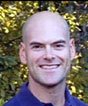
Photo courtesy of VA


Retired Army Staff Sgt. John Bennett, disabled by a sniper's bullet in Iraq, calls the National Veterans Wheelchair Games an opportunity to rekindle the competitive spirit he thought he'd lost.
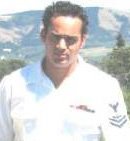
Photo courtesy of VA


Iraq, Afghanistan Combat Wounded Participate in Wheelchair Games

By Donna Miles
American Forces Press Service

WASHINGTON, July 16, 2009 - When Army Staff Sgt. John Bennett got shot by a sniper in Iraq in February 2005, his dreams of competition crumbled along with three vertebrae.

Looking back over that day in Hawijah, Iraq, the Montana Army National Guardsman feared he'd lost far more than a kidney, his spleen, colon, half of his pancreas and use of his legs.

"I was really worried about how my injuries would affect my life," he said.

Three years ago, just 11 months after leaving the hospital, Bennett put those concerns to rest when he attended his first National Veterans Wheelchair Games in Anchorage, Alaska. By the time the competition had finished, he'd earned two gold medals, in basketball and the 100-meter wheelchair race, as well as a bronze in bowling.

"I was really ecstatic that I could still get out there and compete," he said. "It gave me a chance to prove to myself that I could still do it."

Now back at the 29th National Veterans Wheelchair Games in Spokane, Wash., Bennett is helping to show other disabled veterans that they can do it, too.

He's among more than 500 disabled veterans, about half of them wounded in Iraq and Afghanistan. "A ton of them are novices," he said, meaning first-timers to the wheelchair games participating in their first sporting event since becoming disabled.

The event is the world's largest annual wheelchair sports competition, bringing together veterans with spinal cord injuries, amputations or other mobility or neurological conditions to compete in 17 different events.

They've fanned out to venues across the city to compete in track, swimming, field, basketball, weightlifting, softball, quad rugby, air guns, nine-ball, bowling, table tennis, archery, hand cycling, trapshooting, a motorized rally, power soccer and wheelchair slalom, a timed obstacle course. Others are participating in a golf clinic.

"It's fabulous to see this many disabled veterans out here competing," Bennett said. "It's just incredible to see the number of people who come out and do this."

Another Operation Iraqi Freedom veteran participating for the second time is Steve McGuire, who was medically retired as a Navy petty officer second class after a motorcycle accident landed him in a wheelchair.

McGuire was just back from a deployment to the Gulf aboard USS Theodore Roosevelt when the July 2006 accident left him with multiple fractures to his spine and ribs. He spent 10 days in the hospital, then more than five months in rehabilitation.

As he was recovering, McGuire said he realized his future rested largely in his own hands. "I couldn't afford to not get moving and get my life moving," he said.

So he got into adaptive competition, joining the "East Coast Cripplers," Virginia's only wheelchair rugby team.

"It gave me confidence, knowing that even though I was disabled, I was still able," he said.

Last summer, McGuire attended his first National Veterans Wheelchair Games in Omaha, Neb. He netted a gold medal in basketball and two silvers: in the novice category for archery and for coaching the second-place rugby team.

Like Bennett, he's back for more this year in Spokane. He's part of a rugby team slated to compete in the gold-medal match today, and he's got bowling and archery competitions in the days ahead.

But equally exciting, he said, is the opportunity to bond with other disabled veterans, particularly those just learning to live with their disabilities. A peer counselor at his home Veterans Affairs clinic, McGuire uses himself as an example as he helps them look beyond perceived limitations.

"I definitely feel that I have gained more than I have lost," he said of his own disability. "I've gained perspective in life and learned to appreciate things I took for granted. I'm more motivated. Instead of just doing what I had to do, I'm striving to go beyond that."

McGuire praised the National Veterans Wheelchair Games as the perfect experience to help veterans help each other build self-confidence as they rehabilitate together. "It's a huge experience," he said.

Among the mentors at this year's games is Russell Braun, a 70-year-old Air Force veteran participating in his eighth wheelchair games.

"The games give the newly injured veterans the knowledge that they can do more than sit around the house," Braun said. "It gives them self confidence and incentive, and really opens up their lives a lot more."

As VA Secretary Eric Shinseki noted during the games' opening day July 13, the event enriches onlookers, too. "These games are not only great for the athletes, they're even better for us as spectators," he said as he helped tip off a demonstration basketball match that got the games under way.

Bennett, who coaches girls' basketball and regularly cheers on his own family during their athletic events, said it was a treat to be in center court rather than on the sidelines.

"It's great for them to be able to see dad compete and get out there and do something to test his skills against everyone else," he said.

The games will continue through July 18, followed by an awards ceremony.

The National Veterans Wheelchair Games are co-sponsored by the Department of Veterans Affairs and Paralyzed Veterans of America, with financial assistance from corporate, civic and veterans service organizations.

In addition to the wheelchair games, the VA co-sponsors three other national rehabilitative events: the National Disabled Veterans Winter Sports Clinic, the National Veterans Golden Age Games and the National Veterans Creative Arts Festival.

Last fall, the VA hosted a new summer sports clinic pilot program that introduces water and adventure sports such as sailing, surfing, kayaking, cycling, and track-and-field events to recently injured veterans.

Next year's National Veterans Wheelchair Games will be held in Denver in early July.

To learn more, visit National Veterans Wheelchair Games

For an amazing array of photographs of the Veterans, click here

Saturday, May 09, 2009

Currahee

Monday, March 30, 2009

Face of Freedom ~ MAJ Alan Brown

Major Alan Brown rides a stationary bicycle March 21 at Bagram Airfield, Afghanistan. Major Brown is an amputee C-130 Hercules pilot deployed with the 774th Expeditionary Airlift Squadron from the 187th Airlift Squadron of the Wyoming Air National Guard. He lost his leg in a hunting accident 10 years ago, and after seven years he regained his qualifcations to fly. Major Brown works out daily riding the stationary bike using a custom strap developed by the unit's life support crew.
U.S. Air Force photo/Senior Airman Erik Cardenas

Wyoming amputee pilot completes third deployment

by Maj. Carie A. Parker

455th Air Expeditionary Wing

BAGRAM AIRFIELD, Afghanistan (AFNS) (3/27/2009) - What sets Maj. Alan Brown apart from other Airmen in the gym at Bagram Airfield's Camp Cunningham isn't his workout routine, it's his right leg.

"When people see me in shorts at the gym there's definitely a pattern," said the 42-year-old mobility pilot of Pine Bluffs, Wyo.

"They glance at my eyes, look down at my leg and then look back at my eyes," said the Wyoming Air National Guard Airmen deployed with the 774th Expeditionary Airlift Squadron. "It happens every time."

Major Brown accidentally shot his leg in a hunting accident more than 10 years ago. After four weeks in a drug-induced coma and three weeks of grueling rehabilitation, he was released as an above-the-knee amputee. His family made the decision to amputate after several attempts to restore blood flow to the leg failed. That decision saved his life.

"My body was shutting down and they made the tough decision to amputate not knowing how I would react," the major said.

Once he woke up, remembering the accident, his eyes were drawn to his leg. He asked the obvious question, "I lost my leg right?" Then he asked if his then girlfriend (now wife) Gina was still around. His third question provided his family some kind of relief, "What can I do to fly again?"

The answer to the last question had already been researched while the major was in his coma. Knowing how passionate he was about flying, squadron mates had done some homework to find out exactly how he could fly again. Upon hearing his question, they shared with him the names of two civilian amputee pilots who had successfully returned to the cockpit following similar procedures.

Despite recommendations from medical professionals, Major Brown left the crutches and wheelchair behind, focusing on being back to normal. He never looked back.

"Attitude is everything, either you're going to let an injury like this ruin your life or you resume your life," Major Brown said.

He returned to work just nine weeks after the accident, and said he's found if he's willing to give everything he has toward a goal, people are willing to give everything they have to assist. One of those goals was getting back in the cockpit of the C-130 Hercules, re-establishing himself as just another pilot.

"I had invested a lot of time and energy into becoming a pilot," he said. "I wasn't about to walk away from the only career I had known."

First, Major Brown had to prove he should stay in the National Guard. Once he convinced leadership he was dedicated to the mission, the next step was to convince them he could deploy.

His current deployment is his third since he regained his worldwide qualification in 2005.
In the meantime, a well-meaning co-worker offered him a handicapped parking spot so he wouldn't have to walk so far to work.

"I laughed, thanked her and explained that I wasn't handicapped," he said. "It totally went against everything I was trying to achieve. In my mind I couldn't be handicapped and convince people I was able to fly a plane."

His last and most challenging task was to assure anyone who would listen that he wouldn't be a liability as a pilot. He had to prove this with a testimonial from a flight doctor that he could perform as a two-legged pilot.

Before the accident he'd flown for almost five years. From start to finish it took another seven years to get back in the saddle with the military. His dedication to the mission helped motivate him toward getting requalified.

"In my mind, I need to be deployed with my buddies. We've been training and flying together for years. It's not an option to stay home while they're here taking on the mission," the major said. "Flying is in my blood. It's what I do. And besides, I believe in what we're doing in Afghanistan."

He admitted flying is different with a prosthetic.

"As a pilot, using your feet is second nature," he said. "I just had to learn how to operate in a different way after the accident."

The deployed environment does present one significant challenge to the pilot.

"The gravel is rough," he laughed. "I haven't fallen yet but I can tell you that I know where every paved surface is on the base."

His prosthetic leg is slightly shorter than his remaining leg -- to ensure he doesn't drag his foot on the ground -- and has a hydraulic knee to aid with stabilization, but it's much less maneuverable than his own leg.

That lack of flexibility limits him at the gym with weight training and cardiovascular activity. He discovered he can ride the stationary bike with the help of a custom strap crafted by the unit's life support crew.

"Just about every day someone approaches me to ask what happened," he said. "People aren't sure if I'm sensitive about it. But once I let them know that I'm not offended and explain what happened, everything is fine."

The one thing the major is reluctant to talk about is how he's helped others in his situation. He takes every opportunity to encourage other amputees there is life after a lost limb.

"This isn't about me and what I've accomplished. I made a big mistake. There's no one to blame for this but me, and I don't want to stand out," Major Brown said. "Being comfortable with my situation gives me a chance to answer questions other amputees may have on what they'll face."

On a recent trip to Walter Reed hospital in Washington, D.C., he visited many veterans facing the future without a limb.

"I just wanted to answer any questions they had," he said. "Coming home and not knowing what the future holds can be overwhelming."

He emphasized how impressive it is that the military has taken a wider approach with amputees in light of the recent increase in those losing limbs in Iraq and Afghanistan.

He also understands the importance of friends and family when facing difficulty.

"Everyone faces challenges, but having the right mindset and the right people to support you makes the difference," said the major, who expects to be back home by the end of the month.

"I'm the most fortunate guy around, not only do I get to fly, but I am surrounded by great people who have supported me and have now accepted me as just another pilot. That's all I've ever wanted.

Wednesday, February 18, 2009

Wednesday Hero ~ Sgt Kelly Keck

Sgt. Kelly Keck
Sgt. Kelly Keck
34 years old from West Liberty, Kentucky
U.S. Army

Secretary of the Army Pete Geren congratulates Sgt. Kelly Keck after presenting him the Purple Heart.

On September 13, 2008, Sgt. Kelly Keck, a combat medic serving in Afghanistan, was wounded while trying to aid his fellow soldiers who's truck had just been struck by an IED. "I stepped off the road to try to get to the side of the truck, and the next thing I know I hear a loud boom, and I'm laying on the ground," he said. Sgt. Kelly had stepped on a land mine. He was flown to a field hospital in Jalalabad where he ended up loosing three fingers on his left hand and his right leg below the knee. "It was quite an ordeal," the soft-spoken soldier said.


These brave men and women sacrifice so much in their lives
so that others may enjoy the freedoms we get to enjoy everyday.
For that, I am proud to call them Hero.

This post is part of the Wednesday Hero Blogroll. For more information about Wednesday Hero, or if you would like to post it on your site, you can go
here.

Wednesday Hero Logo

Thursday, February 12, 2009

Faces of Freedom ~ Canadians Cpl Billy Kerr & Master Cpl Mike Trauner


Cpl. Billy Kerr, left, and Master Cpl. Mike Trauner, right, Canadian soldiers who lost limbs to improvised explosive devices in separate attacks in Afghanistan, say they believe in the mission and will continue serving in the Canadian army. With them is Capt. Stephanie Smith, a critical care nurse who helped bring them home to Canada for care.
DoD photo by Donna Miles
Chairman of the Joint Chiefs of Staff Navy Adm. Mike Mullen and Canadian Chief of Defense Gen. Walter Natynczyk speak with Canadian army Master Cpl. Mike Traumer, left, and Cpl. Bill Kerr during a visit with Operation Enduring Freedom veterans in Ottawa, Canada, Feb. 10, 2009.
DoD photo by Mass Communication Specialist 1st Class Chad J. McNeeley/Released


Americans often forget that there is a coalition of countries who are fighting and sacrificing in Afghanistan and Iraq along side of us. This is the story of two Canadian soldiers who have paid a price, but are not letting it stop them....

OTTAWA, Feb. 10, 2009 – The chairman of the Joint Chiefs of Staff heard firsthand accounts today about the mission in Afghanistan from Canadian soldiers who recently returned from deployments there, including two amputees who have elected to stay on duty.

Navy Adm. Mike Mullen met with about 40 soldiers. Among them were Cpl. Billy Kerr and Master Cpl. Mike Trauner, who lost limbs to improvised explosive devices in separate attacks outside Kandahar.

“As has been the case for me in recent years, whenever I sit down with those who have been injured, I come away more inspired by them than I had expected and anticipated,” Mullen said during a joint news conference. “These are two great men who look forward to fulfilling their own dreams. It was an honor to be with them.”

Kerr and Trauner share not only similar injuries and therapies, but also a belief in the NATO-led International Security Assistance Force mission in Afghanistan and a desire to continue serving in the Canadian army.

Kerr, 41, is a reservist who volunteered for his second deployment to Afghanistan, where he served as an embedded mentor for the Afghan National Police. “I thought it was something worth doing,” Kerr said of his decision to return. “I felt like it wasn’t done.”

Kerr’s second tour of duty was a near-constant fight, with the enemy uncomfortably close to his base. “At 300 meters you got shot at, at 400 meters you were in a big fight, and at 500 meters you were at their door,” he said.

But as an infantryman, he said “wanting to get in the thick of it” was simply “what you do, … part of your mentality,” so he embraced the mission as he patrolled with the “Razorbacks,” a unit that blended infantry and military police troops.

During a foot patrol in October, Kerr was the fifth soldier into a doorway when a remote-controlled blast severed both legs and his left arm from his body. He never lost consciousness, and remembers looking at what was left of his body and expecting -- even wanting -- to die.

He didn’t. Rushed for care at Kandahar Airfield, then Landstuhl Army Medical Center in Germany, then back to Canada, Kerr cheated the death he had expected.

Less than two months after his injury, he was took his first steps on two prostheses. He expects to be able to walk with a cane by late April.

Trauner, 29, shares a similar story. Less than three months after deploying to Afghanistan in September, he encountered an IED during a dismounted patrol west of Kandahar. The blast -- most likely from an artillery shell strapped to a mortar, he believes -- knocked Kerr 20 feet into the air and destroyed his weapon.

It also took both of his legs and broke 25 bones in his left hand.

Asked by medics who rushed to his care in Kandahar to rate his pain level from 1 to 10, Trauner told them it was 100. He said he died twice -- during his initial surgery, then during the flight to Landstuhl -- but was brought back to life.

Eight surgeries later, Trauner expects to receive his prosthetic legs later this week. He’s still being treated for his hand injuries at a rehabilitation center here.

Both Trauner and Kerr want to stay on active duty. “I really, really do,” Trauner said, while conceding that he most likely will have to move into an administrative position. “I’m very proud to stay.”

“I’m not going anywhere,” echoed Kerr. But unlike Trauner, he envisions himself being back in an infantry job. “I want to be kicking in doors again,” he said. “I would be back there now if I could.”

Kerr dismisses what he sometimes hears on TV or reads in the papers about the mission in Afghanistan going downhill. “Opinions are always opinions,” he said, adding that people who haven’t been there don’t really know what’s going on there.

“I think we are doing some good and making progress there,” he said. “I felt really good going into this mission. I left like I was really contributing.”

Trauner said that as a soldier, his job is to follow orders and do what he’s told. But deep down, he said, there’s a deep personal motivation that inspires him to continue serving.
“If we didn’t do the job, who would?” he said. “We do it because we don’t want our families and other people’s families to be at risk.”

-Donna Miles


Wednesday, December 03, 2008

Face of Freedom ~ SSG Matthew Sims

Army Staff Sgt. Matthew Sims


Medic Earns Three Purple Hearts During One Deployment to Iraq

By Samantha L. Quigley
American Forces Press Service

WASHINGTON, Dec. 1, 2008 - If Army Staff Sgt. Matthew Sims was a cat, he'd have only six lives left after his yearlong deployment to Iraq with the 1st Armored Division's Company B, 270th Armor Battalion, out of Fort Riley, Kan.

"I was wounded three times in Iraq the last time I was there," Sims said of the deployment that began in January 2005.

Sims, a medic, was riding in a tracked ambulance between two M1-A1 Abrams tanks when a roadside bomb detonated.

Shrapnel pierced the vehicle and penetrated his flak vest, puncturing his left lung. He was evacuated to the hospital in Balad. He spent about three weeks recovering before returning to his unit, but it was only the first of three stays at the hospital.

"They know me there," he said with a chuckle.

Three months after he'd returned to duty, his unit was on a foot patrol when it started taking enemy mortar fire. One mortar landed near Sims.

"Shrapnel hit near my lower left leg, penetrating through the front lower part and coming out the back," he said. "[I] almost, almost lost that limb in that incident, but everything's fine now."

Again, Sims was transported to Balad, where he spent another four weeks recovering from his injuries before rejoining his unit to finish his tour.

Unfortunately, he would endure one more interruption before rotating back home.

It was about 4 a.m., and Company B was patrolling Main Supply Route Tampa, one of the main roads in Iraq, when Sims, who was riding in an Abrams tank, started seeing flashes in the distance. He doesn't remember anything after calling in the attack, however.

"I took a sniper bullet - 7.62 mm - to the front of the helmet -- straight in front, almost right between the eyes," Sims said.

The bullet fractured his neck and skull and knocked him unconscious.

"I fell into the turret of the tank," he said, "and when ... [it] turned to fire at the enemy, it broke my right femur."

That earned him a two-month stay in the Balad hospital. He said the care he received there was excellent, and he gave the men in his unit kudos for their part in his survival and recovery.

"I attribute a lot of my speedy recovery ... [to] the care that I received actually on site at the point of injury -- quick response from all the people that were there," he said, referring to the soldiers he'd trained in the new Combat Life Saver program. "The people that were actually treating me were people that I had trained. By the time I got to Balad, I was pretty much good to go. They just had to kind of patch me up."

Sims' last tour in Iraq may have resulted in three Purple Hearts, but he said he's not hesitant about returning.

"No, not at all," he said. "I think that it's a lot safer than when I was there. I think the time that I was there, it was right around the national election time, [and] it was really the peak of all the main [bomb] attacks.

"I think now, it's almost 100 percent turnaround," he added.

It's good he's not timid about returning. His current unit, Headquarters and Headquarters Company, 15th Engineer Battalion based out of Schweinfurt, Germany, is certain to deploy at some time.

"We're trying to get all the equipment in and get this unit stood up, because it's the only construction battalion in Europe right now," Sims said. "So, we don't know exactly where we're going yet, but we know we're going to go somewhere."

Sims, who has served 10 years since enlisting right out of high school, recently re-enlisted indefinitely. He hopes to become a doctor or a physician assistant, he said, but he has his sights on one of the Army's top spots if he remains in the Army as an enlisted soldier. He said he'd like to be the first medic to serve as sergeant major of the Army.

"As a medic, you get a broad spectrum of everything that's in the Army," he added. "You can go to any type of unit, so you're more well-rounded, I think."

Sims and his wife call St. Charles, Mo., home.

The helmet of Army Staff Sgt. Matthew Sims, a medic then assigned to the 1st Armored Division's Company B, 270th Armor Battalion, bears the scars it incurred one of three times he was wounded during a 2005 tour of duty in Iraq.

Tuesday, November 25, 2008

Valour IT - Please Help


Project Valour IT

Can't you help our wounded warriors?

click here

Monday, November 24, 2008

Sign the Christmas Card for our Wounded Troops


Don't let Christmas feel like just another day for our brave heroes
who have already sacrificed so much.

Add your name to the VFW Christmas card to wounded troops
at the Madigan Army Medical Center in Fort Lewis, Washington.

A VFW volunteer will be delivering the Christmas card in person.
Add your name by midnight December 5th to send a message of support and cheer.

Thursday, November 20, 2008

Project Valour-IT


Project Valour IT

Can't you help our wounded warriors?

click here

Tuesday, November 18, 2008

Valour IT - 2008 Fundraiser.


Project Valour IT

Fourth Annual Project Valour IT Fundraiser

Can you help???

Every cent raised for Project Valour-IT goes directly to the purchase and shipment of laptops
and other technology for severely wounded service members. As of November 2008, Valour-IT has distributed over 2700 laptops to severely wounded Soldiers, Sailors, Airmen and Marines across the country, and is now expanding its mission to include other technology that supports physical and psychological recovery.

Valour-IT accepts donations in any amount to support our mission, but also offers a sponsorship option for laptops. An individual or organization may sponsor a wounded soldier by completely funding the cost of a laptop and continuing to provide that soldier with personal support and encouragement throughout recovery. This has proved to be an excellent project for churches, groups of coworkers or friends, and members of community organizations such Boy Scouts.
Originally Valour-IT provided the voice-controlled software that accompanies the laptops, but now works closely with the Department of Defense Computer/electronic Accommodations Program (CAP): CAP supplies the adaptive software and Valour-IT provides the laptop. In addition, DoD caseworkers serve as Valour-IT’s “eyes and ears” at several medical centers, identifying patients in need of laptops and other technological support for their recovery. Wounded military personnel can also directly request a laptop through the sign-up form or through the Valour-IT/Soldiers' Angels representatives at the following medical centers:

* Balboa Naval Hospital
* Brooke Army Medical Center
* Madigan Regional Medical Center
* National Naval Medical Center (Bethesda Naval Hospital)
* Naval Hospital, Camp Pendleton
* Robert E. Bush Naval Hospital (29 Palms)
* Walter Reed Army Medical Center

Thanks to the efforts of the Military Order of the Purple Heart, Valour-IT is also able to reach patients in VA hospitals who would benefit from a Valour-IT laptop or other technology to support their recovery and independence.


Can't you give a few dollars to help those who have given so much for us?

Bloggers - can you help spread the word? Join here

Saturday, January 12, 2008

Farewell, and Walk with God

The Department of Defense announced the death of six soldiers who were supporting Operation Iraqi Freedom. They died Jan. 9 in Sinsil, Iraq, of wounds suffered when an improvised explosive device detonated during combat operations. They were assigned to the 3rd Squadron, 2nd Stryker Cavalry Regiment, 1st Armored Division, Vilseck, Germany.

Killed were:

Spc. Todd E. Davis, 22, of Raymore, Mo.

Staff Sgt. Jonathan K. Dozier, 30, of Rutherford, Tenn.

Staff Sgt. Sean M. Gaul, 29, of Reno, Nev.

Sgt. Zachary W. McBride, 20, of Bend, Ore.

Sgt. 1st Class Matthew I. Pionk, 30, of Superior, Wis.

Sgt. Christopher A. Sanders, 22, of Roswell, N.M.

Whenever a group of soldiers are lost at the same time, the magnitude of the loss makes it seem so much more severe. For us, it is compounded by the loss of a young man from our town. Five other towns are experiencing the same loss. Six families are dealing with the hardest of all losses. Four soldiers were wounded in this explosion. Four families are facing difficulties the rest of us can only imagine. I hope that you will sent a prayer or a kind thought to these families, to the wounded and to the members of the 3/2 who are grieving the loss of their friends. I will bring you their stories as I can. They are worth knowing - they gave everything for us.

Wednesday, January 09, 2008

Book Review ~ Rule Number Two


Rule Number Two

Lessons I Learned in a Combat Hospital

Dr. Heidi Squier Kraft (LCmdr, Ret)

There are two rules of war.
Rule number one is that young men die.
Rule number two is that doctors can't change rule number one.
--M*A*S*H: TV show

One of the remarkable things happening in today's military and today's war zones is the phenomenal writing that is occurring from the front lines in the form of blogs and books. Today, we are brought closer to the thoughts and feelings and experiences of our military through the written word, and they do it so well. Anyone wanting to know more about the War on Terror and our military has access to the information (see my recommendations on the sidebar.)

Rule Number Two is a collection of the experiences of Navy Lieutenant Commander Heidi Kraft during her deployment as a clinical psychologist with a Marine Corps Surgical Unit in Al Asad, Iraq. Dr. Kraft shares with us the stories of the damages of war and the amazing stories of repair of the spirit and the body. She also shares her longing for home and her 15 month old twins, jutaposing her life in Iraq with her family at home. There are stories that will make your heart soar, make you laugh out loud and make you cry. There is an especially gruesome story of her smallpox vaccination and one about camel spiders that are unforgetable!

Dr. Kraft allows us to share her laughter, her tears, her joys and her fears. This is a wonderfully readable book, and difficult to put down, as Dr Kraft weaves us into her stories. We meet the Marines, the Navy Corpsmen, the Navy doctors, nurses, technicians and the Marine working dogs.

Some of the most vivid stories are those of Cpl Jason Dunham. When Cpl Dunham was wounded, Dr Kraft was one of the people who sat and held his hand and talked to him. Cpl Dunham, who died later from his wounds, was awarded the Medal of Honor for his courage and bravery and sacrifice that day when he threw himself on a grenade to save his men. In later chapters, Dr Kraft shares the story of his passing and the story of his mother's, Deb Dunham, letter to Dr. Kraft to thank her for holding Jason's hand and caring for him. They are stories that will touch your heart.

One of the greatest gifts of this book is the peek into the medical care provided to our warriors - the love, care and respect they are given. This is a remarkable book and I recommend it to anyone interested in life in a war zone and in a hospital in a war zone.


Dr Kraft is donating 10% of the profits to the Injured Marine Semper Fi Fund.

(I received this book as a free preview copy from the publisher.)

Sunday, December 30, 2007

A Face of Freedom ~ Air Force SSG Eric Eberhard

Air Force Staff Sgt. Eric Eberhard, a Salt Lake City native deployed from 419th Civil Engineer Squadron at Hill Air Force Base, Utah, kneels in front of a joint explosive ordnance disposal rapid-response vehicle at Bagram Air Base, Afghanistan, Dec. 17, 2007. Eberhard's quick reactions allowed him to save the life of the leader of his three-person EOD team after an improvised explosive device detonated near them Dec. 7.
Photo by Staff Sgt. Josh Jasper, USAF

Face of Defense: Airman Reflects on Saving Team Leaders' Life

By Capt. Michael Meridith, USAF
Special to American Forces Press Service

FORWARD OPERATING BASE GARDEZ, Afghanistan, Dec. 21, 2007 - As he sat eating breakfast Dec. 7, Air Force Staff Sgt. Eric Eberhard had no idea that he was just hours away from a struggle to save the life of the airman sitting next to him.

The Salt Lake City, Utah, native and former Marine was enjoying a brief pause before another demanding day as a member of a three-person explosive ordnance disposal team based here.

"We were out with a route-clearance team for a medical engagement and had spent the night at a local village," Eberhard said. "We ate breakfast and were waiting for the medical engagement to end so we could do the route clearance back."

Although they weren't scheduled to leave the village until later that day, they were surprised by word that an improvised explosive device had been spotted a short distance away by Afghan National Police.

"We got to the scene and talked to the policeman who found it; he had been on patrol and saw something suspicious in a culvert under a bridge and reported it. The bystanders were being kept at a distance, so we dressed out our team leader in a bomb suit, and he went down into the culvert," he said.

While their team leader examined the IED, Eberhard and his fellow teammate kept a constant watch from their armored joint EOD rapid-response vehicle.

"I was sitting in the front seat when I saw the blast. I still see that flash in my mind," Eberhard said.

Moments after the IED exploded, he leapt from the vehicle and raced to the scene, waving medics forward to follow him.

"I didn't know what to expect; I just knew that I needed to get down there and assess the situation. When I got there, I saw him laying on the ground and saw that his leg and arm were severely injured, but his bomb suit was pretty much intact."

After ensuring no further threat from IEDs, Eberhard finally gave the medics the go-ahead to approach the wounded airman. At the same time, he began to act.

"When I got to him he was trying to sit up, but I made him lay back down. At first, all he could say is, 'It hurts bad. ' But we were glad that he was coherent, and we wanted him to stay that way."

To keep the wounded airman conscious, Eberhard elevated the uninjured leg to force blood back to the core of the body. With that accomplished, he started a tourniquet for the wounded arm while the medic tended to the leg.

"In my mind I knew his arm needed a tourniquet, so I just reached over and grabbed it. I didn't ask anyone, I just did it. He was coherent enough that he was actually helping us by telling us what to do. He told me, 'My arm needs to be tighter,' and I tightened the tourniquet."

With the bleeding controlled and an IV started, Eberhard reported the incident and then helped move his wounded team leader to a field to await helicopter medical evacuation.

"I just talked to him and tried to keep him awake," he said. "We talked about football and video games; we're both pretty competitive about it. Not long after that, I ran back and got him a satellite phone and let him talk to his wife. She was extremely grateful, and he was too. It was one of the things that kept him alert. He was talking to his wife, and because of that he knew he couldn't pass out."

Soon afterward, Eberhard said goodbye as his wounded comrade was taken away to medical care. Eberhard later learned that his team leader lost part of his leg, but was expected to recover.

Over the past few weeks, Eberhard has had time to reflect on that day. At the time, he said, he was mostly driven by instinct, which he credits to the combat-skills training he received before deploying. But he makes it clear that he does not consider himself a hero.

"Everyone is calling me a hero, but it is a weird position to be in," he said. "My definition of a hero is someone who does something they don't have to do in a situation they don't have to be in. No one forced me to be here. I'm a reservist. There was nothing saying I had to deploy; I wanted to. I wanted to let someone on active duty take an extra six-month break and be home with their family."

Despite the events of the day, Eberhard said he has no regrets about volunteering to deploy. In fact, he said the deployment experience has left him with some valuable insights he will carry with him to his home unit, 419th Civil Engineer Squadron, at Hill Air Force Base, Utah.

"The biggest thing I learned is that if we focus on being the servants, not the masters, and look at deployments as a way to serve our fellow man, it changes the outlook we have on deployments, and it makes a big difference in the lives of the Afghan people," he said.

(Air Force Capt. Michael Meridith is assigned to 455th Air Expeditionary Wing Public Affairs)

Wednesday, December 19, 2007

Wednesday Hero ~ SSgt Mike Mills

This Weeks Hero Was Suggested By Leo


SSgt. Mike Mills

SSgt. Mike Mills


On June 14, 2005 SSgt. Mike Mills's life was forever changed. The HETT(Heavy Equipment Transport System) he was riding in was hit by an IED. The attack resulted a cracked clavicle and scapula bones, dislocate shoulder, broken left hip, 4 out of 5 bones broken in his foot and being set on fire. The driver in the truck behind him ran with a cooler of melted ice which he threw on Sgt. Mills to put him out.

He spent three months in the Brooks Army Medical Center at Ft. Sam Houston, TX with the injuries listed above plus 2nd, 3rd and deep tissue burns to 31% of the left side of his body. The first thing he remembers thinking after the attack was that his soldiers needed him and he needed to get back to them.

"Then the guilt set in about what I did to my family. I've totally screwed that up. Look at me, no don't. I look hideous. How can I face my kids looking like this. They'll be embarrassed to be seen with me. What if they won't love me anymore? Speaking of love, my wife, oh my god. How can I expect her to stay with me. I'm not a man anymore. She's not going to want be intimate with a freak. What if I can't work, how do I support myself, my family.

I had the nightmares and couldn't sleep. I wasn't eating and was loosing weight. I didn't really care. If I didn't start eating, they where going to put the feeding tube back in. Who cares, I've totally screwed up my life anyways."

But he found out just how much is wife loved him, when she stood by his side throughout the entire ordeal. She was there for every wound dressing and even learned how to change the dressings herself.

SSgt. Mike Mills now runs the site For The Veteran... By A Veteran in which he helps veterans, soldiers and their families find information they may not have been given after their medical discharge or retirement.


Some may say that Mike gave his country more than enough when he was severely maimed by an IED on that fateful day of June 14, 2005, but Mike continues to give to his fellow servicemen, as well as to his nation!


These brave men and women sacrifice so much in their lives

so that others may enjoy the freedoms we get to enjoy everyday.

For that, I am proud to call them Hero.


This post is part of the Wednesday Hero Blogroll. For more information about Wednesday Hero, or if you would like to post it on your blog, you can go here.

Wednesday, November 28, 2007

Operation Santa / Hospitals Needs Our Help!!!


Operation Santa
for the Hospitals & Our Wounded Troops

Operation Santa for the Hospitals is putting together Christmas stockings with gift cards and treats and cards to deliver to the OEF/OIF veterans at Bethesda, Walter Reed, Balboa Naval Hospital and Brooke Army Medical Center.

And, they need our help!!!! There are two ways to help -

Money - They can use our donations to purchase stocking stuffers and pay for postage. To donate, you can click this Pay Pal link for Marine Corps Family Foundation - a 501(c)(3) - so your donations are tax deductible - be sure and designate "For the Hospitals" in the notes box or, you can tuck a check into the envelope of Christmas cards!

Christmas Cards - They wish to put lots of Christmas Cards in the stockings! So, if you can sit down and write a joyful Christmas card (or a box or two!) and send them to:

Operation Santa - c/o Marine Moms-Bethesda - P O Box 22 - Cordova MD 21625

Please note: The cards must be glitter and coating free - these come off and can cause secondary infections in the wounds. Don't seal the envelopes - they are screened. Please consider tucking a check in (Marine Corps Family Foundation - Hospitals) to help with the project! They should be postmarked by December 3.

Contact Carrie at wrcostan@comcast.net for any one interested in supporting the efforts or for more information about the stockings.

Contact Jane at jane@marinemoms-bethesda.org for more information about the cards. And, Jane's detailed post is here

Please help Carrie and Jane make our wounded troops Christmas a little brighter!