Showing posts with label Australia. Show all posts

Sunday, April 26, 2009

ANZAC DAY ~ April 25


ANZAC DAY
At dawn, April 25, Australia and New Zealand have their day of remembrance
of the fallen warriors of their countries.
Candlelit ceremonies were held in all places that they have troops serving,
as well as at home.

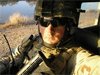
Above, Anzac Day ceremonies at Operation Slipper,
Oruzgan Province in southern Afghanistan


Below, ANZAC Day ceremonies at Baghdad's North Gate War Ceremony
41 Australians and 7 New Zealanders are buried here.


Friday, February 13, 2009

Tribute to a Coalition Partner ~ Australia

Tribute to a Coalition Partner
AUSTRALIA


Australian Forces in Iraq and Afgahnistan
Photos from Australian Defense


"We believe in a free and democratic world, a world where people can pursue their own interests in a free and open way. I think we share the same value set (with the United States), and we stand against the people who want to change that."
-Angus Houston, Chief of the Australian Defence Force


"Just looking at recent history, clearly Australia has been able to operate in Iraq, has been able to operate in Afghanistan at the same time, and provide a peacekeeping force in East Timor and help solve some of the problems of other island nations. I think Australia has clearly demonstrated the ability to lead globally."
-Peter Pace, Chairman of the Joint Chiefs of Staff


The Australians are one of our greatest allies in the War on Terror. They are involved in Afghanistan in Operation Enduring Freedom through Operation Slipper. They are invloved in Operation Iraqi Freedom through Operation Catalyst. Australian Special Operations Soldiers are considered to be world-class. I am proud to call them Allies!

To read about their specific contributions:
http://www.centcom.mil/sites/uscentcom2/Coalition%20Fighting%20Terror/CoalitionPages/Australia/Australia.aspx
Links to the military, political and diplomatic sites are there.

Australia has lost soldiers in OIF and in OEF.
Please remember them:
KUWAIT
WO David Nary SASR (Trg prior to deployment) 16 Nov 05

IRAQ
Flt Lt Paul Pardoel RAF (Serving with UK MOD Air Force) C130 crash Baghdad Iraq 1Feb 2005

Private Jake Kovco 3RAR (Para) Regt Shot/Misadventure Baghdad Iraq 21 Apr 2006

Ex-ADF PMC’s killed in Iraq:

Chris Ahmelman Edinburgh Risk Mngt Killed in Ambush Baghdad Iraq 21 Apr 2005

Wayne Schultz Armor Group Killed in Ambush Baghdad Iraq 8 June 2006

Jon Hadaway Armor Group DOW Germany Baghdad Iraq 15 Aug 2006

Steve Gilchrist Armor Group Killed in Ambush Baghdad Iraq 17 Dec 2006

Brendan Hurst BLP Int Killed in Ambush Baghdad Iraq 15 Jul 2007

Justin Saint BLP Int Killed in Ambush Baghdad Iraq 15 Jul 2007


AFGHANISTAN

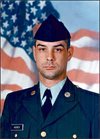
Sgt Andrew Russell SASR May 2002

Tpr David Pearce 2/14 LHR (QMI) Oct 2007

Sgt Matthew Locke SASR Oct 2007 (Medal of Gall Holder)

Private Luke Worsley SASR. Nov 2007

L/Cpl Jason Marks 4 CDO Regt May 2008

Sig Sean McCarthy SASR July 2008

Lt Michael Fussell 4 CDO Regt 27 Nov 2008 Oruzgan Prov

Rfmn Stuart Nash 1st Bn Rifles (Serving with UK MOD Army) Dec 2008

Pte Greg Sher 4 CDO Regt Jan 2009 Urgzgan Prov


For those of you who would like to write to an Australian soldier:
Messages can be sent via e-mail to:
messagestothetroops@defence.gov.au

Alternatively postcards (not enveloped letters or parcels) can be addressed to:

Messages to the Troops
Department of Defence
R1-5-A056
Russell Offices
Canberra ACT 2600
Australia

I try to drop a few postcards to them from time to time. Standard postcards require 94 cents in postage from the US. I have actually heard back from an Australian soldier - they are quite grateful to receive supportive mail from us. We owe them much and they need to hear that we support them, too!


Updated February 2009, thanks to the Legion of Frontiersmen of Australia who provided current information.

Wednesday, October 29, 2008

Wednesday Hero ~ SAS Soldier


Wednesday Hero was started to put a spotlight on the men and women of the United States military and the bravery their show day in and day out. But on a few occasions a service members of an allied nation has been profiled. Such is the case this week.

Despite being shot twice during an ambush in Afghanistan, an SAS (Special Air Service) soldier from Australia lashed himself to the front of his patrol vehicle so he wouldn't be left behind if he passed out from loss of blood and kept on fighting.

The Digger is expected to be recommended for a high level bravery award.

Suffering from serious upper body wounds, the soldier struggled on to the front of his SAS long range patrol vehicle (LRPV) and, under heavy fire, used a rope to attach himself firmly between the vehicle's bull bar and radiator.
Once he was secured, and there was no chance that he would fall off if he fainted, he picked up his rifle and resumed firing at the enemy during a two-hour fighting withdrawal.

SAS troops and their special forces comrades from the Commando Regiment are well aware of the slow and painful death that awaits them if they are captured by the Taliban.

The Digger, who cannot be identified, faded in and out of consciousness, emptying several magazines as volleys of enemy rounds and rocket propelled grenades, rained down around him.

He was finally evacuated from the battle field at high speed still lashed to the front of the LRPV.

A source told The Courier-Mail the Digger was now "up and about" and would recover fully from his serious gunshot wounds. His heroic deeds will be recognized when he is recommended for a high level bravery award.

Several others engaged in the do-or-die battle on September 2 are also in line for top honours.

While their names are not being made public, you can read the entire story here.

These brave men and women sacrifice so much in their lives
so that others may enjoy the freedoms we get to enjoy everyday.
For that, I am proud to call them Hero.


This post is part of the Wednesday Hero Blogroll. For more information about Wednesday Hero, or if you would like to post it on your site, you can go here.
Wednesday Hero Logo

Sunday, November 25, 2007

Thank You, Prime Minister John Howard


Prime Minister John Howard of Australia lost his bid for reelection. With his departure, the United States looses one of its staunchest allies. PM Howard is a man of great courage, strength and eloquence.

Now is the time to send him a message of thanks for all he has done... go here

Thanks to Dude, Where's the Beach for the link!!!

Saturday, August 18, 2007

Words Have Meaning.... Multilateral

Throughout the debate on the Great War on Terror, the words unilateral and multilateral have been thrown around carelesly and repeated far too often, and they have been misused.

UNILATERAL - done or undertaken by one party or country

MULTILATERAL - involving several parties or countries

Regardless of your political stance, the word MULTILATERAL is the correct definition of the coalition that is fighting the Great War on Terror. 290 members of the coalition countries have lost their lives in Iraq and 226 in Afghanistan. I defy you to look at their families and tell them that their sons or daughters were not contributing to the fight against the War on Terror when they lost their lives.

This is the beginning of a series on the MULTILATERAL forces who are serving alongside the American forces. Thank you, all.

Albania - here
Armenia - here
Australia - here and here
Azerbaijan - here
Belgium - here
Bulgaria - here
Bosnia and Herzegovina - here
Canada - here
Germany - here
Great Britian- here
Japan - here
Korea - here
Italy - here
Poland - here and here and here

If the links do not work, click on the labels on the left at the bottom of the page.

Updated 8.18.07

Friday, October 20, 2006

Australian Receives U S Bronze Star


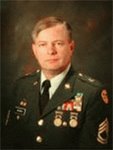
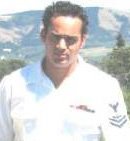
Captain Joe Day
Al Anbar, Iraq
Australian Soldier
Bronze Star Recipient


THE BRONZE STAR CITATION

For heroic achievement in connection with combat operations as Australian Exchange Officer, 1st Light Armored Reconnaissance Battalion, 1st Marine Division, I Marine Expeditionary Unit, United States Marine Corps Forces, Central Command from June 2003 to October 2004 in support of Operation Iraqi Freedom.

WO2 Day demonstrated exceptional leadership, endurance, and versatility through two major operational deployments to Iraq.

Upon redeployment to the US after Operation Iraqi Freedom, he played and integral role in the reconstitution and retraining of the Battalion.

His tactical proficiency and technical prowess were essential in the planning, coordination, and execution of numerous training events to include LAV-25 gunnery, Security and Stability Operations, and Military Operations in Urban Terrain, that prepared 1st Light Armored Reconnaissance Battalion for its deployment back to Iraq for Operation Iraqi Freedom in February 2004.

while deployed, he demonstrated superior leadership and initiative as the Commander of the Task Force Forward Command Platoon/Jump Command Section throughout numerous combat operations in the Ramana and Al Anbar Provinces of Iraq.

His demonstrated moral and physical courage and tactical ability ensured the safety and proper positioning of the Task Force Commander in action against Anti-Iraqi and Anti-Coalition Forces.
His unparalleled performance in combat and in garrison directly contributed to the superior conduct of the Task Force.
WO2 Day's total effectiveness, forceful leadership, and loyal devotion to duty reflected great credit upon him and upheld the highest traditions of the Armed Forces.


Soldier a Bronzed Aussie

From the Australian Army,
by Cpl Andrew Hetherington and Sgt Damien Griffin

An Australian exchange soldier who fought alongside the US Marines in Iraq, including in the battles for Baghdad and Fallujah, has been awarded the US Bronze Star Medal with combat 'V' for heroic achievement.

Then WO2 Joe Day, now a captain, was on a two-year exchange with the 1st Light Armoured Recon BN, 1st Marine Division, when it deployed to Iraq in 2003 and again in 2004.

He spent 14 months in Iraq with the Marine unit and said it was a huge honour to be awarded the Bronze Star.

"I am a little embarrassed though. I think I am overrated and there are a lot of guys I know who took some bullets and didn't get recognised in this way. At the same time I appreciate it," Capt Day said.

He said the unit he was with was a lot like 2 Cav Regt and used the American version of the ASLAV.

"We did the reconnaissance work at the breach before the US forces entered Iraq. We were one of the first units in," he said.

"We fought our way up through to Baghdad and were involved in an operation to attack, seize and hold Tikrit. We were also tasked to deal with the last elements of the Republican Guard and any Iraqi resistance supporting Saddam Hussein."

Capt Day said when the unit entered Iraq in 2003, it fought for about four weeks.

"In the beginning we had light enemy opposition. When we got closer to Baghdad the fighting got heavier, as we were running into the Republican Guard more, and were starting to see the first of the insurgent, guerrilla and militia-type groups appearing," he said.

"In the attack on Tikrit we didn't get much resistance at all. We had a bit of a fight on the first day and into the night, but after that we basically rolled into the palace complex and took it over."

He said during the early days of the campaign there were thousands of Iraqi soldiers surrendering to the US forces.

"Our unit captured quite a few, they either ran away or, if they fought, they died. If they were lucky enough they got to surrender and we sent them back to the rear to be processed," he said.

"We were pretty quick in advancing so we didn't hang on to prisoners for very long. We took care of them as much as we could; especially the wounded ones and we sent them back."

When his unit redeployed to Iraq in February 2004, he noticed a few changes to the country.

"We were operating in the northwest in the Suni Triangle and they didn't like us much there. We also had a lot more casualties in this deployment, there were a lot of guys killed. The insurgency mainly started to take hold when we were there the second time. It was very frustrating and psychologically draining."

Capt Day served as a platoon commander, which he said was a privilege and a great experience.

"This was pretty rare having a warrant officer commanding a platoon of Marines in combat. I then moved on to become the battalion's weapons officer," he said.

"The exchange and deployments with the Marines was an intense learning experience.

Capt Day said the two deployments were pretty hard on unit members.

"You were always fatigued and pretty deprived. We didn't have the luxury of being on any firm bases. We were living on MREs the whole time, shelter was wherever we could dig a hole, we lived pretty rough and it was as rough as I have lived in my 22 years in the Army.

"I have never done anything that hard before."

He said the Marines held Australians in high regard.

"We have a huge reputation over there and they wished they could have more of us working with them," he said. "We just have a way of being able to do what is needed to be done. I adopted a very forthright approach when in command and I decided to command the way I knew how to.

"I didn't try to Australianise them, but I introduced them to a lot of our ways and habits. For example I showed them our methods of tactical vehicle movement, gunnery skills and ever our version of basic field craft."

He even taught them some Australian methods of bush cooking, such as making jaffles in the field.

"In Fallujah I also had the scouts out looking for as many potatoes and onions as we could find and we chucked them into the back of the vehicle and I fried them up for them. It was the only fresh food we had."

Since returning from his exchange, Capt Day has passed on some of his knowledge to junior leaders on courses through Face of Battle presentations.

"... I would like to have more opportunity to do that kind of thing in the future, particularly helping out with the writing of doctrine and lessons learnt. I think my gun-slinging days are over."


From the Australian Army Paper